If you’re considering replacing windows in Concord, you’re not alone — and the reasons go deeper than most homeowners realize. Concord sits in the heart of Contra Costa County’s inland corridor. If you’ve lived here long enough, you know what that means — summers that push well past 95°F, air conditioning that runs from May through October, and energy bills that climb higher every year. What most homeowners don’t realize is that their windows are often the single biggest reason their house can’t keep up with the heat.
This isn’t a general list of “signs you need new windows” pulled from a national home improvement site. This is specific to Concord and the inland East Bay, where the climate puts unique stress on residential windows that coastal homeowners simply don’t experience. If your home was built in the 1960s or 1970s — and a large percentage of Concord’s housing stock was — these five warning signs deserve your attention.
1. Fogged or Hazy Glass Between the Panes
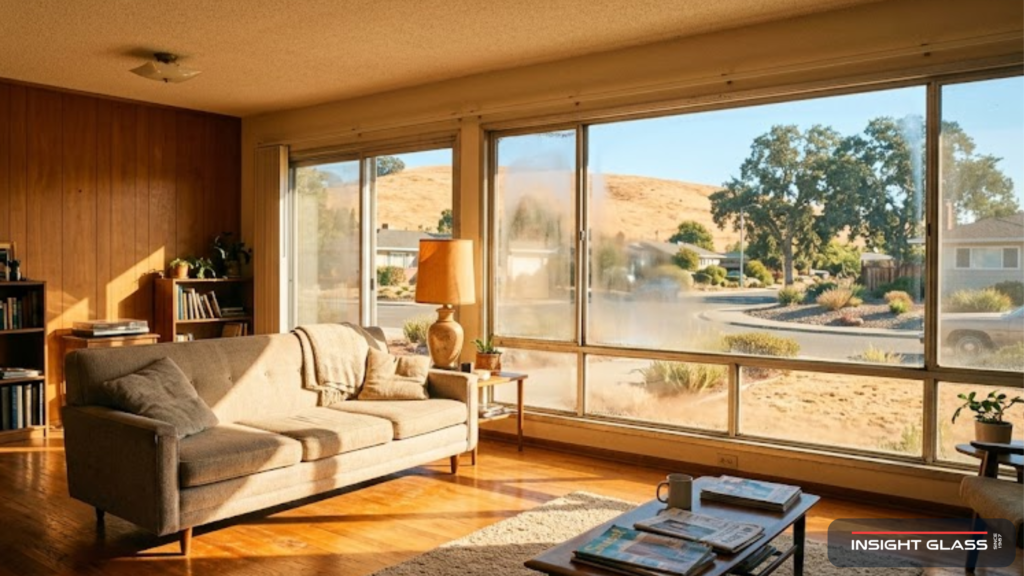
Double-pane windows rely on a sealed air gap (or gas fill) between the two glass layers to insulate your home. When that seal fails, moisture gets in. You see it as a cloudy, milky haze between the panes that you can’t wipe away from either side.
Here’s the part most homeowners miss: that fog isn’t just cosmetic. A broken seal means the insulating gas (usually argon) has leaked out and been replaced by regular air and moisture. The window’s insulating value drops significantly — in some cases by 50% or more. In Concord’s climate, where the temperature difference between your air-conditioned interior and the outdoor heat can exceed 30 degrees on a peak summer afternoon, that lost insulation translates directly into higher cooling costs.
If you see fog in more than one or two windows, it’s a signal that the entire batch is reaching the end of its useful life. Replacing individual panes is usually a short-term fix. A full window replacement with modern, dual-pane or triple-pane units gives you a fresh seal, better glass coatings, and decades of reliable performance.
2. Rooms That Won’t Cool Down No Matter What You Do
You’ve got the thermostat set to 72. The AC is running. But the south-facing bedroom or the living room with the big picture window still feels five to ten degrees warmer than the rest of the house. You close the blinds. You add a fan. It helps a little, but the problem comes back every afternoon.
This is solar heat gain, and it’s one of the most misunderstood comfort issues in homes in inland Contra Costa County. Older windows — especially those with clear, uncoated glass — let solar radiation pass straight through. The sun heats up your floors, furniture, and walls, and those surfaces radiate that heat back into the room for hours. Your AC is fighting an uphill battle.
Modern replacement windows address this with Low-E (low-emissivity) coatings — microscopically thin metallic layers applied to the glass that reflect infrared radiation while still allowing visible light through. If your current windows were installed before these standards existed, they’re likely letting in three to four times more solar heat than a modern window would.
The difference is not subtle. Homeowners who upgrade frequently tell us they can feel the change the same day the new windows go in. Rooms that were always the “hot room” in the house suddenly hold temperature like the rest of the house.
Noticing these signs in your Concord home? Get a free, no-obligation window assessment from a local installer who’s worked on hundreds of homes in your area.
Call 707-746-65713. Drafts or Air Leaks Around the Window Frame
Run your hand slowly around the edges of a closed, locked window on a windy day. If you feel moving air, that’s infiltration — and it’s costing you money in both directions. In summer, hot air leaks in. In Concord’s cooler winter months (and yes, it does get down into the 30s on December and January mornings), heated air leaks out.
Drafts come from two places: the window unit itself (worn weatherstripping, warped sashes, failed hardware) or the gap between the window frame and the rough opening in the wall. Older aluminum-frame windows are especially prone to this. Aluminum expands and contracts with temperature changes more aggressively than vinyl or fiberglass, and after 40 to 50 years of Concord’s thermal cycling, the frames can warp enough to create visible gaps.
Caulking and weatherstripping can buy you time, but if the frames themselves are warped or the sash no longer sits square in the frame, the only real fix is replacement. Modern vinyl and fiberglass frames are engineered for dimensional stability across a wide temperature range — exactly what inland East Bay homes need.
4. High Energy Bills That Keep Climbing
PG&E rates in the Bay Area are among the highest in the country. When your windows aren’t performing, your HVAC system compensates by running longer and harder. You pay the difference every month.
Here’s a practical way to gauge the impact. Pull up your PG&E bills from the last two or three summers. Look at your peak-month usage (usually July or August). If your cooling costs have been trending upward even though your usage habits haven’t changed, your home’s thermal envelope is likely degrading — and windows are usually the weakest link.
Replacing aging, single-pane, or failed double-pane windows with ENERGY STAR-certified units can significantly reduce energy loss. That’s real money back on a purchase you were going to need anyway. Your installer can confirm which products qualify, and homeowners claim the credit on IRS Form 5695.
5. Visible Frame Damage, Discoloration, or Difficulty Operating
This one seems obvious, but homeowners adapt to deteriorating windows more than they realize. You start propping the bedroom window open with a stick because the balance broke. You stop opening the kitchen window because it’s painted shut or the track is corroded. You ignore the hairline crack in the frame because “it’s been there for years.”
In Concord’s climate, frame deterioration is more than an inconvenience. A cracked or warped frame can’t hold a proper seal. A window that won’t open defeats the purpose of natural ventilation — and in a climate where evening temperatures drop 20 to 30 degrees from the afternoon peak, being able to open windows after sundown and let cool air flush the house is one of the most effective (and free) ways to reduce your AC reliance.
How Many Signs Apply to Your Home?
What Concord Homeowners Should Know About Replacement
If two or more of these signs apply to your home, it’s worth getting a professional assessment. A qualified installer will evaluate not just the windows themselves, but how they interact with your home’s overall energy performance — insulation, orientation, shading, and HVAC capacity all factor in.
When you do move forward, make sure any replacement windows meet current California Title 24 energy standards for our climate zone. That means a U-factor of 0.30 or lower and an SHGC of 0.23 or lower. These aren’t premium upgrades — they’re the legal minimum for new installations in Contra Costa County, and they exist because our climate demands them.
At Insight Glass, we’ve been replacing windows across the Bay Area since 1987. We’ve worked on hundreds of Concord homes — from the 1960s-built Crossroads and Dana Estates neighborhoods to newer communities off Treat Boulevard and Kirker Pass. We know what the inland climate does to windows, and we know which products and installation methods hold up best over time.
The Bottom Line
Concord’s inland climate is harder on windows than most homeowners think. The daily temperature swings, intense summer sun, and decades of thermal cycling take a measurable toll on seals, frames, and glass coatings. If your home still has its original 1960s or 1970s windows, they’ve already outlived their expected service life — and they’re quietly adding to your energy bills every month.
Replacing them isn’t just about comfort or curb appeal. It’s a practical investment that pays back through lower utility costs, a more consistent indoor temperature, and a home that’s easier on your HVAC system. The federal tax credit makes the timing even better.
Don’t wait until a window fails completely. The warning signs are there if you know what to look for — and now you do.
Since 1987, Insight Glass has provided top-quality windows replacement or installation in the Bay Area.
Call 707-746-6571 for Expert Installation!
CONTACT US TO GET A FREE ESTIMATE!