



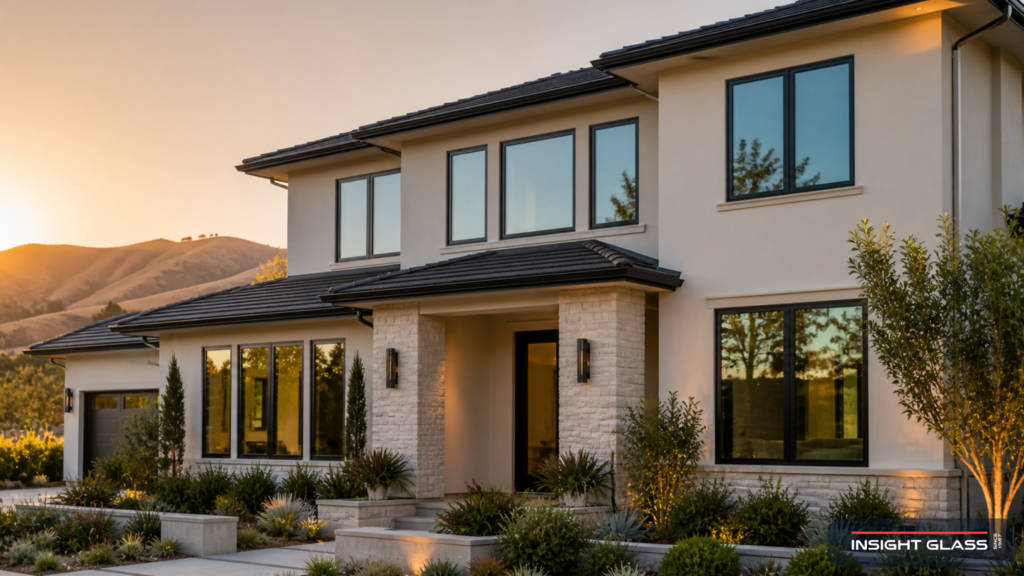
The Tri-Valley shares a climate, a freeway corridor, and an inland-heat profile that makes it one of the most window-sensitive markets in the Bay Area. It does not share a single playbook for window replacement. Livermore homes are different from Pleasanton homes. San Ramon’s first-generation vinyl windows are at the end of their service life. Dublin’s newer tract homes are often Title 24 compliant from the original build but spec’d to code minimum, not to comfort optimum.
We’ve replaced windows on homes across all four Tri-Valley cities, and the patterns are consistent: similar climate-driven specifications, but city-specific HOA rules, housing eras, and buyer expectations that change which contractor approach fits. This guide walks through the Tri-Valley by city, what to expect in cost in 2026, and how the permit and HOA review process differs between Alameda County (Livermore, Pleasanton, Dublin) and Contra Costa County (San Ramon).
Table of Contents
- What Makes the Tri-Valley Climate Different (Heat, Wind, Fire Risk)
- Livermore: What Homeowners Are Picking in 2026
- Pleasanton: HOAs and Architectural Review
- San Ramon: Newer Homes, Retrofit-Friendly
- Dublin: Tract-Home Patterns
- 2026 Installed Cost Ranges Across the Tri-Valley
- Permits Across Alameda + Contra Costa
- Choosing a Tri-Valley Contractor
- Frequently Asked Questions
1. What Makes the Tri-Valley Climate Different (Heat, Wind, Fire Risk)
Three climate factors define Tri-Valley window decisions, and they’re meaningfully different from coastal or even most inland Bay Area markets.
Inland Summer Heat
Summers run 90 to 95°F average with regular peaks at 105 to 110°F. Heat is dry and persistent. Climate Zone 12 means tighter Title 24 SHGC requirements; we typically recommend going below code minimum on west and south exposures.
Altamont Pass Wind
25 to 40 mph afternoon and evening winds are routine in summer, especially in Livermore and the eastern Tri-Valley. Compression weatherstripping and welded corners outperform brush weatherstripping and mechanically joined corners on dust and air infiltration.
WUI Fire Risk
Hillside neighborhoods in southern Pleasanton, eastern Livermore near Las Positas, and the foothills above San Ramon sit in California Wildland-Urban Interface zones. Tempered, laminated, or fire-rated assemblies may be required. Confirm WUI status with the local building department.
2. Livermore: What Homeowners Are Picking in 2026
Livermore at a Glance
Largest Tri-Valley city by population and the hottest by climate. Stock spans 1950s mid-century ranches to 1970s–1990s tract to 2000s–2010s custom and infill. The wine country south of town draws a different buyer than the tract neighborhoods north of I-580.
| Spec | What Livermore Homeowners Pick in 2026 |
|---|---|
| Frame material | Vinyl mid-grade (~70% of projects). Quality 5+ chamber profiles, welded corners, compression weatherstripping. Fiberglass picks up ~20% on higher-end projects and homes near Vasco/Tesla Road wine corridor. Wood-clad rare outside historic restoration. |
| Glass package | Spectrally selective Low-E increasingly the standard on west and south exposures. SHGC 0.20–0.22, argon fill, low-conductive spacer. Triple-pane on worst-case west-facing two-story upstairs. |
| Color | White vinyl common on tract ranches. Black/bronze co-extruded heat-rated vinyl popular on newer custom and higher-end remodels. Standard dark vinyl is risky in Livermore sun — specify heat-rated formulations. |
| Operability | Casement gaining share over double-hung and slider because compression seal is tighter against Livermore wind. |
For more in-depth Livermore-specific service information, see our window replacement service page.
3. Pleasanton: HOAs and Architectural Review
Pleasanton at a Glance
West of Livermore, bordered by I-580 to the north and the foothills to the south. Heavily HOA-managed, particularly in the newer subdivisions north of I-580 and foothill communities like Ruby Hill, Foothill Knolls, and Castlewood. Buyer demographic skews tech, dual-income, resale-conscious.
The defining Pleasanton variable is HOA design review. Most subdivisions have active architectural committees with specific window requirements:
| HOA Requirement | Typical Rule |
|---|---|
| Frame color | Many require white, beige, or specific neutrals. Black/bronze may need approval; some HOAs prohibit them on visible elevations entirely. |
| Mullion pattern | HOAs may require divided-light grilles to match the original tract pattern, or prohibit added grilles where none were original. |
| Style consistency | Casement-to-slider conversions, picture window replacements, or other style changes typically need approval. |
| Material | Some HOAs restrict aluminum on residential elevations or require fiberglass on visible front elevations. |
Live in a Pleasanton HOA? We’ve worked across Ruby Hill, Foothill Knolls, Castlewood, and most of the I-580 north subdivisions. We bring approval-ready drawings to the proposal.
Call 707-746-65714. San Ramon: Newer Homes, Retrofit-Friendly
San Ramon at a Glance
North of Pleasanton, anchored by Bishop Ranch corporate center. Predominantly 1990s through 2010s housing, with newer custom infill and Dougherty Valley master-planned communities. Most homes were built with first-generation vinyl that’s now 15 to 25 years old.
The IGU seals are failing on a significant percentage; foggy interior glass is the most common indicator. The good news: the original vinyl frames are usually structurally sound, making retrofit (insert) replacement viable for many San Ramon homes.
| San Ramon Pattern | What We See |
|---|---|
| HOA review | Almost universal. Patterns mirror Pleasanton: color restrictions, mullion patterns, material requirements. |
| Failed first-gen vinyl signals | Beyond foggy IGUs, early-2000s San Ramon vinyl often shows weatherstripping degradation, hardware failures (locks, balances), and color yellowing on darker frames in sun-exposed orientations. |
| Glass spec | Solar control Low-E sufficient on most exposures. Spectrally selective justified on west-facing master suites and family rooms. |
| Project pricing | Retrofit vinyl mid-grade: $13,000–$24,000 installed. Full-frame fiberglass with HOA-spec finishes: $17,000–$30,000. |
For San Ramon-specific service information, see our window replacement San Ramon service page.
5. Dublin: Tract-Home Patterns
Dublin at a Glance
West of San Ramon, anchored by the I-580/I-680 interchange and the BART connection at Dublin/Pleasanton station. Fastest-growing Tri-Valley city over the past 15 years. Dublin Ranch, Schaefer Ranch, Positano, and surrounding master-planned communities define the housing landscape.
The Dublin window replacement market is different from the others because the housing stock is newer:
| Dublin Pattern | What We See |
|---|---|
| Original windows still in service | Quality 2010s vinyl IGU seals can run 25 to 30 years. Most Dublin homes are still on their original Title 24-compliant double-pane Low-E. |
| Modern aesthetic preferences | Buyers lean toward black or bronze frames, slim sightlines, and contemporary trim profiles. Heat-rated dark vinyl and fiberglass are the right material picks. |
| HOA review | Consistent across Dublin tracts. Most newer subdivisions have active HOAs with specific design rules. Expect a 2 to 6-week HOA process layered on top of the city permit. |
6. 2026 Installed Cost Ranges Across the Tri-Valley
Pricing varies by city, but the underlying drivers are consistent. Here’s the 2026 Tri-Valley pricing summary by frame material and project size.
| Per-Window Style | Installed Price (Mid-Grade Vinyl, Solar Control Low-E) |
|---|---|
| Standard double-hung or slider | $700–$1,200 |
| Casement | $850–$1,400 |
| Picture window | $600–$1,300 (depending on size) |
| Sliding patio door | $1,800–$4,000 |
| Whole-Home Project (12–15 Windows) | Installed Range |
|---|---|
| Vinyl mid-grade, double-pane solar control Low-E | $14,000–$26,000 |
| Vinyl mid-grade with spectrally selective on hot exposures | $16,000–$30,000 |
| Fiberglass with spectrally selective | $20,000–$38,000 |
| Fiberglass with HOA-spec custom finish | $25,000–$45,000 |
| Wood-clad fiberglass on architecturally significant homes | $35,000–$65,000 |
| City | Variance vs. Tri-Valley Baseline |
|---|---|
| Livermore | Baseline. Easier access, lower HOA penetration in older neighborhoods. |
| Pleasanton | +5 to 15% above Livermore. HOA-spec premiums and higher-end material preferences. |
| San Ramon | Slightly above Livermore. HOA premiums apply, but retrofit-eligible projects sometimes offset. |
| Dublin | Comparable to San Ramon. Newer-home retrofit adds speed; custom finish requirements add cost. |
The labor multiplier across all four cities runs $300 to $450 per window installed, comparable to East Bay flatlands and below San Francisco. Hillside lots in southern Pleasanton, eastern Livermore, or the San Ramon foothills add 10 to 25 percent to access labor.
7. Permits Across Alameda + Contra Costa
The Tri-Valley spans two counties (Alameda for Livermore, Pleasanton, Dublin; Contra Costa for San Ramon) plus unincorporated areas under each county’s jurisdiction. The permit process differs subtly across them.
| Jurisdiction | Permit Process Notes |
|---|---|
| City of Livermore | Like-for-like residential window replacements often qualify for over-the-counter permits. Plan check applies to opening size or structural changes. Title 24 CF1R required. |
| City of Pleasanton | Similar structure to Livermore. Tends to run slightly slower on plan check (1 to 3 weeks). HOA review is separate and parallel to city permitting. |
| City of Dublin | Generally fast permit turnaround. Plan check on structural changes only. Title 24 documentation required. |
| City of San Ramon | Contra Costa County, so the framework differs slightly from the Alameda cities. Standard like-for-like permits processed quickly. Plan check on bigger changes. |
| Unincorporated Alameda County | For Tri-Valley homes outside city limits, the County Building Department issues permits. Process similar to city permits but adds 1 to 2 weeks for routing. |
| Unincorporated Contra Costa County | For homes outside San Ramon city limits in foothill areas, Contra Costa County Building Department handles. Similar timeline. |
For broader county-level service information, see our Alameda County and Contra Costa County pages.
- Egress sizing on bedroom windows (5.7 sq ft net opening, 24″ min height, 20″ min width).
- Tempered glass at hazardous locations (bathrooms, near doors, stair landings, large near-floor windows).
- Title 24 CF1R energy compliance documentation.
- Fire-rated glazing on WUI-mapped properties.
- HOA approval letter, where applicable (city permits typically require this for HOA-managed properties).
8. Choosing a Tri-Valley Contractor
The right Tri-Valley contractor combines local climate knowledge, HOA experience, and Title 24 / WUI fluency. The questions worth asking on a quote visit:
| Question | What a Good Answer Looks Like |
|---|---|
| Local volume | How many Tri-Valley projects in the past 12 months, broken out by city? Specific numbers, not vague claims. |
| HOA experience | Which subdivisions have you worked in? Named subdivisions and approval drawings on file beat generic answers. |
| Spectrally selective Low-E | Do you spec it where it matters, or default to standard solar control on every project? The right answer is “depends on orientation.” |
| WUI fire-rated glazing | Have you handled projects on fire-zone properties? Familiarity with the WUI map and assembly options. |
| Heat-rated dark vinyl | Which manufacturers offer it for hot inland exposures? Standard dark vinyl warps in Livermore sun. |
| Lead times | How does your install schedule handle summer demand peaks? Honest backlog disclosure beats over-promising. |
A Tri-Valley contractor with several years of local project history is meaningfully different from a generalist Bay Area contractor who occasionally handles Tri-Valley work. The climate-specific specification choices, the HOA familiarity, and the WUI fluency all come from accumulated local experience.
Tri-Valley Window Replacement: Picking the Right Approach for Your City
The Tri-Valley shares a climate but not a playbook. Livermore wants spectrally selective Low-E and heat-rated dark vinyl options. Pleasanton requires HOA-approved finishes and patience for architectural review. San Ramon often runs as retrofit-eligible work at meaningful labor savings. Dublin’s newer homes need spec upgrades for inland comfort even when the existing windows aren’t failing. The correct quote for your home is the one that recognizes which Tri-Valley city you live in, not just that you live in the Tri-Valley.
If you’d like a real assessment of your Tri-Valley home, we offer free walk-throughs in Livermore, Pleasanton, San Ramon, and Dublin. We measure every opening, identify HOA or WUI considerations, walk through climate-appropriate specifications, and provide a quote tailored to your specific city and house. That’s how Tri-Valley window replacement actually works in 2026: by matching the spec to where you live within the valley, not generalizing across the whole region.
9. Frequently Asked Questions
Insight Glass — your Bay Area window experts since 1987.
Call 707-746-6571 for a Free Quote!
CONTACT US FOR A FREE ASSESSMENT
