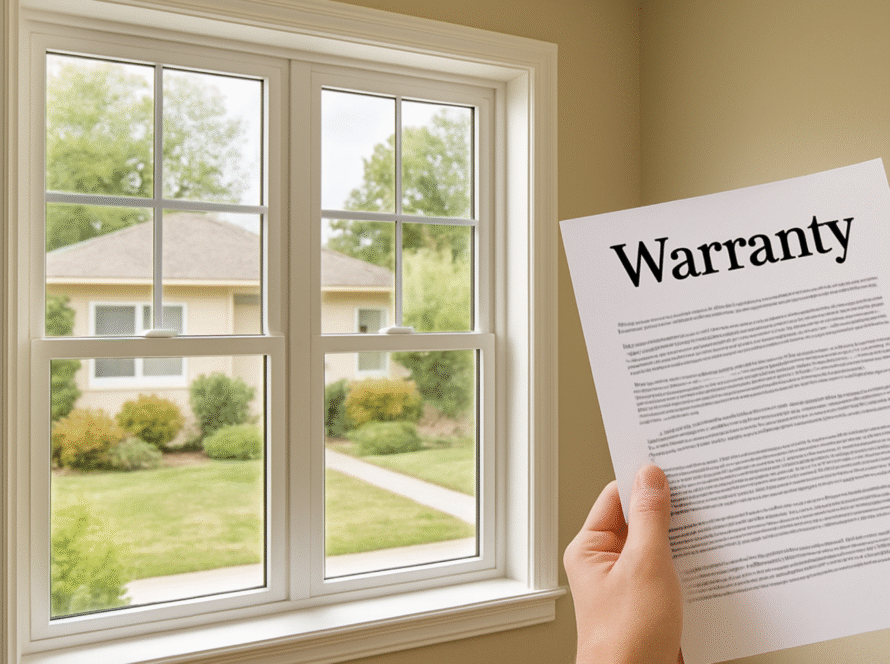
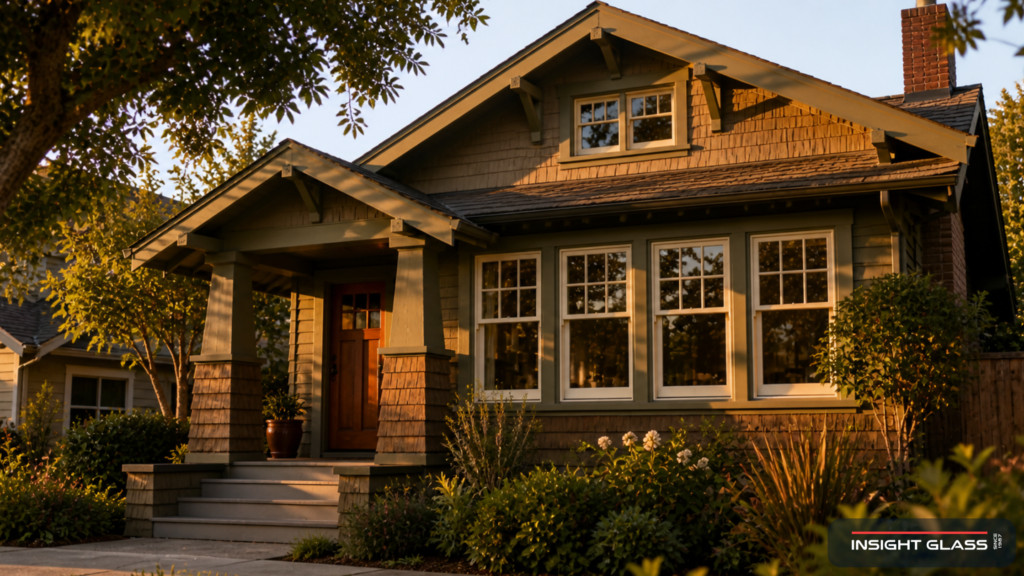
Window replacement Berkeley is unlike anywhere else in the East Bay. The housing stock skews older than Oakland’s, more architecturally distinctive than the tract markets to the south, and is concentrated in Craftsman bungalows and Brown Shingle homes that the Berkeley Landmarks Preservation Commission actively watches. Add the hill microclimate, the WUI fire-zone considerations in the upper Hills, and a homeowner culture that leans toward preservation, and the result is a window market that rewards local experience and punishes generic specs.
We’ve replaced windows across most of Berkeley’s neighborhoods. This guide is the version of the conversation we have on every Berkeley walk-through. The right starting point depends on which side of the city you’re on and what era the house is from.
Table of Contents
- Why Berkeley Window Replacement Is Its Own Thing
- North Berkeley / Hills: Fog, Wind, and View-Window Strategy
- Elmwood and Claremont: Craftsman and Brown Shingle Preservation
- South Berkeley and West Berkeley: Bungalow and Tract Considerations
- Berkeley Historical-Resource Rules (LPC)
- 2026 Installed Cost Ranges in Berkeley
- Best Window Styles by Berkeley Home Era
- Permits and Timeline in Berkeley
- Choosing a Berkeley Window Contractor
- Frequently Asked Questions
1. Why Berkeley Window Replacement Is Its Own Thing
Three factors make Berkeley window decisions different from neighboring cities:
Architecturally Significant Stock
One of California’s densest concentrations of Craftsman bungalows, Brown Shingle homes (Maybeck/Morgan tradition), and First Bay Tradition. Many homes are 90 to 120 years old with original wood-frame divided-light sash still in place.
Active LPC Enforcement
Berkeley Landmarks Preservation Commission reviews changes to landmarks, structures of merit, and historic-district properties. Vinyl on a Craftsman elevation in Elmwood can be denied. Mills Act adds preservation obligations.
Hill Microclimate
Roughly 800 feet of elevation from bay flats to Berkeley Hills. Fog line at ~500 feet. Above the fog: more sun, more wind, increasingly WUI fire-zone requirements. Below the fog: cooler year-round, U-factor and condensation control matter most.
For deeper context on Berkeley-specific window service information, see our window replacement service page for Berkeley.
2. North Berkeley / Hills: Fog, Wind, and View-Window Strategy
North Berkeley & Berkeley Hills at a Glance
North Berkeley and the Hills sit above the typical fog line, spanning elevations from roughly 400 to 1,300 feet. Microclimate is meaningfully different from the flats: more sun on south and west exposures, stronger wind, and fire-zone glazing requirements on much of the upper Hills.
| Hill Factor | What It Drives |
|---|---|
| Higher sun exposure | Above the fog, summer sun is intense. South and west exposures deal with real solar load. Spectrally selective Low-E becomes the right spec for hot orientations. |
| Stronger wind | Hill homes face stronger and more consistent wind than the flats. Compression weatherstripping and welded vinyl corners (or fiberglass) handle this better than economy construction. |
| View windows | Berkeley Hills homes often designed around bay or Mt. Tamalpais views. Original picture windows are 6 to 12 feet wide, single-pane, aluminum-frame, structurally significant. Replacement requires careful header assessment. Laminated glass is sometimes recommended for safety and Tilden Park wind noise reduction. |
| WUI fire zones | Much of the Hills is mapped within California’s Wildland-Urban Interface. Title 24 fire-rated glazing requirements on certain elevations. Tempered, laminated, or fire-rated assemblies may be required. |
3. Elmwood and Claremont: Craftsman and Brown Shingle Preservation
Elmwood & Claremont at a Glance
Central-southeast Berkeley, anchored by College Avenue. The highest concentration of architecturally significant Craftsman bungalows and Brown Shingle homes in the city, with a meaningful percentage falling under Berkeley historic-resource provisions.
| What We Navigate | Recommendation |
|---|---|
| Restoration vs. replacement | Many original wood windows are 95 to 115 years old and still restorable. Old-growth fir or redwood is structurally sound when sash cords, glazing putty, and weatherstripping are renewed. We don’t push replacement on every project. |
| Period-correct mullion patterns | Craftsman 4-over-1 or 6-over-1 patterns are typical. TDL preferred on architecturally significant homes; SDL acceptable on others. GBG reads incorrect and is rarely approved by historic review. |
| Frame material | Wood or wood-clad fiberglass is essentially mandatory on visible front elevations. Vinyl sometimes acceptable on rear elevations, but reads incorrectly on Craftsman architecture even when spec’d correctly. |
| RRP-certified handling | All Elmwood and Claremont housing is pre-1978; federal law requires lead-safe handling for any work disturbing paint. RRP cert on the contractor is non-negotiable. |
For the broader historical replacement framework, see our historic window replacement guide.
Live in Elmwood, Claremont, or another Berkeley historic block? We’ve handled LPC submittals across the city and bring approval-ready drawings to the proposal.
Call 707-746-65714. South Berkeley and West Berkeley: Bungalow and Tract Considerations
South & West Berkeley at a Glance
South of Ashby and west of San Pablo. Pre-1940s bungalows and small Victorian-era cottages interspersed with post-war tract development and newer infill projects. More flexible window market than the historic core.
| South / West Berkeley Pattern | What We See |
|---|---|
| Material flexibility | Vinyl is acceptable on most projects. Less historic-resource overlay; fewer LPC issues; budget-conscious homeowners make up the buyer profile. |
| Glass package | Standard solar control Low-E is the default. Cool, foggy climate means spectrally selective is rarely justified. |
| RRP still applies | Most homes are pre-1978, so lead-safe handling remains required. |
| Permit timeline | Standard Berkeley Building Department permits, typically over-the-counter for like-for-like replacements. Faster turnaround than landmark properties. |
For background on Berkeley double-hung windows (a common Berkeley window style), see our guide to replacing double-hung windows in Berkeley.
5. Berkeley Historical-Resource Rules (Landmarks Preservation Commission)
Berkeley’s LPC is one of the most actively enforced historic preservation authorities in the East Bay. Three relevant designation tiers apply to window replacement decisions:
City of Berkeley Landmarks
Properties formally designated by the LPC. Any exterior change (including window replacement) requires LPC review. Approval typically requires period-correct material, profile, and mullion pattern. Vinyl is rarely approved on visible elevations; aluminum is generally not approved at all.
Structures of Merit
A lower designation tier; LPC review still required, but with more flexibility. Period-correct preferred but not always strictly required.
Historic District Properties
Properties within designated historic districts (Northside, Berkeley Hillside Club area, others) face design review on exterior changes even if the individual structure isn’t separately landmarked.
Mills Act Properties
Owners of designated landmarks who participate in the Mills Act receive significant property tax reduction in exchange for a contractual commitment to preserve and restore the property to historic standards. Window replacement must comply with the preservation plan filed with the city.
6. 2026 Installed Cost Ranges in Berkeley
Berkeley pricing varies significantly by neighborhood and project type. Approximate 2026 installed totals for typical 10 to 15-window projects:
| Project Profile | Installed Range |
|---|---|
| Standard South or West Berkeley (vinyl mid-grade, double-pane solar control Low-E) | $13,000–$22,000 |
| North Berkeley flats (mixed vinyl and fiberglass, no historic overlay) | $18,000–$32,000 |
| North Berkeley Hills (view windows, fiberglass or premium vinyl, partial WUI fire-rated glazing) | $25,000–$50,000 |
| Elmwood or Claremont Craftsman (SDL muntins, wood-clad fiberglass, RRP handling) | $30,000–$65,000 |
| Mills Act or formally landmarked (full historic restoration, TDL muntins, custom wood profiles) | $50,000–$100,000+ |
The Berkeley labor multiplier runs $325 to $500 per window installed, slightly above the East Bay flatlands baseline due to access constraints, prevailing wage on certain residential work, and the slower LPC review process when applicable.
7. Best Window Styles by Berkeley Home Era
Window selection should match the era and architectural style:
| Era / Style | Recommended Spec |
|---|---|
| Pre-1900 Victorian or Edwardian | Wood-frame double-hung with traditional 1-over-1 or 2-over-2 muntin pattern, often stained or etched upper sash. Period-correct profile required for landmarked properties. (See our SF Victorian and Edwardian replacement guide.) |
| 1900–1925 Craftsman bungalow | Wood-frame double-hung with 4-over-1 or 6-over-1 muntin pattern, art glass on feature windows, casement on smaller openings. SDL minimum, TDL on landmarks. |
| 1900–1920 Brown Shingle (Maybeck-style) | Wood-frame casement windows with leaded or art glass, often grouped in horizontal bands. Wood mandatory on visible elevations. |
| 1920s–1940s Mediterranean & Spanish Revival | Casement with wrought-iron-style grilles, arched openings, smaller divided lites. |
| 1950s–1970s Mid-century | Minimal-frame aluminum or fiberglass, large lites, slim sightlines. |
| 1980s+ infill and newer development | Vinyl or fiberglass per current taste. |
8. Permits and Timeline in Berkeley
Berkeley Building Department handles residential window replacement permits. The process for non-landmark properties is straightforward; for landmark properties, it involves additional LPC review.
| Project Type | Permit Process |
|---|---|
| Like-for-like, non-landmark | Typically over-the-counter permit. Title 24 CF1R required. Tempered glass at code locations. Egress sizing on bedrooms. |
| Plan check projects | Structural changes, opening size changes, or any landmark properties. Plan review adds 2 to 4 weeks. |
| LPC review | Landmark properties or designated districts. 4 to 8 weeks added to the front of the project. |
| WUI fire-zone properties | Additional Title 24 fire-rated glazing review. |
| Project Profile | Realistic Timeline |
|---|---|
| South/West Berkeley standard | 6 to 9 weeks contract to final inspection |
| North Berkeley with hillside or WUI | 8 to 12 weeks |
| Elmwood/Claremont Craftsman with LPC review | 12 to 20 weeks |
| Full Mills Act landmark restoration | 16 to 24+ weeks |
Berkeley inspectors have a reputation for thorough plan checks on visible exterior changes and reasonable inspections on like-for-like replacements. The most common flags: tempered glass at code locations, Title 24 documentation, egress sizing for bedrooms, and (on landmark properties) profile matching the original.
9. Choosing a Berkeley Window Contractor
Berkeley work rewards local experience differently than other Bay Area markets:
| Credential / Experience | Why It Matters in Berkeley |
|---|---|
| RRP certification | Mandatory for any work disturbing paint on pre-1978 homes (most of Berkeley). Verify the cert, not just a verbal claim. |
| LPC submittal experience | Contractors who have submitted to the Berkeley LPC before move faster and have higher first-pass approval rates than those new to the process. |
| Mills Act familiarity | Mills Act property owners need contractors who understand the preservation plan obligations. |
| Local neighborhood knowledge | A contractor who has worked on Elmwood Craftsman homes knows the typical original sash dimensions, profile widths, and material preferences. A general East Bay contractor on their first Elmwood project usually doesn’t. |
| CSLB license | C-17 (Glazing) or B (General Building). Verify on cslb.ca.gov. |
| Insurance and bond | Workers’ comp, general liability, $25,000 California contractor’s bond. |
| Berkeley project references | Specifically Berkeley, ideally in your neighborhood or a similar one (Craftsman if Elmwood, Brown Shingle if Northside, etc.). |
A contractor without Berkeley-specific experience can still do good work, but the project will take longer and may encounter LPC pushback that experienced Berkeley contractors avoid by anticipating requirements.
Window Replacement in Berkeley: Decisions for Each Neighborhood
The right window replacement approach in Berkeley is not one approach. Elmwood and Claremont Craftsman bungalows demand wood-clad fiberglass with SDL muntins and RRP handling. North Berkeley Hills view homes need fiberglass or quality vinyl with WUI fire-rated glazing where required. South and West Berkeley bungalow homes run cleanly on mid-grade vinyl with solar control Low-E. Mills Act and landmarked properties move more slowly and pay more for period-correct restoration that protects long-term resale value.
If you’d like a real assessment for your Berkeley home, we provide free walk-throughs across the city. We measure every opening, identify LPC or Mills Act considerations, walk through climate-appropriate specifications for your specific elevation, and give you a quote that fits your house and your neighborhood. That’s how Berkeley window replacement actually works in 2026: by recognizing that what works in one Berkeley neighborhood is the wrong answer in the next.
10. Frequently Asked Questions
Insight Glass — your Bay Area window experts since 1987.
Call 707-746-6571 for a Free Quote!
CONTACT US FOR A FREE ASSESSMENT