



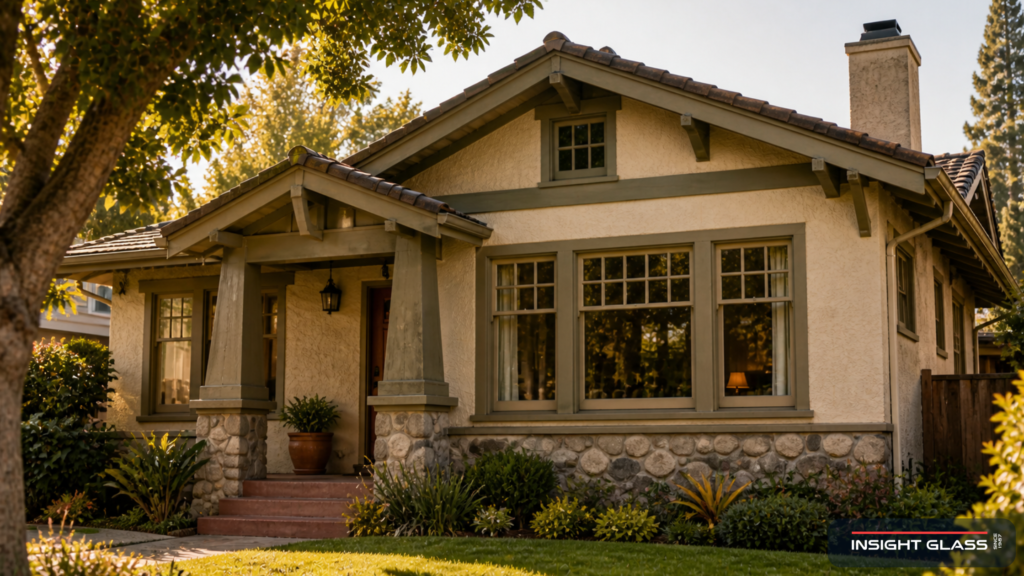
San Jose is too big to treat as a single window market. The city covers more than 180 square miles, spans five distinct housing eras, and runs from coastal-influenced fog in the north to inland heat in the south. The right window for a 1928 Willow Glen bungalow is the wrong window for a 1985 Almaden Valley tract home. The HOA rules in Almaden don’t apply in Cambrian. The Eichler aesthetic in pockets of Berryessa is not suited to downtown high-rise condos.
We’ve replaced windows on homes across most of San Jose’s major neighborhoods, and the patterns are consistent. This guide is the neighborhood-level version of the conversation we have on every San Jose walk-through. If you live in one of the areas covered below, the section for your neighborhood is the right place to start.
Table of Contents
- Why San Jose Window Picks Vary by Neighborhood
- Willow Glen: 1920s/30s Bungalows and Spanish Revival
- Almaden Valley: 1970s Tract Homes and HOA Rules
- Cambrian Park: Mid-Century Ranch Styles
- Berryessa: Eichler and Modern Picks
- Downtown San Jose: Historic and Condo Considerations
- San Jose / Santa Clara County Permit Notes
- Frequently Asked Questions
1. Why San Jose Window Picks Vary by Neighborhood
When it comes to window replacement San Jose neighborhoods diverge along three factors that drive nearly every homeowner decision in the city.
Climate Microzones
North San Jose runs cooler and foggier (closer to Santa Clara/Mountain View). Central is warmer but moderate. South (Almaden, Cambrian, Coyote Valley) hits regular 90s in summer. West, into the foothills, runs cooler. SHGC and U-factor specs vary by zone.
Housing Eras
Willow Glen is 1910s–1940s. Cambrian is 1950s–1960s mid-century tract. Almaden expanded 1970s–1990s. Berryessa mixes mid-century with Eichlers and modern infill. Downtown ranges from pre-1940 historic to brand-new high-rise. Each era has its own profile.
HOA & Historic Overlay
Newer Almaden subdivisions and parts of Berryessa have active HOAs. Naglee Park and a handful of Willow Glen blocks fall under San Jose’s historic resource provisions. Downtown condos have building-level rules. The same window can be approved in one neighborhood and rejected in the next.
For a higher-level overview of the service, see our window replacement San Jose page. The neighborhood-level detail starts below.
2. Willow Glen: 1920s/30s Bungalows and Spanish Revival
Willow Glen at a Glance
South-central San Jose, along Lincoln Avenue between The Alameda and Curtner. One of the most architecturally distinctive neighborhoods in the city: Craftsman bungalows, Spanish Revival cottages, English Tudor Revival, and some early ranch.
The original windows are typically wood-frame double-hung with divided light upper sash, casement windows with leaded or art glass on feature elevations, and Spanish Revival arched openings with decorative wrought-iron-style grilles. Many original windows are restorable rather than requiring replacement; the wood is often old-growth fir or redwood that, when sound, lasts another 30 years with new glazing putty and weatherstripping.
For homes where replacement is the right call:
| Spec | Willow Glen Recommendation |
|---|---|
| Frame material | Wood-clad fiberglass or solid wood. Vinyl rarely looks right; the muntin profile reads thinner and flatter than period-correct. |
| Mullion pattern | Simulated Divided Lite (SDL) at minimum, True Divided Lite (TDL) on the most architecturally significant homes. GBG reads incorrect for these elevations. |
| Glass package | Double-pane Low-E with passive or solar control coating depending on orientation. Climate is moderate; spectrally selective is rarely required. |
| Lead-safe handling | Pre-1978 housing requires EPA RRP-certified work for any work that disturbs paint. Confirm the contractor’s RRP cert before signing. |
| Resale comp | $1.5M+ Willow Glen homes lean toward period-correct wood or wood-clad. Vinyl on a visible front elevation can show as a negative differentiator on appraisal. |
Live in Willow Glen, Naglee Park, or another San Jose historic block? We walk every elevation, identify resource overlay considerations, and quote period-correct without overspending.
Call 707-746-65713. Almaden Valley: 1970s Tract Homes and HOA Rules
Almaden Valley at a Glance
Southern edge of San Jose, west of US 101 and into the foothills. Predominantly tract development with some 2000s custom infill. Ranch, contemporary, and Mediterranean Revival across multiple subdivision phases.
The defining variable in Almaden is the HOA design review. Most Almaden subdivisions have active HOAs with architectural committees that approve or reject exterior changes, including window replacement.
| Common HOA Requirement | What It Means for Your Spec |
|---|---|
| Frame color | White or beige usually allowed; custom colors and dark frames may require approval. |
| Mullion pattern | Some HOAs require matching the original divided-light pattern; others prohibit added grilles. |
| Style consistency | Casement-to-slider conversions or other style changes often require review. |
| Material | Some HOAs restrict aluminum on visible elevations or require specific fiberglass profiles. |
Always confirm HOA rules before specifying. We frequently bring HOA-approval drawings to clients during the proposal phase to streamline the review process.
- U-factor 0.28 or lower for the assembly.
- SHGC 0.22 or lower on west- and south-facing windows.
- Spectrally selective Low-E on west-facing master bedrooms and family rooms with foothill views.
- Standard solar control Low-E on east and north exposures.
For deeper context on energy-efficiency choices that fit the San Jose climate, see our guide to energy-efficient windows for San Jose homes.
4. Cambrian Park: Mid-Century Ranch Styles
Cambrian Park at a Glance
Between Willow Glen and Almaden, south of Camden Avenue and west of Almaden Expressway. Predominantly mid-century ranch tract: single-story, 1,400 to 1,800 sq ft, three bedrooms, original aluminum-frame sliding and double-hung windows.
Cambrian is a different price point than Willow Glen and a different specification than Almaden. The neighborhood’s mid-century character is real but more modest, and most projects don’t carry the architectural-detail premium that defines Willow Glen replacements.
| Spec | Cambrian Recommendation |
|---|---|
| Frame | Vinyl in white or beige. Mid-grade construction (5+ chambers, welded corners, compression weatherstripping). Looks appropriate on Cambrian ranch architecture. |
| Casement upgrade option | Many Cambrian homes have original aluminum sliders that can be upgraded to casements during replacement. +15–25% cost, tighter seal. (See our casement install cost guide for San Jose.) |
| Glass package | Double-pane IGU with solar control Low-E. SHGC 0.25 to 0.30, U-factor 0.28 to 0.30. Climate is warm but not punishing; solar control is the right balance. |
| Hardware | Standard brushed finish. Custom finishes are usually overspending for Cambrian’s resale comp pool. |
| Configuration | Like-for-like where possible. Avoids structural changes and permit complexity. |
5. Berryessa: Eichler and Modern Picks
Berryessa at a Glance
Northeast San Jose, near the I-680/I-280 interchange, with the BART extension anchoring development at the Berryessa/North San Jose station. Mix of 1960s mid-century (including some Eichler tracts) and 1990s through 2010s suburban development.
Berryessa has two distinct sub-markets:
Eichler Homes
Berryessa has pockets of Eichler housing (along with the larger Eichler concentrations in Sunnyvale, Palo Alto, and Mountain View). Eichlers were designed around a minimal-frame, large-glass aesthetic, often with floor-to-ceiling glass walls and atriums. Original Eichler windows were single-pane plate glass in slim aluminum frames; most have been replaced once already.
- Slim aluminum or fiberglass frames in dark anodized or matte black finish. Resist the urge to use vinyl, which reads thicker and changes the architectural character.
- Large fixed lights with no muntins. The minimal frame is the design statement.
- Double-pane Low-E IGU. Triple-pane is rarely needed; the architecture prioritizes light over deep insulation.
- Atrium glazing considerations. Eichler atriums with overhead glass require tempered safety glazing under CBC code and careful flashing details.
1990s–2010s Berryessa Tract
These homes often have first-generation vinyl windows that are now failing (foggy IGU seals, weatherstripping degradation, broken hardware). Replacement is straightforward: same configuration, current-spec Low-E, modern frame quality. Most projects in this segment run $15,000 to $30,000 installed.
The Berryessa climate is moderate, with cooler nights from valley breezes. Spectrally selective Low-E is rarely justified; standard solar control or passive Low-E covers most exposures.
6. Downtown San Jose: Historic and Condo Considerations
Downtown San Jose at a Glance
Between Highway 87, I-280, US 101, and Coleman Avenue. The most architecturally diverse part of the city, with pre-1900 historic structures, mid-century commercial and residential mixed-use, and 21st-century high-rise condos.
Three distinct downtown window-replacement scenarios:
| Scenario | What Drives the Spec |
|---|---|
| Pre-1940 historic homes (Naglee Park, parts of Hensley Historic District) | Restoration over replacement is often the right call. Where replacement is required, period-correct SDL or TDL muntins, wood-clad fiberglass or solid wood frames, and lead-safe handling all apply. Some properties are subject to San Jose’s historic resource review. |
| High-rise condo replacements (Axis, 88 South 4th, The 88, others) | Building-association rules typically prohibit individual unit owners from changing exterior window appearance. Most replacements are limited to interior glass swaps within existing factory frames; visible exterior change requires building review. Confirm before purchasing. |
| Mid-rise mixed-use and live-work units | Varying rules. Some allow replacement without restriction, others require building approval. Traffic noise from downtown corridors makes laminated glass a common upgrade for sound control. |
7. San Jose / Santa Clara County Permit Notes
The San Jose Building Department handles residential window replacement permits for the city. Santa Clara County handles the unincorporated areas surrounding San Jose. The processes overlap but aren’t identical.
| Permit Item | What to Know in 2026 |
|---|---|
| Like-for-like replacement | Same opening, same operation type, same dimensions often qualifies for over-the-counter approval — keeps the timeline tight. |
| Plan review trigger | Egress, structural, or opening size changes trigger plan review (adds 2 to 4 weeks). |
| Title 24 (CF1R) | Energy code compliance documentation must be submitted with the permit and on-site for inspection. |
| Tempered glass | Required at code hazardous locations (bathrooms over tubs, sidelites within 24″ of doors, stair landings, large near-floor glass). Tempered bug etch is the proof of compliance. |
| Bedroom egress | Must meet current code: 5.7 sq ft net opening, 24″ min height, 20″ min width. Older bedroom windows often don’t meet this — replacement is the chance to fix. |
| Permit fees | $200 to $600 for residential window replacement, depending on project size. |
Week 1–2: Permit application (over-the-counter or plan check submission).
Week 2–6: Window manufacturing.
Week 6–7: Installation (typically 2 to 4 days).
Week 7–8: Final inspection and permit close-out.
Total: 6 to 9 weeks from contract to final inspection.
For deeper context on the Santa Clara County permit framework specifically, our window installation permit guide for the unincorporated area covers the process.
A note on inspector preferences: San Jose Building Department inspectors have a reputation for thorough but reasonable plan checks. They flag the same handful of common issues consistently — tempered glass at code-required locations, Title 24 documentation, egress sizing. If those three boxes are clean, most San Jose inspections move quickly.
Want a permit-ready quote for your San Jose home? We handle Title 24 documentation, tempered glass call-outs, and egress sizing as part of the proposal — not surprises at inspection.
Call 707-746-6571San Jose Window Replacement: Neighborhood-Level Decisions for 2026
The right window for your San Jose home is determined first by your neighborhood, then by your specific property. Willow Glen and Naglee Park demand period-correct wood-clad with SDL muntins. Almaden requires HOA-approved specifications, often with deeper SHGC for foothill heat exposure. Cambrian runs well on quality vinyl mid-grade. Berryessa Eichlers want slim aluminum or fiberglass. Downtown condos defer to building rules. None of these is interchangeable.
If you’d like a real proposal for your San Jose home, we provide free assessments across the city. We measure every opening, identify HOA or historic resource issues, walk through the climate zone considerations for your specific exposures, and give you a quote that fits your house and your neighborhood, not a generic citywide spec. That’s how San Jose window replacement actually works: by matching the window to where you live, not just the city you live in.
8. Frequently Asked Questions
Insight Glass — your Bay Area window experts since 1987.
Call 707-746-6571 for a Free Quote!
CONTACT US FOR A FREE ASSESSMENT
