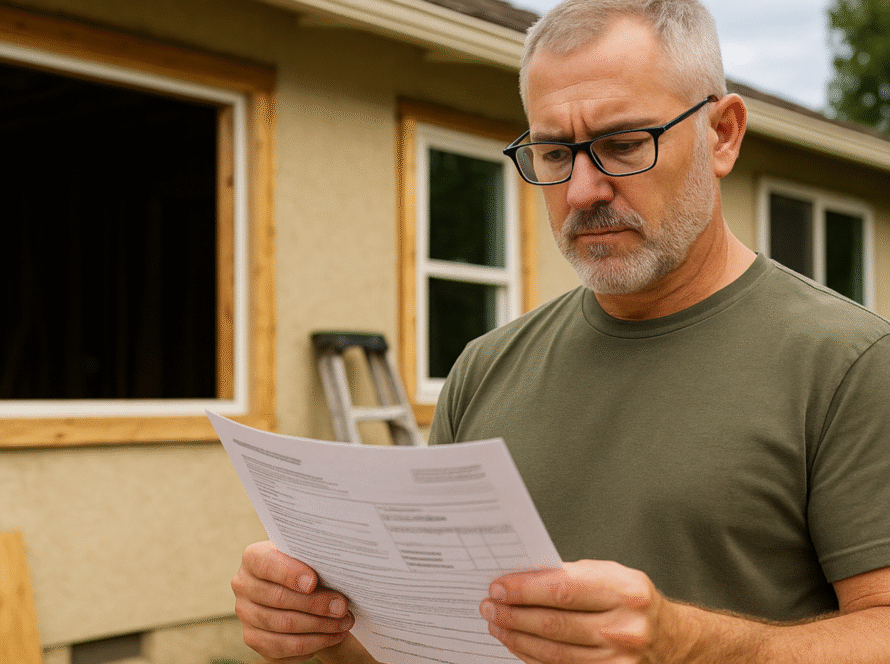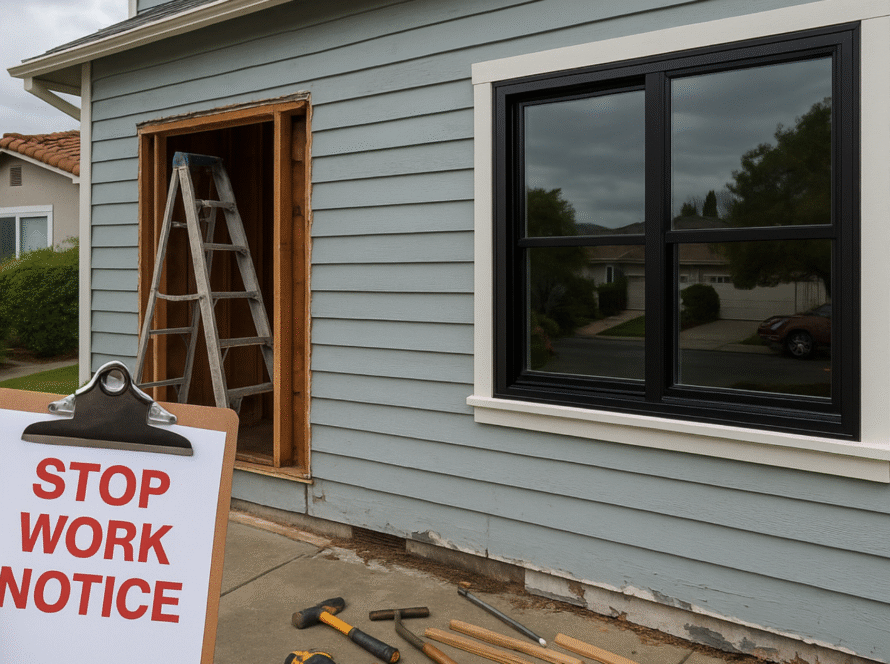
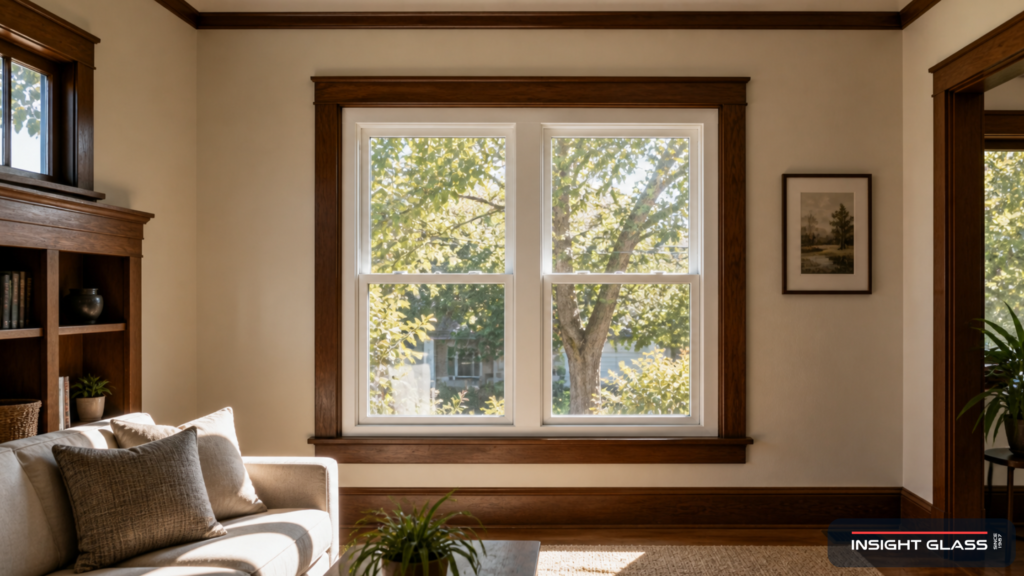
Retrofit windows are the most cost-effective replacement option in the Bay Area when they’re appropriate, and the most expensive mistake when they aren’t. The decision between retrofit and full-frame replacement gets made in the first 10 minutes of a walk-through, and homeowners who don’t know the difference often agree to the wrong choice without realizing they had options.
We’ve installed both types on hundreds of Bay Area homes. The patterns are consistent. There are houses where retrofit is exactly the right call and saves the homeowner $3,000 to $8,000 over a whole-home project. There are houses where retrofit hides a problem the full-frame approach would have fixed, and the homeowner pays for it five years later when water damage shows up in the wall. This guide is the version of the conversation we have during every walk-through, written down.
Table of Contents
- What Retrofit Windows Actually Are (vs. Full-Frame Replacement)
- When Retrofit Makes Sense (Existing Frame in Good Shape)
- When Retrofit Is the Wrong Call (Rot, Sash Issues, Energy Upgrade)
- Retrofit Cost vs. Full-Frame Replacement
- Best Retrofit Window Styles for Bay Area Homes
- Install Timeline and Disruption
- Common Bay Area Retrofit Mistakes
- Frequently Asked Questions
1. What Retrofit Windows Actually Are (vs. Full-Frame Replacement)
A retrofit window, also called an insert replacement, is a new window unit (sash, frame, glass, hardware) installed inside the existing window frame opening. The original wood, vinyl, or aluminum frame stays. The exterior trim and casing stay. The interior trim usually stays. Only the operating window components and the inner frame are replaced.
Full-frame replacement is the opposite. The entire existing window assembly comes out down to the rough opening. New flashing, new sill pan, new frame, new sash, new trim inside and out. Everything is replaced.
Retrofit (Insert)
- New unit nests inside the existing frame.
- Exterior trim, casing, and (usually) interior trim stay.
- Glass area typically 1–2 inches narrower and shorter than the original.
- Relies on the existing frame’s structural integrity.
- 30 to 60 minutes per window install time.
Full-Frame Replacement
- Existing assembly removed down to the rough opening.
- New flashing, sill pan, frame, sash, and interior/exterior trim.
- Maintains or expands the original glass area.
- Rebuilds the connection between window and wall.
- 2 to 3 hours per window install time.
For a deeper read on the technical comparison, our full-frame vs. insert window replacement installation guide covers the construction details in more depth.
2. When Retrofit Makes Sense (Existing Frame in Good Shape)
Retrofit is the right call when the existing window frame is structurally sound, the operation type isn’t changing, and the project priorities favor speed and lower cost over deep modification.
- Existing frame has no rot, warp, or corrosion. A sound 1990s vinyl frame, an 1980s aluminum frame in a non-coastal location, or a well-maintained wood frame from any era can all hold a retrofit unit indefinitely.
- Like-for-like replacement. Same opening type (slider stays slider, double-hung stays double-hung, casement stays casement). Same approximate dimensions.
- Stucco or brick exteriors. Full-frame requires cutting and patching the stucco around the opening, which adds high cost and creates a visible patch line. Retrofit avoids this entirely.
- HOA-restricted exterior changes. Some Bay Area HOAs prohibit any visible exterior changes. Retrofit keeps all exterior trim original.
- Budget-driven whole-home projects. Retrofit can save 25 to 40 percent on labor across a 12 to 15-window project — on a $30,000 quote, that’s $7,500 to $12,000 in difference.
- Disruption-sensitive projects. Occupied homes during the install. Retrofit takes 30 to 60 minutes per window vs. 2 to 3 hours for full-frame.
- Working aluminum frames in good condition. Many 1970s–1990s Bay Area homes have aluminum frames that are structurally fine but have failed thermal seals on the IGUs. Retrofit drops a new vinyl or fiberglass insert into the aluminum opening cleanly.
3. When Retrofit Is the Wrong Call (Rot, Sash Issues, Energy Upgrade)
Retrofit is wrong when the existing frame can’t be trusted to hold up another 20 to 30 years, when code changes are needed, or when a deeper energy upgrade is the goal.
- Visible rot or wood damage. Retrofitting a rotted wood frame traps the rot inside the wall. Water that gets behind the new unit can’t drain because the original failed flashing is still doing the (failed) work. Within a few years, the rot grows into structural damage.
- Frames are out of square or settled. If the foundation has shifted or the framing has settled, the existing opening isn’t square anymore. A retrofit can be made to fit, but the seals will leak air and water along the gap.
- Sash mechanism failures from frame issues. If the original sash won’t operate smoothly, the cause is usually frame distortion. Retrofitting into a distorted frame produces another sash that won’t operate smoothly.
- Egress code upgrade required. Older bedroom windows that don’t meet current egress code (5.7 sq ft net opening, 24″ min height, 20″ min width) need to be enlarged. Retrofit can’t do this; full-frame can.
- Deeper energy performance is the priority. Retrofit nests the new unit into the existing frame, limiting the available IGU thickness and Low-E performance. For maximum energy efficiency, full-frame allows the deepest IGU and the best frame insulation.
- Comprehensive lead remediation goal. Retrofit disturbs less paint than full-frame, but it also leaves more painted wood in place. If comprehensive remediation is the goal, full-frame is the better strategy.
- Coastal exposures with corroded aluminum frames. Salt air corrosion in coastal Bay Area homes (Pacifica, Sausalito, parts of Daly City) often degrades aluminum frames invisibly. Retrofit traps the corroded frame in the wall.
Not sure if your existing frames support retrofit? We check each opening for rot, settlement, and corrosion during the walk-through, and tell you honestly which approach fits your home.
Call 707-746-65714. Retrofit Cost vs. Full-Frame Replacement
Typical 2026 Bay Area pricing comparison for the same window in the same opening:
| Frame Material | Retrofit (Insert) | Full-Frame Replacement | Difference |
|---|---|---|---|
| Vinyl mid-grade | $400–$900 / window | $700–$1,300 / window | +25–50% |
| Fiberglass | $600–$1,200 / window | $900–$1,700 / window | +25–50% |
| Wood-clad fiberglass | $800–$1,500 / window | $1,200–$2,200 / window | +25–50% |
For per-project cost ranges, our retrofit windows installation cost and retrofit window replacement cost pages cover the unit-level math in more detail.
5. Best Retrofit Window Styles for Bay Area Homes
Some operation types retrofit cleanly. Others don’t.
| Retrofit Verdict | Window Styles & Scenarios |
|---|---|
| Excellent retrofit candidates | Single-hung and double-hung (most common Bay Area retrofit), horizontal sliders, picture windows, and casements when the original casement frame is sound. |
| Difficult retrofit candidates | Bay and bow windows (the angled assembly usually requires full-frame), custom or non-standard shapes, and any opening that needs egress upsizing. |
| Bay Area Era | Retrofit Likelihood |
|---|---|
| 1970s–1990s tract (Almaden, Concord, Walnut Creek, Hayward) | Excellent candidates if aluminum frames are intact. |
| Pre-1940s wood-frame (Willow Glen, Berkeley Elmwood, Old Oakland, Alameda) | Retrofit only if the wood frames pass a careful condition check; many should go full-frame. |
| 1990s–2010s newer homes | Usually retrofit-eligible. |
| Mid-century Eichlers | Slim original aluminum frames are often structurally marginal; full-frame may be the better call. |
6. Install Timeline and Disruption
Retrofit’s headline advantage over full-frame is installation speed. Realistic timeline comparison for a typical Bay Area whole-home project:
| Phase | Retrofit (12 windows) | Full-Frame (12 windows) |
|---|---|---|
| Field measure | 1 day | 1 day |
| Manufacturing | 3–7 weeks | 3–8 weeks |
| Install | 1–2 days | 3–5 days |
| Final inspection | Within a week | After completion |
| Total elapsed | 5–8 weeks | 6–10 weeks |
7. Common Bay Area Retrofit Mistakes
After enough projects, the same handful of retrofit mistakes show up in homes that had retrofit work done badly. The five we see most often:
- Retrofitting over rotted frames. The biggest single mistake. The new unit looks fine for a year or two while the rotted original frame keeps failing. By the time water staining or mold smell shows up, the repair cost is significantly higher than it would have been originally.
- Skipping moisture barrier integration. A proper retrofit ties the new unit’s flashing into the existing weather-resistant barrier. Quick installs skip this step, allowing water to bypass the new unit and run down inside the wall.
- Mismatching frame depth. Retrofit units come in specific depths. If the existing frame depth doesn’t match, the new unit sits too proud (weatherstripping leaks) or too recessed (water collects on the sill). Measure first.
- Ignoring failed weatherstripping in the surrounding casing. The new unit has new weatherstripping; casing trim around it often does not. Air infiltration from the casing-to-wall joint negates the energy improvement.
- Missing tempered glass at code locations. Retrofit replacements still need to meet CBC tempered glass requirements (bathrooms, near doors, stair landings, large near-floor windows). Some installs reuse the original (untempered) rationale and fail inspection.
A subtle one, specific to coastal Bay Area homes: retrofit over an aluminum frame that has begun to corrode internally. The corrosion isn’t visible from inside, but the frame’s structural integrity is already compromised. The retrofit unit looks fine for several years until the aluminum frame deforms under load. By that point, fixing it requires the full-frame replacement that should have happened originally.
Retrofit Windows: Making the Right Call for Your Bay Area Home
Retrofit windows are the right answer for many Bay Area projects and the wrong answer for others. The decision comes down to the condition of the existing frames, the project priorities (speed and budget vs. deep upgrade), and the specific code or HOA constraints. A 1990s Concord tract home with sound aluminum frames is an excellent candidate for a retrofit. A 1924 Berkeley bungalow with original wood frames showing rot at the sills is not.
If you’d like a real walk-through of your Bay Area home, we provide free assessments. We check each frame for rot, settlement, and structural integrity, and tell you honestly which openings should be retrofitted and which need full-frame work. That’s how the retrofit decision actually pays back: by matching the approach to what’s behind the trim, not what looks easy on the surface.
8. Frequently Asked Questions
Insight Glass — your Bay Area window experts since 1987.
Call 707-746-6571 for a Free Quote!
CONTACT US FOR A FREE ASSESSMENT