The decision to replace double hung windows in a South San Francisco home is one of the most practical upgrades a homeowner can make. Double hung windows have been a staple of residential architecture for well over a century, and for good reason — they deliver reliable ventilation, straightforward operation, and a clean appearance that fits virtually any home style. South San Francisco’s housing stock includes everything from post-war tract homes in the Westborough and Sunshine Gardens neighborhoods to hillside residences along Sign Hill, and double-hung windows work across all of them.
Unlike single-hung windows, which have only the bottom sash moving, double-hung windows feature two operable sashes that slide vertically within the frame. This dual-sash design is more than an engineering detail. It fundamentally changes how air moves through a room, how easy the window is to maintain, and how well it performs over decades of daily use.
Why South San Francisco Homes Benefit From Double-Hung Replacements
South San Francisco sits in a unique microclimate. The city catches fog and marine air pushing inland from the Pacific through the San Bruno Gap, which means homes here deal with persistent moisture, cool winds, and temperature swings that test window performance year after year. Older single-pane double hung windows — especially those with wood frames and rope-and-pulley counterbalance systems — eventually lose their ability to seal against these conditions. Paint bonds sashes shut, weatherstripping deteriorates, and the glass itself offers almost no thermal insulation.
When homeowners replace double hung windows with modern vinyl or fiberglass units, the improvement is immediate and measurable. New double hung windows arrive with factory-installed weatherstripping, multi-point locking hardware, and insulated glass units that dramatically reduce air infiltration. The drafts disappear. The fog stays outside where it belongs.
Tilt-In Sashes Make Cleaning Simple
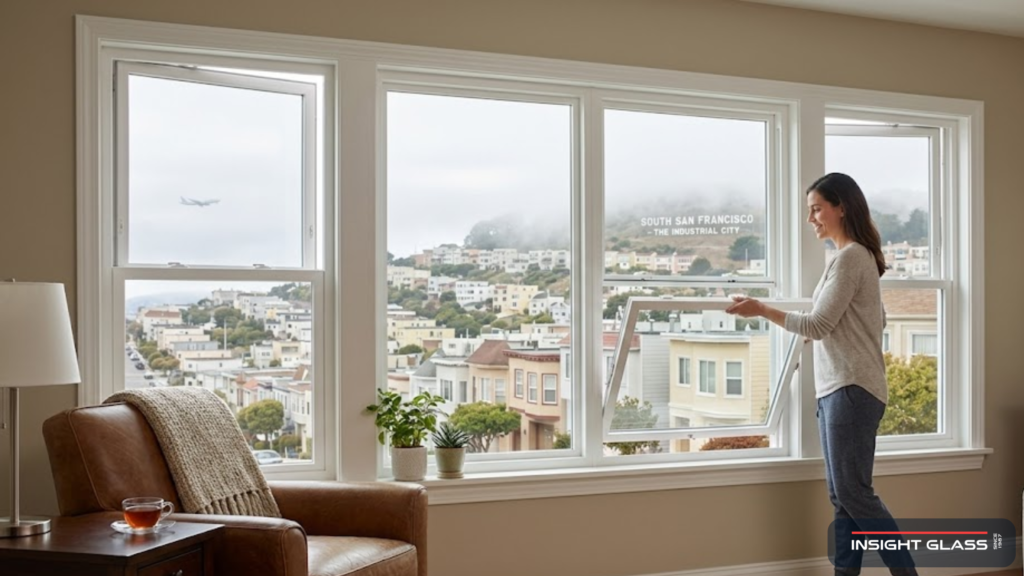
One of the most appreciated features of modern double-hung windows is the tilt-in sash mechanism. Both the upper and lower sashes pivot inward from the frame, allowing homeowners to clean the exterior glass surface from inside the house. This matters especially in South San Francisco, where second-story windows on hillside homes can be difficult or dangerous to reach from outside.
The tilt-in function requires no tools and no special technique. Disengage the sash locks at the top corners, tilt the sash toward you, clean both sides of the glass, and snap it back into position. The entire process takes less than a minute per sash. For homeowners accustomed to hiring window cleaners or wrestling with ladders, tilt-in sashes eliminate an ongoing maintenance burden entirely.
Ventilation Control That Works With Coastal Weather
The dual-sash design of double-hung windows creates a ventilation pattern that single-hung and sliding windows cannot match. Opening the top sash allows warm air near the ceiling to escape, while opening the bottom sash draws in cooler air at floor level. Operating both sashes simultaneously generates a natural convection loop that circulates fresh air through the room without mechanical assistance.
This matters in South San Francisco because the weather rarely demands air conditioning — daytime temperatures hover in the mid-fifties to low sixties for much of the year. What SSF homeowners need is the ability to selectively manage airflow. On mornings when fog sits heavy, keep the windows closed and let the insulated glass keep the interior warm. When the afternoon sun breaks through and temperatures climb, open both sashes a few inches and let the stack effect do the work.
The ability to partially open either sash also provides a measure of security that fully open windows do not. A top sash that cracks three inches allows ventilation while remaining essentially inaccessible from the outside — a practical consideration for ground-floor windows in any urban neighborhood.
Energy Efficient Glass That Reduces Utility Costs
Modern double-hung windows are engineered to be energy-efficient in ways older units simply were not. Dual-pane insulated glass with Low-E coatings and argon gas fill is now the baseline specification, and the performance gains over single-pane glass are substantial. Low-E coatings reflect infrared radiation back into the room during cooler months and block solar heat gain during warmer periods, reducing the workload on heating and cooling systems throughout the year.
For South San Francisco homes, where heating accounts for the majority of energy costs due to the cool coastal climate, the thermal improvement from replacing old single-pane double-hung windows with insulated units typically reduces heating bills by fifteen to twenty-five percent. That translates into real-dollar savings every month, and the cumulative effect over the lifespan of the window — typically 30 years or more — far exceeds the initial investment.
California’s Title 24 energy code sets specific U-factor and solar heat gain coefficient requirements for replacement windows, and all modern double-hung windows from reputable manufacturers meet or exceed these standards. Homeowners replacing windows in South San Francisco can be confident that code-compliant units will deliver meaningful energy performance without requiring special upgrades.
The Replacement Process: What SSF Homeowners Should Expect
The most common approach for residential double-hung window replacement is the pocket method, in which the new window is inserted directly into the existing frame opening after the old sashes and hardware are removed. This method preserves the interior and exterior trim, avoids disruption to surrounding wall finishes, and typically takes one to two hours per window.
The process begins with precise measurement of the existing opening — width and height taken at three points each to account for settling or irregularity in the frame. The replacement window is ordered slightly smaller than the smallest measurement to ensure it fits. On installation day, the old sashes come out, the frame cavity is cleaned and inspected for rot or damage, and the new unit is set in place with sealant, shims, and installation screws. Low-expansion foam is applied to the perimeter gap for insulation, and the interior trim is reinstalled.
Full-frame replacement is the alternative when the existing frame is compromised. This involves removing the entire window assembly down to the rough framing, which costs more and takes longer, but provides the opportunity to address structural issues and install a slightly larger glass area. A qualified installer will assess the frame condition during the initial measurement visit and recommend the appropriate method.
Cost Expectations and Long-Term Value
Homeowners can expect to invest between $400 and $1,000 per window for a standard double-hung replacement, depending on size, frame material, and glass specifications. Vinyl frames represent the most cost-effective option and offer excellent moisture resistance for SSF’s damp climate. Fiberglass frames cost more but provide superior structural rigidity and a longer lifespan. Wood frames with exterior cladding deliver the warmest interior aesthetic but require the highest investment.
The return extends beyond energy savings. Updated double-hung windows improve curb appeal, reduce exterior noise from nearby SFO airport flight paths and Highway 101 traffic, and increase the assessed property value. In South San Francisco’s competitive real estate market, modern windows signal a well-maintained home — a detail that buyers notice immediately.
Insight Glass works with South San Francisco homeowners to select the right double hung window specifications for each home’s architecture, climate exposure, and budget, ensuring that every replacement delivers lasting performance and value.
Since 1987, Insight Glass has provided top-quality windows replacement or installation in the Bay Area.
Call 707-746-6571 for Expert Installation!
CONTACT US TO GET A FREE ESTIMATE!Disclaimer: This article is for informational purposes only. Window requirements vary by property and project scope. Always consult your local building department and a qualified professional for guidance specific to your home.