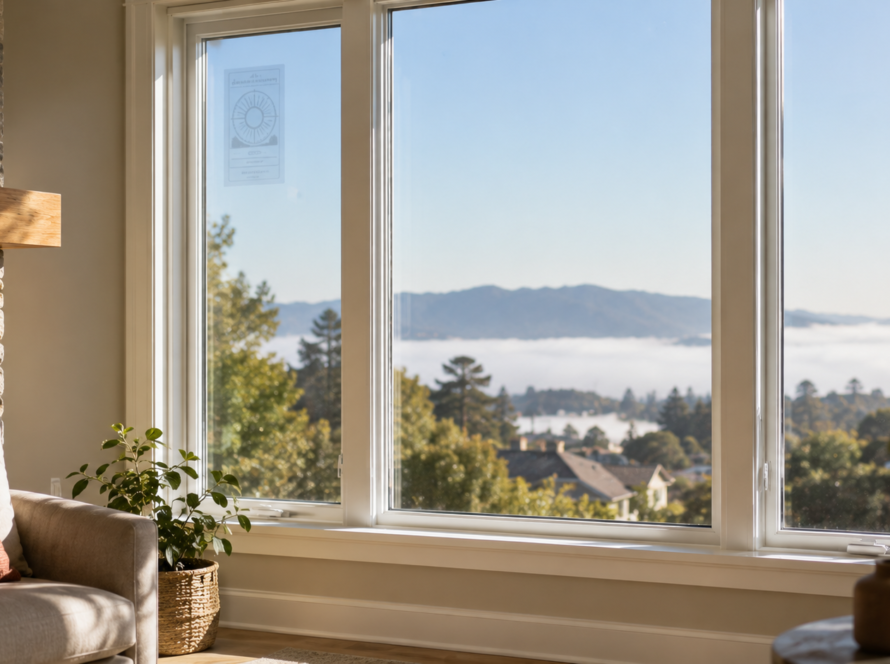
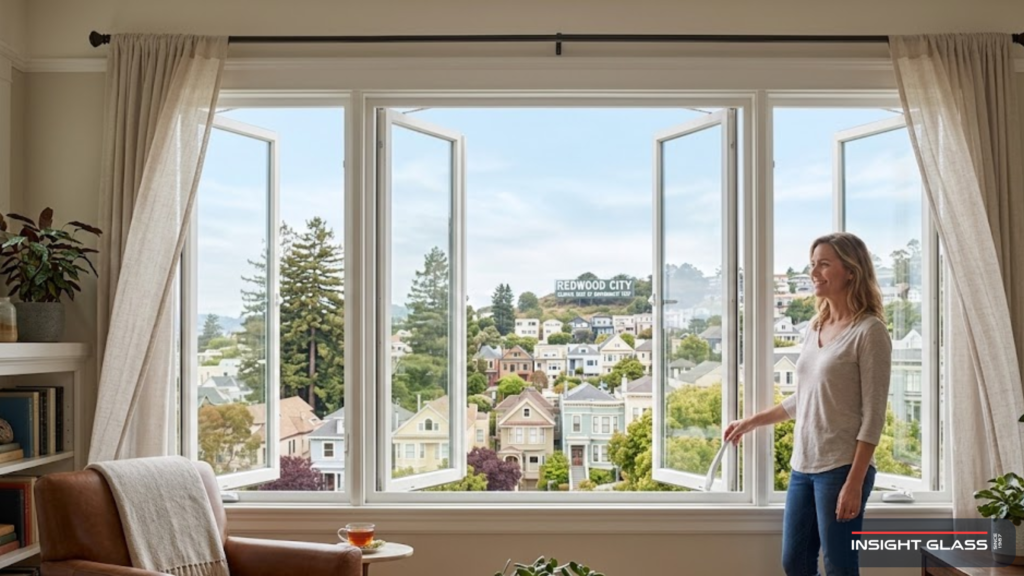
Replacing casement windows in a Redwood City home is one of the most effective ways to improve indoor comfort without increasing energy costs. Redwood City holds a well-earned reputation as one of the warmest cities on the San Francisco Peninsula — its downtown sign has famously declared “Climate Best By Government Test” since 1929. Summer afternoons routinely push into the mid-eighties and low nineties, significantly warmer than fog-cooled San Francisco just thirty miles north. For homeowners here, the casement window is not just a design preference. It is a climate strategy.
A casement window is hinged on one side of the window frame and swings outward using a crank handle. When the sash is fully open, the entire window opening is unobstructed, allowing maximum airflow into the room. This is fundamentally different from double-hung or sliding windows, where only half the window area is available for ventilation at any given time. In a city where natural cooling matters, that difference is significant.
How Casement Windows Create Cross-Ventilation
Cross-ventilation occurs when air enters through one opening and exits through another on the opposite or adjacent wall, creating a continuous breeze through the living space. Casement windows are uniquely effective at driving this airflow because the outward-swinging sash acts as a scoop, catching lateral breezes and redirecting them indoors.
In Redwood City, prevailing afternoon winds flow from the northwest as marine air pushes through the gaps in the coastal range. Positioning casement windows to open and close in alignment with this wind pattern turns the home’s natural orientation into a passive cooling system. A casement window on the windward side of the house captures incoming air while another on the leeward side allows warm interior air to escape. The result is a steady, natural breeze that reduces indoor temperatures without running the air conditioner.
This passive approach to cooling aligns with California’s broader energy efficiency goals and its Title 24 building standards, which encourage reduced mechanical cooling in residential construction. Homeowners who invest in replacement casement windows designed for optimal ventilation are making a choice that benefits both comfort and long-term operating costs.
When Replacement Makes More Sense Than Repair
Not every casement window issue requires full replacement. If the frame remains structurally sound and the weatherstripping simply needs refreshing, a repair may be the more cost-effective path. However, several conditions clearly indicate that replacing casement windows is the better investment.
Warped or rotting frames compromise the seal between the window and the wall, allowing air infiltration that no amount of caulk can permanently fix. Broken or stripped crank mechanisms make the window difficult to open and close, defeating the purpose of a casement design. Moisture trapped between the panes of an insulated glass unit signals seal failure — the glass will remain permanently fogged, and the unit’s insulating value will drop to nearly zero.
Single-pane casement windows in older Redwood City homes present the clearest case for replacement. These units offer minimal thermal resistance, transmit exterior noise freely, and provide none of the energy efficiency benefits that modern insulated glass delivers. Upgrading to dual-pane Low-E glass with argon fill transforms the window from an energy liability into an energy asset.
Full-Frame vs. Pocket Replacement
Homeowners replacing casement windows have two installation approaches to consider. A pocket replacement — sometimes called an insert replacement — places the new window unit inside the existing frame after removing the old sash and hardware. This method works well when the existing frame is square, plumb, and undamaged. It preserves interior and exterior trim, reduces installation time, and typically costs less than the alternative.
A full-frame replacement removes everything — sash, frame, trim, and flashing — down to the rough opening in the wall. The new window assembly installs from scratch with fresh flashing, insulation, and sealant. This approach is necessary when the existing frame shows rot, structural damage, or significant racking that prevents a new insert from sealing properly. Full-frame replacement costs more and takes longer, but it addresses underlying problems that a pocket insert would simply cover up.
A qualified installer will assess the frame condition during the measurement visit and recommend the appropriate method. Skipping this assessment and defaulting to a pocket replacement when the frame is compromised can result in air leaks, water intrusion, and premature failure of the new window.
Choosing the Right Frame Material for Redwood City
Frame material affects durability, maintenance requirements, thermal performance, and cost. Vinyl frames offer the best value for most Redwood City homeowners — they resist moisture, never need painting, and provide good thermal insulation through multi-chambered construction. Fiberglass frames deliver superior strength and dimensional stability, expanding and contracting less than vinyl under Redwood City’s temperature swings. Wood frames with aluminum or fiberglass exterior cladding offer the warmest interior aesthetic, while the cladding handles weather exposure.
All three materials are available in replacement casement configurations and meet California Title 24 requirements when paired with appropriate insulated glass units. The choice ultimately comes down to budget, aesthetic preference, and how long the homeowner plans to stay in the home. Vinyl delivers the fastest return on investment, while fiberglass and clad wood offer longer lifespans and premium curb appeal.
Cost Expectations and Return on Investment
Homeowners can expect to pay between $600 and $1,300 per installed replacement casement window, depending on size, frame material, glass specifications, and whether the project requires pocket or full-frame installation. A typical Redwood City home with ten to fifteen windows and doors represents a total project investment of $6,000 to $19,500.
The return comes from multiple directions. Energy savings from improved insulation and reduced reliance on air conditioning accumulate month by month. Increased property value reflects the visible upgrade in a competitive Peninsula real estate market where buyers scrutinize every detail. Reduced maintenance eliminates the recurring cost of repainting, re-caulking, and repairing aging window hardware.
Insight Glass helps Redwood City homeowners evaluate their existing windows and doors, select the right replacement casement specifications, and ensure professional installation that maximizes both performance and value for Peninsula living.
Since 1987, Insight Glass has provided top-quality windows replacement or installation in the Bay Area.
Call 707-746-6571 for Expert Installation!
CONTACT US TO GET A FREE ESTIMATE!Disclaimer: This article is for informational purposes only. Window requirements vary by property and project scope. Always consult your local building department and a qualified professional for guidance specific to your home.