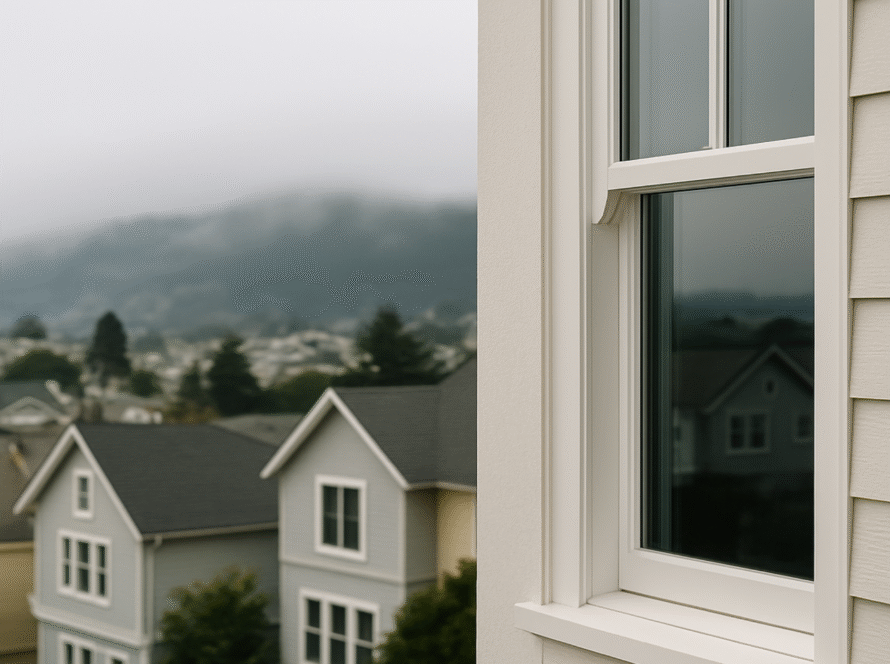
Oakland is a city of distinctive homes. From the craftsman bungalows of Rockridge and Temescal to the charming cottage-style houses throughout the Glenview and Crocker Highlands neighborhoods, the East Bay’s residential architecture has a character all its own. When homeowners in these neighborhoods begin exploring window replacement options, one question comes up consistently: What is a casement window, and is it a good fit for my home?
The answer, for many Oakland homeowners, is yes. Casement windows offer a combination of ventilation, energy performance, and clean design that makes them particularly well-suited to the East Bay’s mild climate and the architectural styles that define the city’s most desirable neighborhoods.
How Casement Windows Work
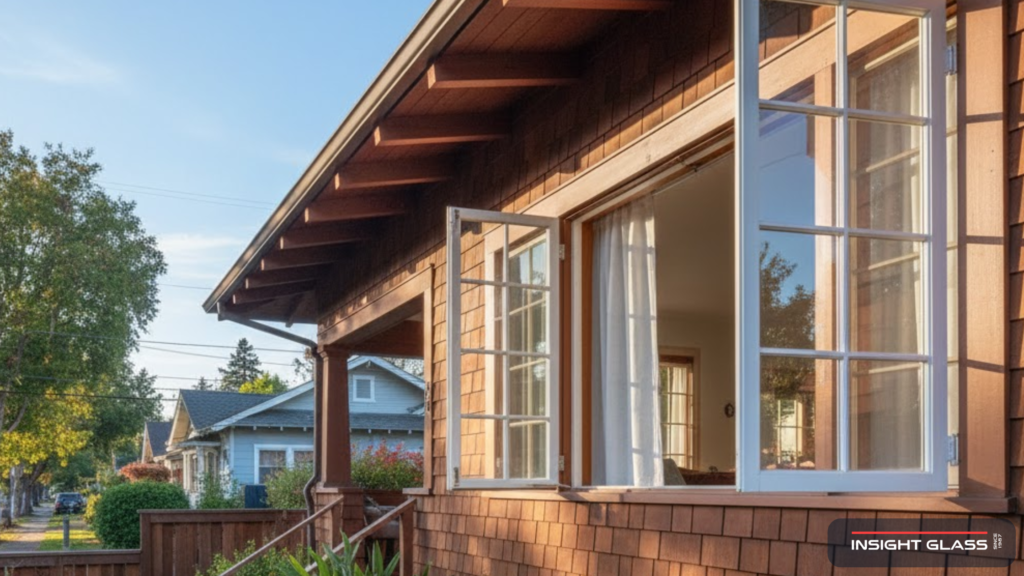
A casement window is a single-sash window hinged on one side and swinging outward, typically operated by a hand crank mounted at the base of the frame. Unlike a double-hung window, where sashes slide vertically within the frame, or a sliding window that moves horizontally along a track, a casement window opens outward at its hinge, like a small door. When you turn the crank to open the window, the entire sash pivots away from the frame, creating a wide, unobstructed opening.
This design is what sets casement windows apart from other types of windows. Because the sash opens fully, casement windows offer significantly more ventilation than windows that only open halfway. The outward swing also means there is no sash blocking your view when the window is open, allowing maximum natural light and a clear sightline from living rooms, kitchens, and bedrooms.
The hand-crank mechanism makes casement windows especially practical in locations where it might be difficult to open the window by lifting or sliding. Above a kitchen sink, behind a couch, or in any spot where reaching up to push or pull a sash would be awkward, the simple crank lets you open and close the window with minimal effort.
Why Casement Windows Are Among the Most Energy Efficient Options
One of the most important advantages of casement windows is their energy performance. When you close a casement window and engage the locking mechanism, the hardware pulls the sash firmly against the window frames, compressing the weatherstripping to create a tighter seal than most other window styles can achieve. With a double-hung or sliding window, the sash must slide freely within the frame, so there is always some tolerance in the fit. Casement windows do not have that limitation.
This tighter seal translates directly into better insulation. In Oakland’s mild East Bay climate, where temperatures rarely reach extremes, but cool marine air can push through gaps in older windows, that improved seal helps maintain a comfortable interior without overworking a heating system. When paired with dual-pane Low-E glass and argon gas fill, energy-efficient casement windows easily meet and exceed California’s Title 24 energy requirements.
There is also a natural ventilation advantage specific to the casement design. Because the window opens outward, it can act as a scoop, catching passing breezes and directing fresh air into the home. In Oakland, where summer days are warm but evenings cool, this ability to channel airflow through a room is a practical, energy-saving benefit that reduces reliance on mechanical cooling.
Egress Compliance for Oakland Bedrooms
California building code requires that every bedroom have at least one egress window, a window large enough and accessible enough to serve as an emergency exit. The requirements specify a minimum opening of 5.7 square feet, a width of at least 20 inches, a height of at least 24 inches, and a sill no higher than 44 inches above the floor.
Casement windows are one of the best types of windows for meeting egress requirements. Because the entire sash swings open, the full width and height of the window opening is available as an exit path. There is no sash blocking half the opening, as there would be with a double-hung window or a slider. For Oakland homeowners adding bedrooms during a remodel, converting a garage into a living space, or building an accessory dwelling unit, casement windows simplify egress compliance while still looking clean and modern.
A Natural Fit for Oakland’s Craftsman and Bungalow Homes
Oakland’s craftsman and bungalow homes were originally built with an emphasis on natural materials, handcrafted details, and a connection between the interior and the outdoors. Casement windows complement that philosophy. Their simple, uncluttered lines and wide glass area bring in generous natural light without the visual division of a double hung window’s meeting rails. When windows hinged on the side, they create an immediate sense of openness and connection to the garden, porch, or street outside.
For homeowners who want to preserve the character of a craftsman home while upgrading performance, casement windows strike the right balance. They look equally at home in a 1920s bungalow and a contemporary renovation, making them one of the most versatile window choices available.
At Insight Glass, we help Oakland homeowners select and install casement windows that match their home’s style, meet California energy codes, and deliver the ventilation and comfort that the East Bay climate makes possible. If you are considering new windows for your Oakland home, we are here to help you find the right fit.
Since 1987, Insight Glass has provided top-quality windows replacement or installation in the Bay Area.
Call 707-746-6571 for Expert Installation!
CONTACT US TO GET A FREE ESTIMATE!Disclaimer: This article is for informational purposes only. Window requirements vary by property and project scope. Always consult your local building department and a qualified professional for guidance specific to your home.