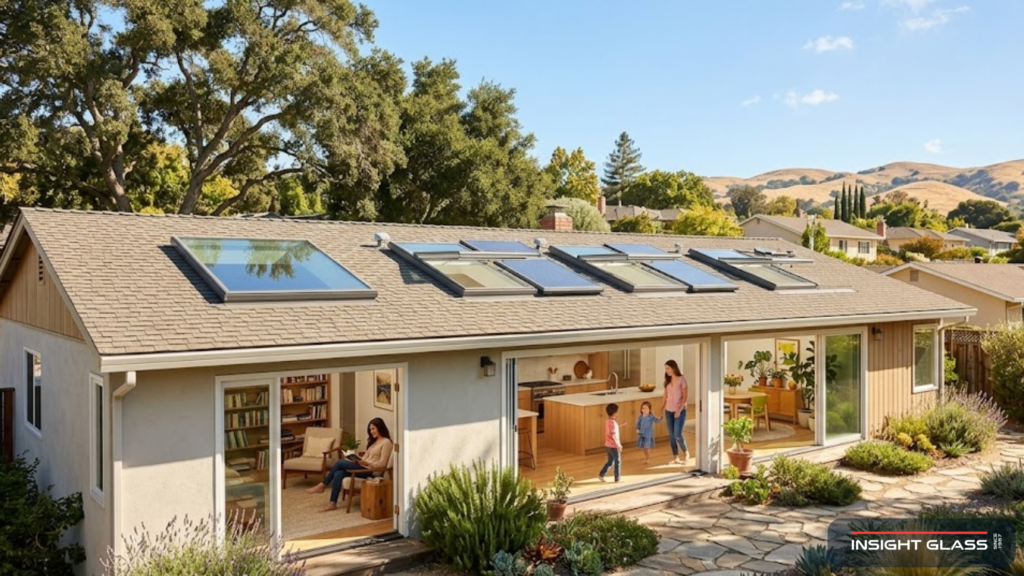
Adding a skylight for roof installation in a Concord home addresses two realities of living in inland Contra Costa County — the need for natural light in single-story interiors and the challenge of managing heat that builds under the roofline during the warmer months. Concord sits in the East Bay’s sun belt, sheltered from the coastal fog that keeps San Francisco and the Peninsula cool for much of the year. Summer temperatures here regularly reach the mid-nineties, and even spring and fall afternoons push comfortably into the eighties. That abundant sunshine is an asset for daylighting, but it also demands thoughtful skylight selection to avoid turning a bright room into an overheated one.
Concord’s residential neighborhoods — from the established homes near Todos Santos Plaza to the subdivisions stretching toward Clayton and the base of Mount Diablo — are heavily composed of single-story ranch and tract-style homes built from the 1960s through the 1980s. These floor plans often place kitchens, hallways, and bathrooms in the center of the house, far from exterior walls and their windows. Without overhead glazing, these interior zones rely entirely on artificial lighting during daytime hours.
Fixed vs. Vented Skylights: Choosing What Concord Homes Need
A fixed skylight is a sealed unit that admits natural light but does not open. It costs less, has no moving parts to maintain, and works well in spaces where the sole objective is brightness — hallways, closets, stairwells, and rooms where ventilation is already handled by other windows.
A vented skylight opens to release warm air that naturally rises and accumulates at the ceiling. In Concord, where interior temperatures climb quickly on summer afternoons, this venting capability is not a luxury — it is a practical cooling mechanism. Hot air exits through the open skylight while cooler air draws in through lower windows and doorways, creating a passive ventilation loop that reduces the home’s dependence on air conditioning.
Motorized vented skylights take this a step further. Built-in rain sensors close the unit automatically when moisture is detected, and programmable timers can open the skylight during cooler morning and evening hours to pre-cool the home before daytime heat builds. For Concord homeowners who leave for work before the hottest part of the day, this automation ensures the house manages its own temperature without manual intervention.
Solar Shades: Managing Heat and Glare
A skylight for roof installation in a sun-intensive climate like Concord should include some form of shading. Solar-powered blinds mount inside the skylight frame and adjust to filter incoming sunlight, reducing heat gain and glare while still allowing diffused natural light to illuminate the room below.
These shades operate on small photovoltaic cells built into the frame, so they require no wiring or electrical connection. A remote control or smart home integration allows adjustment from anywhere in the room. During peak afternoon sun, closing the blinds blocks most solar heat gain while maintaining a soft, ambient glow. In the morning and evening, opening the blinds fully lets in maximum daylight when the sun is lower in the sky, and the heat intensity is reduced.
The combination of Low-E coated glass and adjustable solar shades gives Concord homeowners precise control over the balance between brightness and thermal comfort — a balance that shifts throughout the day and across seasons.
Glass Specifications That Work for Inland Heat
Skylight glass selection matters more in Concord than it does in cooler coastal cities. Dual-pane insulated glass with Low-E coatings and argon gas fill is the minimum specification for any inland East Bay installation. The Low-E coating reflects infrared radiation, preventing a significant portion of solar heat from entering the room while allowing visible light to pass through.
Solar heat gain coefficient ratings between 0.22 and 0.35 are appropriate for Concord’s climate, keeping heat transfer manageable without making the skylight feel dim. These specifications meet California Title 24 energy code requirements and ensure that the skylight contributes natural light without working against the home’s cooling system.
Laminated inner glass adds a safety layer — if the pane cracks from impact or thermal stress, the interlayer holds fragments together rather than allowing them to fall into the living space below.
Cost Expectations and Practical Value
A skylight for roof installation typically costs between $1,000 and $3,500, depending on size, type, glass specifications, and whether the unit is fixed or vented with solar shades. Curb-mounted installations on low-slope roofs — common in Concord’s ranch homes — are generally less complex than deck-mounted installations on steeper pitches, which can reduce labor costs.
The return on investment comes through reduced daytime lighting costs, lower air conditioning bills from passive venting, and the intangible but real improvement in daily living quality that overhead natural light provides.
Insight Glass helps Concord homeowners select skylight specifications engineered for Contra Costa County’s inland climate — balancing brightness, heat management, and energy performance for homes that deserve to feel as bright inside as the California sun shining outside.
Since 1987, Insight Glass has provided top-quality windows replacement or installation in the Bay Area.
Call 707-746-6571 for Expert Installation!
CONTACT US TO GET A FREE ESTIMATE!Disclaimer: This article is for informational purposes only. Window requirements vary by property and project scope. Always consult your local building department and a qualified professional for guidance specific to your home.