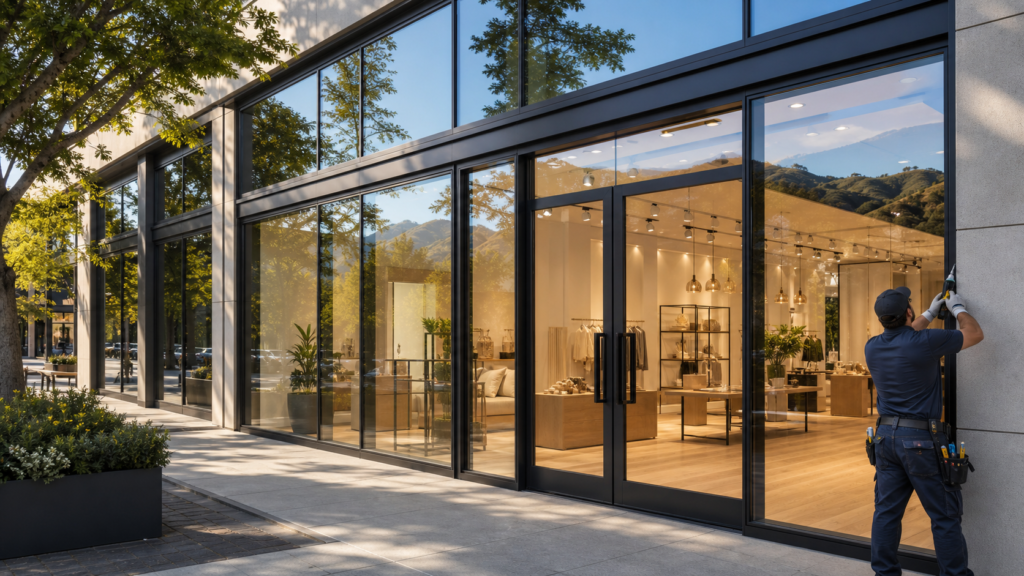
Storefront glass makes up most of the front wall on many commercial buildings. Every square foot of it either manages heat transfer or leaks money. For GCs, developers, property managers, and business owners, energy-efficient storefront windows pay off three ways at once. They keep people comfortable, they lower utility costs, and they help the building meet energy code.
This guide explains what makes a storefront system energy efficient, why it matters in Bay Area weather conditions, and what to look for on your next project.
Table of Contents
- Why Energy Efficiency Matters at the Storefront
- What Makes a Storefront Window Energy Efficient
- Natural Light Without the Heat Gain
- What Do Energy-Efficient Storefront Windows Cost?
- What Energy-Efficient Storefronts Deliver for Commercial Buyers
- Aluminum Frames, Recycled Content, and Long-Term Value
- Choosing Energy-Efficient Storefront Windows for Your Bay Area Project
Why Energy Efficiency Matters at the Storefront
Glass is the weakest thermal link in most building envelopes. A storefront wall that is mostly glass multiplies that effect.
Bay Area weather conditions raise the stakes. A Walnut Creek or Livermore storefront bakes through 90 degree summer afternoons. A foggy Daly City or Berkeley frontage sheds heat most mornings of the year. The same building design can perform very differently from one microclimate to the next. Glass and framing choices should match the site, not just the budget.
What Makes a Storefront Window Energy Efficient
Commercial storefront framing is almost always aluminum, and for good reason. Aluminum frames are slim, durable, and available in finishes that suit nearly any building design. Bare aluminum moves heat quickly, though. High performance systems add a few key parts to control it:
Thermal Breaks
A thermal break is a strip of low-conductivity material set between the inner and outer faces of the frame. It blocks the path of heat transfer, so conditioned air stays in your interior space and outdoor temperatures stay outside.
Low-E Insulated Glass Units
Dual-pane units with a Low-E (low-emissivity) coating reflect radiant heat while letting natural light pass through. In warm inland cities, a solar control Low-E coating stops most unwanted heat gain before it reaches the sales floor.
Verified Ratings
U-Factor measures how well the assembly resists heat flow, and lower is better. SHGC (Solar Heat Gain Coefficient) measures how much solar heat passes through the glass. Ask for NFRC-rated assemblies so the numbers cover the whole window and door system, not just the glass. ENERGY STAR labels apply to homes, so commercial specs lean on NFRC ratings and Title 24 targets.
Careful Installation
Even the best unit falls short when it is poorly flashed, sealed, or anchored. Air leaks around the frame can undo much of what the glass package achieves.
Natural Light Without the Heat Gain
Daylight is the main reason storefront glazing exists. A bright interior space shows merchandise better and feels more welcoming. It also reduces the need for artificial lighting during business hours, which trims lighting costs on top of the HVAC savings.
The challenge is capturing that natural light without the heat that usually rides along with it. Modern Low-E coatings are spectrally selective, which means they pass visible light while turning away most infrared heat. The result is a storefront that stays bright and comfortable, where staff and customers can sit next to the glass without sitting in a hot spot.
Scoping a storefront project? Insight Glass specs, bids, and installs energy-efficient storefront systems across the Bay Area, with COIs and Title 24 documentation included.
Call 707-746-6571What Do Energy-Efficient Storefront Windows Cost?
In the Bay Area, a thermally broken aluminum storefront with tempered, Low-E insulated glass typically runs $90 to $140 per square foot installed. Upgraded glass packages, such as laminated or spectrally selective units, run $130 to $180. Our commercial storefront window cost guide breaks down the full pricing line by line.
| Glass & Frame Package | Typical Installed Cost (per sq ft) |
|---|---|
| Standard: thermally broken aluminum, tempered IGU, basic Low-E | $90–$140 |
| Upgraded: laminated or spectrally selective glass, custom finishes | $130–$180 |
What Energy-Efficient Storefronts Deliver for Commercial Buyers
Each side of a commercial project sees the payoff differently:
GCs & Developers
A cleaner path to Title 24 compliance, U-Factor and SHGC values they can plug into the energy model, and fewer comfort callbacks after turnover.
Property Managers
Lower utility spend across the portfolio and fewer hot and cold calls from tenants. Less load on rooftop HVAC equipment also extends its service life.
Business Owners
An interior space that stays comfortable at the glass line, displays that read clearly in natural light, and utility savings that repeat every month the doors are open.
Aluminum Frames, Recycled Content, and Long-Term Value
Energy efficiency also supports the sustainability goals on many Bay Area projects. Architectural aluminum framing typically contains a high share of recycled content, and the metal can be recycled again at the end of its service life. Aluminum also resists corrosion in coastal weather conditions, from salt air in Alameda to winter storms in Daly City. A thermally broken storefront keeps performing for decades with basic upkeep, so the energy efficiency you spec today compounds over every year the building operates.
Choosing Energy-Efficient Storefront Windows for Your Bay Area Project
The right spec depends on orientation, microclimate, and how the interior space is used. A south-facing San Jose retail front needs a different glass package than a shaded Oakland office lobby. An experienced installer will walk the site before recommending one.
Insight Glass installs thermally broken aluminum commercial storefront windows with Low-E insulated glass across the Bay Area, from Solano and Contra Costa counties to the Peninsula and South Bay. Pricing a new build, a tenant improvement, or a multi-site upgrade? Send us your plans or openings. Call 707-746-6571 or request a free consultation and commercial bid. We will spec a high performance storefront that fits your building and your numbers.
Insight Glass — your Bay Area window experts since 1987.
Call 707-746-6571 for a Free Quote!
REQUEST A COMMERCIAL BID