A glass window sliding design embodies the kind of understated functionality that Mountain View homeowners value — clean horizontal lines, maximum glass area, effortless operation, and a profile that complements both mid-century architecture and contemporary new construction. Mountain View sits at the heart of Silicon Valley, where residential neighborhoods blend post-war ranch homes from the 1950s and 1960s with modern builds that reflect the city’s forward-looking character. Sliding windows fit both eras naturally because their design philosophy has always prioritized simplicity, unobstructed views, and practical performance over ornamental complexity.
Unlike casement or double-hung windows, which rely on hinges or vertical counterbalance systems, sliding windows operate on a horizontal track. One or both sashes glide left or right to open, requiring no clearance space on the interior or exterior of the home. This makes them particularly well-suited for rooms that face walkways, patios, decks, or side yards where an outward-swinging sash would create an obstruction.
Why Sliding Windows Match Mountain View Architecture
Mountain View’s residential landscape tells two distinct architectural stories. The first is the mid-century ranch home — single-story, low-roofed, with a horizontal emphasis and wide window openings designed to connect indoor living spaces with the California outdoors. The second is the new-construction home — often two stories, built on subdivided lots, featuring clean, contemporary lines and open floor plans that maximize every square foot of buildable space.
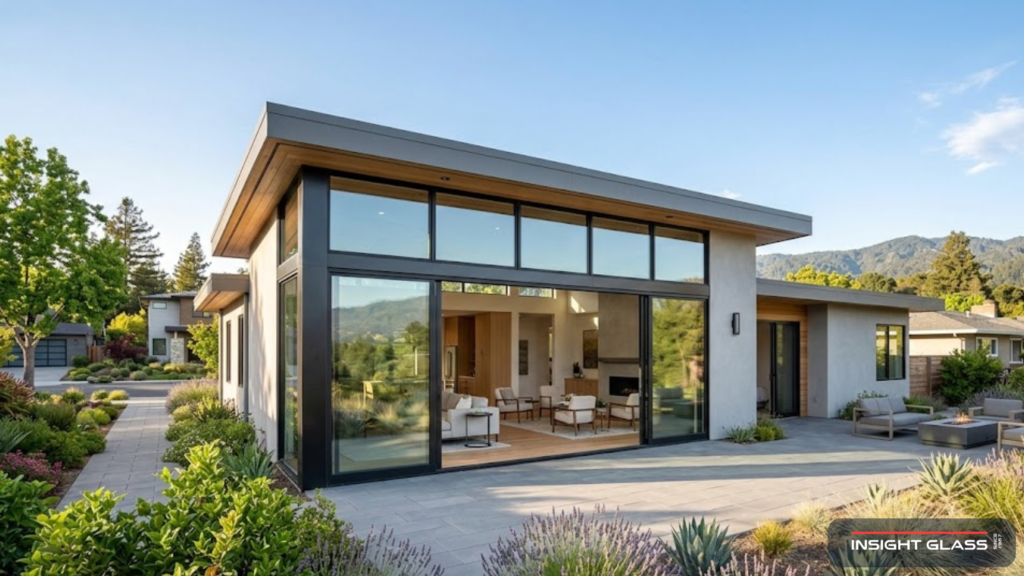
Sliding windows serve both styles because their horizontal orientation echoes each style’s design language. On a ranch home, a wide sliding window reinforces the low, ground-hugging profile that defines the style. On a contemporary build, floor-to-ceiling sliding windows create expansive glass walls that blur the boundary between interior rooms and outdoor living areas. The aesthetic works because it does not compete with the architecture — it extends it.
The generous glass area of sliding windows also addresses a practical concern shared by many Mountain View homes: natural light. Single-story ranch homes with deep floor plans can struggle with interior brightness, especially in central hallways and kitchens set back from exterior walls. A wide sliding window with minimal frame profiles admits significantly more daylight than an equivalent opening filled with a multi-lite double hung or casement unit. More glass, fewer mullions, more light — the equation is straightforward.
How Sliding Windows Improve Ventilation Without Complexity
Mountain View enjoys a Mediterranean climate with warm, dry summers and mild winters. Daytime temperatures from June through September regularly reach the mid-eighties and low nineties, making natural ventilation a genuine alternative to air conditioning for much of the year. Sliding windows support this passive cooling strategy through simple, reliable operation.
Opening a sliding window requires a single horizontal push. There are no cranks to turn, no sashes to lift against gravity, and no mechanical hardware that wears out over time. This simplicity translates to long-term reliability — sliding windows have fewer moving parts than virtually any other operable window type, which means fewer maintenance issues and a longer functional lifespan.
For rooms that require emergency egress — particularly bedrooms — sliding windows offer an advantage. Their wide horizontal openings often meet or exceed the minimum clear-opening dimensions required by the California Building Code, providing a safe exit path in emergencies. This is especially relevant in Mountain View’s older ranch homes, where bedroom windows may currently fall below modern egress standards and need upgrading during renovation.
Ventilation control is straightforward. Slide the sash partially open for gentle airflow or fully open for maximum ventilation. Pair sliding windows on opposite walls to create cross-ventilation that moves air through the room without mechanical assistance. On Mountain View evenings when temperatures drop into the comfortable low sixties, this natural airflow pattern cools the home efficiently while reducing energy consumption.
Energy Efficiency in a Sliding Window Design
Modern sliding windows deliver energy efficiency that earlier generations of the design could not approach. Contemporary units feature dual-pane, insulated glass with Low-E coatings and argon gas fill as standard. The Low-E coating reflects infrared radiation, keeping interior spaces warmer in winter and cooler in summer without reducing visible light transmission. Argon gas between the panes slows heat conduction more effectively than air alone, improving the overall thermal performance of the glass unit.
Frame material also contributes to energy performance. Vinyl frames with multi-chambered construction provide thermal breaks that reduce heat transfer through the frame itself. Fiberglass frames offer similar thermal performance with greater structural rigidity, maintaining tight sash-to-frame contact that minimizes air infiltration over the years of operation.
Weatherstripping and track design have also evolved significantly. Modern sliding windows use interlocking weatherstripping that compresses when the sash is closed, creating a seal that resists both air and water infiltration. Weep holes in the track system drain any moisture that enters the channel, preventing pooling and water damage — an important detail in Mountain View, where winter rain can be persistent.
All of these specifications align with California’s Title 24 energy code, which sets mandatory U-factor and solar heat gain coefficient thresholds for replacement windows. Homeowners replacing older single-pane sliding windows with modern insulated units typically see measurable reductions in heating and cooling costs from the first month after installation.
Maintenance That Stays Simple
One of the most practical advantages of sliding windows is their low maintenance profile. Routine care involves cleaning the track channel to remove accumulated dust and debris — a task that takes minutes with a vacuum attachment or stiff brush. If a sash begins to feel heavy or resist smooth movement, the rollers beneath the sash may need a light application of silicone lubricant to restore effortless operation.
Periodic inspection of weatherstripping ensures that seals remain intact and energy performance remains steady. Vinyl and fiberglass frames require no painting or staining — occasional cleaning with mild soap and water maintains their appearance indefinitely.
Cost Expectations for Mountain View Homeowners
Sliding window replacement typically costs between $775 and $1,650 per window installed, depending on size, frame material, glass specifications, and installation complexity. Larger openings and multi-panel configurations fall at the higher end of the range. For a typical Mountain View home with eight to twelve windows, the total project investment ranges from $6,200 to $19,800.
The return extends beyond energy savings. Updated sliding windows improve the visual coherence of both ranch and contemporary homes, reduce exterior noise from nearby Highway 101 and Caltrain corridors, and increase assessed property value in one of the Bay Area’s most competitive real estate markets.
Insight Glass works with Mountain View homeowners to select sliding window specifications that match each home’s architectural character, climate exposure, and performance requirements — delivering clean modern functionality that lasts.
Since 1987, Insight Glass has provided top-quality windows replacement or installation in the Bay Area.
Call 707-746-6571 for Expert Installation!
CONTACT US TO GET A FREE ESTIMATE!Disclaimer: This article is for informational purposes only. Window requirements vary by property and project scope. Always consult your local building department and a qualified professional for guidance specific to your home.