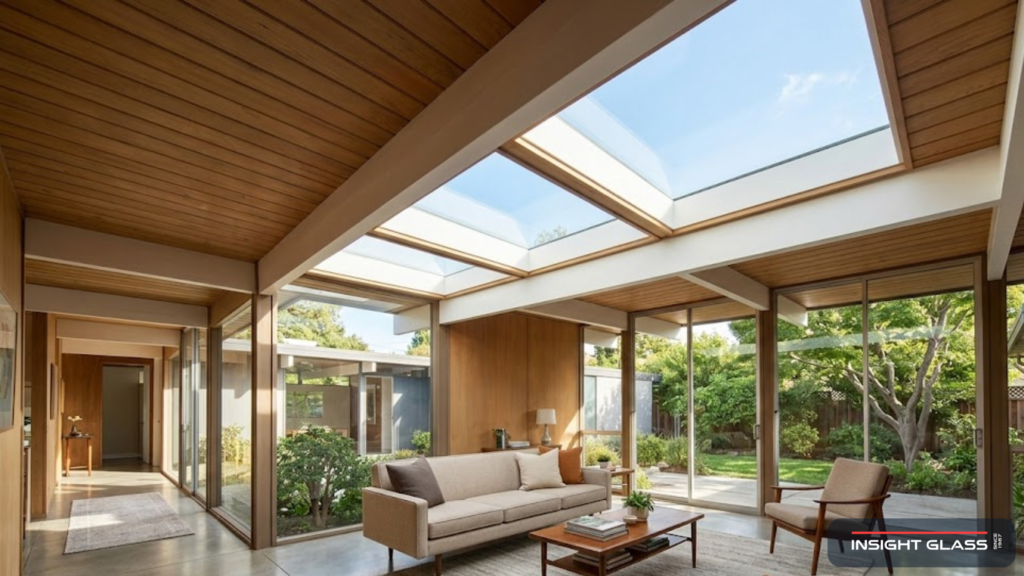
A large skylight window does something no vertical window can replicate — it pours natural daylight directly down into a room from overhead, transforming dark interiors into bright, open living spaces. Palo Alto is home to some of the Bay Area’s finest mid-century modern architecture, where low-slung rooflines and open floor plans blur the boundary between indoor and outdoor living. Installing skylight units in these homes honors the original design intent while addressing a practical problem many single-story layouts share: limited access to natural light in central rooms.
Mid-century homes in Palo Alto neighborhoods like Eichler tracts, Barron Park, and Greenmeadow were built with post-and-beam construction and flat or low-slope roofs. These architectural characteristics make them ideal candidates for skylight installations, as the roof geometry accommodates flush- or curb-mounted units without requiring complex framing modifications.
Why Palo Alto Homeowners Are Choosing Smart Skylights
Silicon Valley homeowners tend to approach home improvement the same way they approach everything else — with an eye toward technology and efficiency. Smart skylights represent the intersection of both. These motorized units open and close automatically in response to rain sensors and temperature readings, allowing fresh air to circulate throughout the home without manual intervention. Built-in solar-powered blinds adjust throughout the day to manage heat gain and glare, responding to ambient light conditions in real time.
The practical benefits extend beyond convenience. A vented smart skylight replaces stale interior air with fresh air through the natural chimney effect — warm air rises and exits through the open skylight while cooler air draws in through lower windows. This passive ventilation reduces reliance on mechanical cooling, which is important during Palo Alto’s warm summers, when afternoon temperatures regularly reach the mid-eighties.
Sizing and Placement for Maximum Impact
The size of a large skylight window directly determines how much natural light enters the room below. Industry guidelines suggest that the skylight glazing area should equal roughly 5% of the floor area in rooms with additional windows and up to 15% in rooms without vertical glazing. For a typical 300-square-foot Palo Alto living room, that translates to a skylight between 15 and 45 square feet of glazing.
Placement matters as much as size. North-facing skylights deliver consistent, diffused light throughout the day without the intense heat gain associated with south or west orientations. For homeowners who want to fill a home with the beauty of natural light while keeping energy costs manageable, north-facing orientation is the most balanced choice. South-facing installations produce more light and passive solar heat, which can be advantageous during cooler months, but require Low-E-coated glass to manage summer heat gain.
Hallways, bathrooms, and kitchens benefit enormously from overhead natural daylight because these spaces often sit in the center of a floor plan, far from exterior walls. A single well-placed skylight eliminates the need for artificial lighting during daytime hours in these interior zones.
Glass Technology and Energy Performance
Modern skylight glass has advanced significantly beyond the single-pane units that earned skylights a reputation for leaking and heat loss. Double-pane insulated glass with argon fill and Low-E coatings is now standard, delivering thermal performance comparable to high-quality vertical windows. Laminated inner panes add safety — if the glass breaks, the interlayer holds fragments in place rather than allowing them to fall into the room below.
For Palo Alto’s climate, solar heat gain coefficient ratings between 0.25 and 0.40 strike the right balance between harvesting free daylight and preventing overheating. These specifications meet California Title 24 energy requirements while maximizing the practical benefits of overhead glazing.
What to Expect for Cost and Installation
A large skylight window typically costs between $1,000 and $3,500 installed, depending on size, glass specifications, and whether the unit is fixed or vented. Smart motorized models with solar-powered blinds and rain sensors fall at the upper end of that range. Curb-mounted installations on flat roofs — common in Palo Alto mid-century homes — are generally less complex than deck-mounted installations on pitched roofs, which can reduce labor costs.
Insight Glass helps Palo Alto homeowners select and install skylight solutions engineered for California’s energy standards and the unique rooflines of Silicon Valley’s mid-century modern homes.
Since 1987, Insight Glass has provided top-quality windows replacement or installation in the Bay Area.
Call 707-746-6571 for Expert Installation!
CONTACT US TO GET A FREE ESTIMATE!Disclaimer: This article is for informational purposes only. Window requirements vary by property and project scope. Always consult your local building department and a qualified professional for guidance specific to your home.