
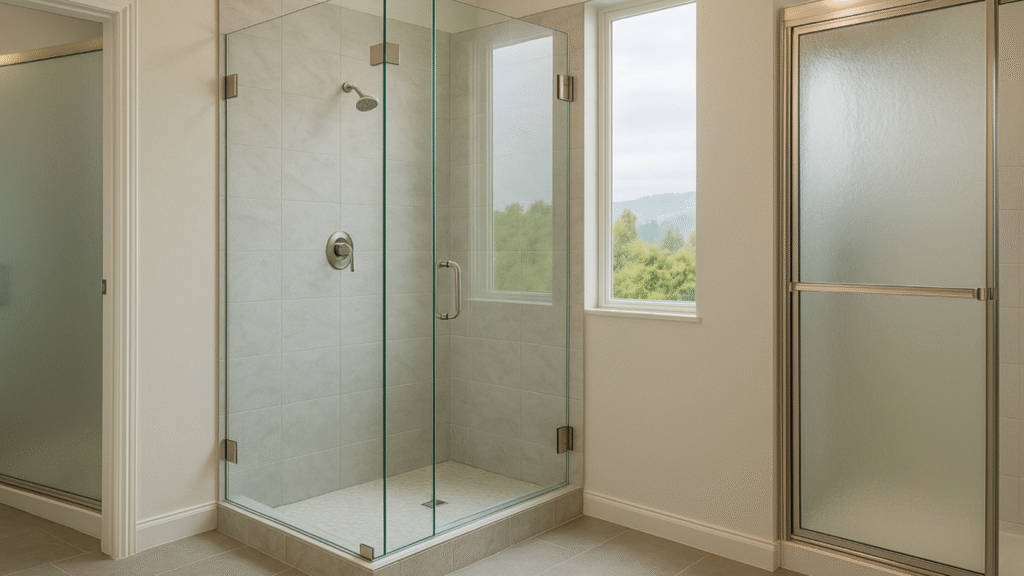
Determining what type of glass door is best for a shower depends on your bathroom size, budget, style preferences, and practical needs. Bay Area homeowners can choose from frameless, semi-frameless, framed, sliding, and pivot configurations, each offering distinct advantages for different situations.
Understanding Shower Door Types
Deciding what type of glass door is best for a shower requires understanding the options available for Bay Area bathrooms. Bathroom shower glass doors come in multiple configurations, each suited to different shower spaces, design aesthetics, and functional requirements.
The main types of shower doors are frameless, semi-frameless, and framed, based on the presence of metal framing. Additionally, doors operate differently—sliding, pivot, hinged, or fixed panels—affecting how they function within your shower space.
Understanding what type of glass door is best for a shower means matching door characteristics to your specific bathroom throughout San Francisco, Oakland, Berkeley, or elsewhere in the Bay Area. No single door type proves universally best—instead, the optimal choice depends on your priorities regarding aesthetics, budget, space, and maintenance preferences.
Frameless Shower Doors: Premium Modern Choice
Frameless shower doors represent the Premium answer to what type of glass door is best for a shower when modern aesthetics and open spaces matter most. These doors eliminate visible metal framing, using thick tempered glass that stands independently with minimal hardware.
Advantages: Frameless showers create a stunning visual impact. The lack of framing makes bathrooms feel larger and more open—particularly valuable in smaller bathrooms in the Bay Area. Clear sight lines showcase beautiful tile work and fixtures without metal barriers interrupting views.
Cleaning proves easier without metal frames that trap soap scum and moisture. A simple squeegee across smooth glass keeps frameless doors looking pristine. This matters in hard-water areas of the Bay Area, where mineral deposits accumulate quickly on metal surfaces.
The contemporary aesthetic suits modern Bay Area homes perfectly. Frameless doors complement clean-lined fixtures and minimalist design popular throughout San Francisco and Silicon Valley properties.
Considerations: Frameless doors cost significantly more than framed alternatives—typically 2-3 times as much. The thick tempered glass (usually 3/8 to 1/2 inch thick) and precision installation drive up costs.
Installation requires perfect measurements and experienced professionals. Any errors in fabrication or installation show obviously without frames to hide imperfections.
Frameless doors work best for standard rectangular showers. Complex shapes or angled enclosures become prohibitively expensive with frameless construction.
Semi-Frameless Doors: Balanced Option
Semi-frameless shower doors offer a compelling middle ground when determining what type of glass door is best for a shower. These doors incorporate minimal framing—typically only along the hinged edges or perimeters—while keeping most of the glass exposed.
Advantages: Semi-frameless doors deliver much of the open, modern aesthetic of fully frameless options at 30-40% lower costs. The minimal metal framing provides structural support, allowing slightly thinner glass, which reduces material costs.
This door type suits homeowners who want a contemporary look without premium frameless pricing. The subtle framing proves barely noticeable while significantly reducing costs compared to fully frameless installations.
Semi-frameless construction offers more flexibility for non-standard shapes than frameless options. The partial framing accommodates slight irregularities in walls or shower configurations that would complicate actual frameless installations.
Considerations: While cleaner than fully framed doors, semi-frameless options still include some metal that requires cleaning and eventually shows wear. The trade-off between aesthetics and cost defines this door type.
The metal framing, though minimal, creates slight visual barriers absent in frameless designs. For homeowners prioritizing the cleanest lines, frameless remains preferable despite the higher cost.
Framed Shower Doors: Budget-Friendly Classic
Framed shower doors provide the most economical option for the best shower door type when budget considerations outweigh aesthetic preferences. Metal framing surrounds all glass edges, providing structural support for thinner, less expensive glass.
Advantages: Cost efficiency is the primary advantage of framed doors. At 50-60% less than frameless alternatives, framed doors suit budget-conscious renovations, rental properties, or situations where shower enclosures don’t warrant premium investment.
The metal framing supports thinner 1/4 inch tempered glass, reducing both material and installation costs. The straightforward installation process further lowers labor expenses.
Framed doors accommodate imperfect walls and irregular spaces well. The adjustable framing can compensate for walls that aren’t perfectly plumb or square—common in older Bay Area homes.
A wide variety of frame finishes allows coordination with bathroom fixtures. Chrome, brushed nickel, oil-rubbed bronze, and other finishes match faucets and hardware throughout the bathroom.
Considerations: The extensive metal framing creates more traditional, less contemporary aesthetics. Framed doors don’t provide the open, airy feeling that makes frameless and semi-frameless options popular in modern design.
Cleaning requires more effort with frames that trap soap residue, mildew, and mineral deposits. The channels and crevices in metal framing need regular attention to prevent buildup.
The metal framing becomes the most visible design element, making finish selection critical. Mismatched finishes or dated styles date bathrooms quickly.
Sliding Shower Doors for Space Efficiency
Sliding shower doors address the question of which type of glass door is best for a shower when space limitations prevent doors from swinging open. These doors slide along tracks, requiring no clearance outside the shower footprint.
Advantages: Space efficiency makes sliding doors ideal for small Bay Area bathrooms where every square foot matters. The door slides parallel to the shower opening rather than swinging into the bathroom, preserving floor space for movement and other fixtures.
Sliding doors work particularly well for tub-shower combinations common in older Bay Area homes. The wide openings typical of bathtubs require door configurations that don’t swing across large arcs.
These doors accommodate wide shower openings that would be awkward with single-hinged panels. Two sliding glass panels efficiently cover openings up to 72 inches wide.
Considerations: Tracks require regular cleaning to prevent debris buildup that impedes smooth operation. The Bay Area’s hard water quickly deposits minerals in track channels, requiring consistent maintenance.
The sliding mechanism means you can’t fully open the shower at its full width simultaneously. One panel always remains partially blocking the opening—potentially awkward for cleaning or mobility considerations.
Most sliding configurations use framed or semi-framed construction. True frameless sliding doors exist, but they cost substantially more due to the complex hardware required.
Pivot Shower Doors for Wide Openings
Pivot shower doors are an elegant solution for showers with generous openings, as they offer a glass door type best suited to these spaces. These doors swing on pivot points rather than traditional hinges, allowing larger glass panels and a dramatic entry.
Advantages: Pivot mechanisms support huge, heavy glass panels that would strain traditional hinges. This enables wider shower openings with single door panels—more elegant than configurations requiring multiple panels or doors.
The doors can swing both inward and outward (within limits), providing flexibility for entry and exit. This proves particularly convenient when entering or exiting showers in tight spaces.
Pivot hardware creates architectural interest, with visible pivot points becoming design elements rather than hidden functional components. High-quality pivot hardware adds a luxury feel to shower enclosures.
Considerations: Doors swinging outward require clearance in the bathroom. Ensure adequate space is available before selecting pivot doors—they need room to swing, as with hinged options.
Pivot mechanisms cost more than standard hinges. The specialized hardware adds $200-500 to door costs compared to traditional hinged installations.
Water can drip from door panels as they swing outward. Proper installation minimizes this issue, but some water inevitably escapes—less contained than sliding doors.
Hinged Doors for Standard Alcoves
Traditional hinged doors remain a popular choice for the best type of glass door for a shower in standard alcove installations. These doors swing on hinges like conventional doors, offering simplicity and reliability.
Advantages: Hinged doors provide full, unobstructed access to shower spaces when open. No tracks or sliding mechanisms partially block the opening—you step through an obvious doorway.
The simple hinge mechanism proves durable and trouble-free. With minimal moving parts and no tracks to maintain, hinged doors require little maintenance beyond regular cleaning.
Hinged doors work with frameless, semi-frameless, or framed construction. This flexibility allows hinge operation to be matched to desired aesthetics and budgets.
Installation costs less than sliding or pivot configurations. Standard hinges represent the simplest, most economical operation mechanism for glass shower doors.
Considerations: Doors require clearance to swing open. Bathrooms must have adequate floor space outside shower openings for doors to swing fully without hitting toilets, vanities, or walls.
Hinges bear the full door weight concentrated at attachment points. Proper installation into studs or blocking becomes critical, particularly for heavy frameless doors.
Corner Shower Enclosures
Corner shower enclosures address the question of which type of glass door is best for showers installed in bathroom corners—a standard configuration in Bay Area homes that maximizes space efficiency.
Advantages: Corner installations make excellent use of otherwise awkward bathroom corners. They create functional shower spaces without requiring dedicated wall space along bathroom perimeters.
Neo-angle designs—corner showers with angled entries—provide more interior room than square corners while maintaining compact exterior footprints. This benefits small Bay Area bathrooms where maximizing shower space matters.
Corner enclosures can incorporate any door type—hinged, sliding, or pivot—allowing selection of the operating method based on preferences and constraints beyond just corner placement.
Considerations Corner enclosures typically require two glass panels plus the door, increasing costs compared to single-wall alcove installations. The additional glass and hardware add $400-800 to project costs.
Custom fabrication is often necessary because corner dimensions vary from home to home. This increases costs and lead times compared to standard alcove doors.
Cleaning corner enclosures requires accessing multiple panels and the corner junction where glass meets. This takes more time than cleaning single flat panels.
Glass Thickness Considerations
Glass thickness significantly affects what type of glass door is best for a shower, beyond just door configuration and framing style.
1/4 1/4-inch glass is the Thinnest option used exclusively in framed doors, where metal framing provides structural support. This economical choice works well for budget projects but feels less substantial than thicker alternatives.
3/8-inch glass, Middle-weight option, suitable for semi-frameless doors and some frameless applications. This thickness balances cost and quality, providing good structural integrity and moderate weight.
1/2 1/2-inch glass is the Premium thickness required for most frameless installations. The extra weight and strength allow glass to stand independently without extensive framing. This thickness delivers the most substantial, luxurious feel but costs significantly more.
Bay Area homeowners should match glass thickness to door style—framed doors use 1/4 inch, semi-frameless doors use 3/8 inch, and frameless doors require 1/2 inch in most cases.
Matching Door Type to Your Bathroom
Determining what type of glass door is best for a shower requires assessing your specific bathroom characteristics and priorities.
For Small Bathrooms, Space constraints typical in San Francisco apartments and urban homes favor sliding doors that don’t require swing clearance. Alternatively, partially inward-opening pivot doors maximize tight spaces.
Frameless or semi-frameless glass creates visual openness, making small bathrooms feel larger. Clear glass maintains sight lines that enhance spaciousness.
For Large Master Bathrooms, Spacious Bay Area master bathrooms throughout Marin, Peninsula, and upscale urban properties can accommodate any door type. Frameless hinged or pivot doors deliver the most dramatic, luxurious aesthetic appropriate for premium spaces.
Large openings benefit from pivot doors that can span more expansive spaces with single panels rather than requiring multiple sections.
For Budget-Conscious Projects, framed sliding or hinged doors provide functional shower enclosures at minimal cost. The extensive metal framing supports economical glass while offering acceptable aesthetics for guest bathrooms or rental properties.
For Modern Design, Contemporary Bay Area homes demand frameless or semi-frameless doors with minimal visible hardware. Clear glass, complimentary of texture or frosting, maintains clean lines consistent with modern aesthetics.
For Traditional Spaces, Classic San Francisco Victorians or traditional Berkeley Craftsman homes pair well with framed doors in finishes that match period-appropriate fixtures. The defined frames complement traditional design elements better than ultra-modern frameless options.
Making the Right Choice
Understanding what type of glass door is best for a shower requires weighing multiple factors specific to your Bay Area bathroom and household needs.
Assess Your Budget: Establish realistic budget parameters before selecting door types. Frameless doors cost 2-3 times as much as framed alternatives—if budget constraints are a choice, acknowledge this early rather than compromising installation quality to achieve unaffordable aesthetics.
Measure Your Space: Document actual clearances, wall conditions, and opening dimensions. Some door types won’t work regardless of preferences if the space doesn’t physically accommodate them.
Consider Maintenance Preferences: Frameless doors require less maintenance than framed alternatives, but demand higher initial investment. Balance immediate costs against long-term cleaning effort and appearance.
Match Bathroom Style: Select door types that complement existing bathroom design rather than clash with established aesthetics. Modern bathrooms suit frameless options, while traditional spaces may work better with framed configurations.
Prioritize Function Space constraints, accessibility needs, and practical considerations, as much as aesthetic preferences, when making decisions. A beautiful door that doesn’t function well serves no one.
Consult Professionals Work with experienced Bay Area shower door installers who can assess your specific situation, recommend appropriate options, and ensure proper installation. Quality installation proves as necessary as product selection for long-term satisfaction.
Determining which type of glass door is best for a shower is not a universal answer. Frameless doors deliver unmatched aesthetics but cost significantly more. Semi-frameless options balance looks and budget effectively. Framed doors provide an economical function. Sliding doors maximize space efficiency while pivot and hinged doors offer operational advantages. By carefully considering your bathroom size, budget, design style, and practical needs throughout San Francisco, Oakland, or elsewhere in the Bay Area, you can select the glass shower door type that best serves your specific situation and delivers years of reliable, attractive service.
Since 1987, Insight Glass has provided top-quality bathroom glass shower doors installation in the Bay Area.
Call 707-746-6571 for Expert Installation!
CONTACT US TO GET A FREE ESTIMATE!