What is a storefront window? Understanding these commercial glazing systems—their construction, purpose, and engineering—helps Bay Area business owners and architects choose the right solution.
You encounter them daily in virtually every retail shop and office building’s ground floor. They’re the “silent salespersons” who invite customers inside and showcase merchandise around the clock. Yet storefront windows are often confused with other commercial glass systems, such as curtain walls or standard window installations.
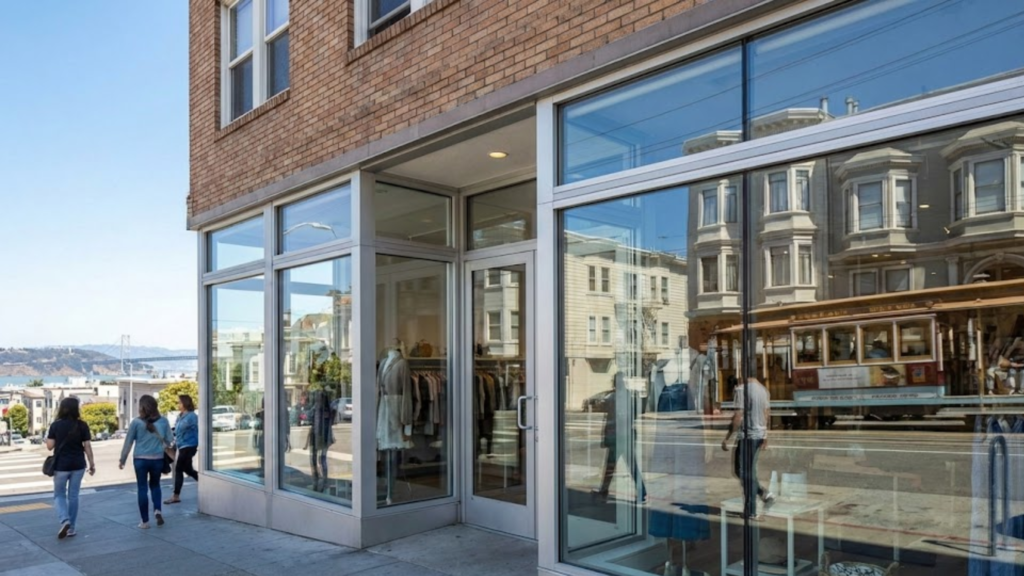
If you’re asking “what is a storefront window?”—here’s the essential definition: A storefront window is a non-load-bearing glass-and-aluminum facade system typically installed between the ground floor and the ceiling, usually extending up to 10 feet. These specialized systems maximize street visibility, showcase products effectively, and withstand the heavy foot traffic characteristic of ground-level commercial spaces.
Location distinguishes storefronts from other glazing systems—they’re almost exclusively found at the building’s ground level in commercial buildings. While they resemble simple glass walls, storefronts represent sophisticated engineering that incorporates specific safety-glass requirements, weather-management features, and structural components that set them apart from residential windows and high-rise curtain wall systems.
The Technical Anatomy of a Storefront
Understanding what makes a storefront system function properly requires examining its core components.
The framing relies almost exclusively on architectural aluminum. Aluminum offers the ideal combination of strength, light weight, rust resistance, and durability for commercial applications. The storefront system uses “center-glazed” construction, meaning glass sits centered within the window frame rather than sitting against one side. Installers anchor the complete system to the floor slab below and the building structure above, creating a stable framework that maintains structural integrity without bearing building loads.
The glass prioritizes safety above all else. Tempered glass serves as the industry standard, undergoing heat treatment that creates internal stresses. When broken, tempered glass shatters into thousands of small, relatively harmless pebbles rather than dangerous jagged shards. Laminated glass is used in higher-security applications, where multiple glass layers are bonded with interlayer films. Like automobile windshields, laminated glass holds together even when shattered, preventing entry and protecting occupants.
Water management represents a critical yet often overlooked feature. Glass storefronts aren’t designed as watertight barriers like submarines. Instead, the aluminum frames incorporate drainage channels that capture water penetrating the system and direct it downward to weep holes in the bottom sill. These small openings allow water to exit safely rather than accumulating inside the frame, where it could cause damage or leaks.
Storefront vs. Curtain Wall: What’s the Difference?
This distinction confuses many people planning commercial projects, yet understanding the difference prevents costly specification errors.
Storefront windows are suited for low-rise applications, typically limited to one or two stories, with a focus on ground-floor installation. The system sits inside the building opening, spanning from floor to ceiling. The building floor supports the storefront’s weight rather than the storefront carrying structural loads. This relatively simple installation makes storefronts the most affordable commercial glass option for retail shops, restaurants, and small office buildings.
Curtain walls serve entirely different purposes in high-rise buildings and office buildings. These systems span multiple floors, sometimes covering entire skyscraper facades. Unlike storefronts that sit within openings, curtain wall systems hang outside the building structure, like their namesake, a curtain. Vertical mullions and horizontal members transfer wind loads and the glazing’s weight to the building’s structural frame at each building floor. This sophisticated engineering provides superior resistance to wind and weather but costs significantly more than storefront installations.
Primary Uses & Benefits
Commercial storefront windows offer numerous advantages, which explains their ubiquitous presence in retail and commercial settings.
Visual marketing benefits from floor-to-ceiling transparency, transforming building facades into 24/7 product displays. Passersby view merchandise, restaurant interiors, or office environments without entering, driving foot traffic, and creating inviting commercial spaces. The abundant natural light flooding through large expanses of glass creates appealing interiors that attract customers.
Accessibility features seamlessly integrate into storefront system designs. Commercial swing doors integrate directly into the framing, and manufacturers engineer systems meeting ADA accessibility requirements. This integration creates cohesive entrances combining glass display areas with functional, code-compliant access points.
Energy efficiency in modern storefronts rivals that of residential windows through advanced engineering. Thermally broken aluminum frames incorporate insulation strips within the metal, preventing heat transfer between interior and exterior surfaces. Low-E glass coatings reflect infrared energy while admitting visible light, reducing HVAC costs substantially. These features matter tremendously for businesses maintaining climate-controlled environments where utility expenses impact profitability.
Residential Storefronts: A Growing Trend
An emerging architectural trend sees homeowners installing commercial storefront windows in residential homes to achieve a modern, industrial aesthetic.
The advantage lies in scale. Storefront systems accommodate massive glass walls that exceed the dimensions standard residential window manufacturers can produce. Floor-to-ceiling glass transforms living spaces, erasing boundaries between indoor and outdoor environments while flooding interiors with natural light.
The tradeoff involves thermal performance. While commercial storefronts offer reasonable energy efficiency for commercial applications, they typically provide lower insulation values than premium residential windows engineered specifically for home comfort. Homeowners in extreme climates should carefully weigh aesthetic appeal against potential heating and cooling costs.
Common Storefront Window Questions
What is the difference between a storefront and a façade?
A façade encompasses the entire front exterior of a commercial building, including all materials—brick, stone, concrete, wood, and glass. The storefront specifically refers to the glass entrance system and windows located on the ground floor within that façade. Think of the façade as the entire face of the building, while the storefront represents only the glazed portion at street level.
Are storefront windows load-bearing?
No. Storefront windows are explicitly non-load-bearing systems. They support their own weight—the glass, aluminum frames, and doors—but carry zero structural loads from the building above. The building structure itself supports upper floors and roof loads independently. This non-load-bearing characteristic distinguishes storefronts from structural building components.
Why are storefront windows made of aluminum?
Aluminum provides the optimal balance of properties for commercial glazing. It’s strong enough to support large, heavy glass panes spanning considerable distances without deflecting or warping. Simultaneously, aluminum remains light enough to keep material and installation costs reasonable while simplifying handling. Aluminum never rusts, requires minimal maintenance, and accepts various finishes matching architectural specifications.
Choosing the Right Commercial Glazing System
A storefront window represents far more than simple glass installation—it’s a precisely engineered architectural system designed specifically for ground-floor applications, balancing visibility, safety, and cost-effectiveness. Its design differs fundamentally from that of high-rise curtain walls because storefront systems sit between the floor and ceiling rather than spanning multiple floors.
Planning commercial renovations or modern residential projects requires specifying the correct glazing system. Using storefront windows where curtain wall systems belong can create structural issues and weathering problems. Conversely, specifying expensive curtain walls for simple ground-floor applications wastes money on unnecessary engineering.
Bay Area property owners planning commercial renovations or modern architectural projects can consult with Insight Glass for expert guidance on storefront window systems. Our experienced team helps architects, contractors, and property owners select appropriate glazing solutions that match project requirements and budgets. Whether you need traditional retail replacement windows, a complete storefront system installation, or guidance distinguishing between storefront and curtain wall applications, we provide transparent expertise. As a trusted window installation contractor, we deliver quality commercial glazing that enhances building aesthetics while meeting all safety codes and performance standards. Contact Insight Glass today to discuss your commercial window project and discover why Bay Area businesses rely on our storefront expertise.
Since 1987, Insight Glass has provided top-quality windows installation in the Bay Area.
Call 707-746-6571 for Expert Installation!
CONTACT US TO GET A FREE ESTIMATE!