Skylight window installation transforms dark interior spaces into bright, welcoming rooms filled with natural light. Bay Area homeowners in Oakland, Berkeley, San Jose, and surrounding cities discover how strategic skylight placement enhances comfort, reduces energy costs, and creates stunning architectural features.
The Power of Natural Light in Your Home
Natural light dramatically improves living spaces in ways artificial lighting cannot match. Skylights flood rooms with sunshine that changes throughout the day, creating dynamic environments that feel larger, more open, and more connected to the outdoors. As fall arrives and days grow shorter, homeowners throughout the Bay Area increasingly appreciate design elements that maximize available daylight and brighten spaces that feel closed in during darker months.
Skylight window installation addresses common challenges in Bay Area homes. Interior bathrooms, hallways, and rooms surrounded by neighboring buildings often lack adequate natural light. Traditional windows can’t always solve these problems due to privacy concerns, property lines, or structural limitations. Skylights bring light from above, illuminating spaces without compromising privacy or requiring exterior wall modifications.
Understanding Skylight Types and Applications
Fixed Skylights
Fixed skylights provide natural light without ventilation. These permanently sealed units work well in climate-controlled spaces where air circulation isn’t needed. Homeowners in temperature-moderate areas, such as Alameda, San Leandro, or Berkeley, often choose fixed skylights for hallways, stairwells, and living areas, where the primary goal is to brighten dark spaces rather than improve airflow.
Fixed designs typically cost less than operable versions and require less maintenance since they have no moving parts. The sealed construction also provides excellent weather protection—essential for Bay Area locations that experience heavy winter rains. When properly installed with quality flashing systems, fixed skylights remain watertight for decades with minimal attention.
Ventilating Skylights
Ventilating skylights open to allow fresh air circulation, combining natural light with improved ventilation. These units excel in bathrooms, kitchens, and other rooms where moisture control or temperature management is crucial. Homes in warmer Bay Area microclimates, such as Livermore, Antioch, or San Ramon, benefit from ventilating skylights that exhaust hot air naturally, thereby reducing cooling costs during late summer and early fall.
Modern ventilating skylights include rain sensors that automatically close when precipitation starts, protecting interiors even when you’re away from home. Remote controls and smartphone integration make operation effortless, encouraging regular use that improves indoor air quality and comfort.
Tubular Skylights
Tubular skylights, also known as sun tunnels or light tubes, provide natural light to spaces where traditional skylights are not feasible. These compact systems use reflective tubes to channel sunlight from roof-mounted domes into interior rooms below. Tubular designs work exceptionally well for closets, small bathrooms, and narrow hallways, which are common in older Bay Area homes throughout Oakland, Hayward, and Concord.
Installation complexity and costs are lower than those of traditional skylights, as tubular systems require fewer roof penetrations and less structural modification. For homeowners testing skylight benefits before committing to larger installations, tubular options provide an accessible entry point.
Strategic Placement for Maximum Benefits
Room-Specific Considerations
Different rooms benefit from different skylight approaches. Kitchens require bright, even lighting that avoids creating harsh shadows on work surfaces—position skylights to illuminate counters and cooking areas without causing glare on appliances or screens. North-facing skylights provide consistent, shadow-free light throughout the day, making them ideal for tasks that require precision and detail.
Bedrooms require more careful planning. While natural light improves morning routines, excessive brightness disrupts sleep. Consider operable skylights with integrated shades or blinds that provide light control. East-facing installations bring gentle morning sun, while west-facing units can create uncomfortable afternoon heat in rooms throughout Fremont, Milpitas, or Santa Clara.
Bathrooms benefit tremendously from skylight window installation. Natural light makes morning routines more pleasant while reducing mold and mildew through improved ventilation and drying. Privacy concerns disappear when light comes from above rather than through traditional windows facing neighboring properties.
Roof Orientation and Solar Considerations
Skylight orientation has a significant impact on light quality and heat gain. South-facing skylights receive intense direct sunlight year-round, creating dramatic natural lighting but potentially increasing cooling loads during warmer months. North-facing units provide gentler, more consistent light without substantial solar heat gain—often the better choice for Bay Area climates.
East and west orientations create different experiences. Eastern skylights flood rooms with morning light, energizing spaces as the day begins. Western exposure brings afternoon and evening light that can feel warm and inviting during cooler months. Still, it may create excessive heat during late summer in inland areas like Union City, San Ramon, or Walnut Creek.
Energy Efficiency and Performance Features
Glazing Technology
Modern skylight glazing features multiple layers, low-E coatings, and gas fills, similar to those found in high-performance window replacement products. These features control heat transfer, reducing cooling costs during warm weather while retaining heat during cool Bay Area evenings. Triple-glazed units provide maximum insulation, which is particularly valuable for rooms used year-round where temperature control is crucial.
Low-E coatings block ultraviolet radiation that fades furniture, flooring, and artwork while allowing visible light to pass through. This selective filtering preserves the brightness you want while eliminating the damage you don’t. For homes with valuable interiors or sensitive materials, UV protection justifies the modest additional investment in premium glazing.
Shading and Light Control
Integrated shading systems give you precise control over light levels and heat gain. Motorized shades adjust automatically based on time of day, temperature, or sunlight intensity. Manual options provide simple, reliable control at lower cost. Either approach allows you to maximize natural light when desired while managing glare and heat during peak sun hours.
Consider seasonal needs when selecting shading options. Fall and winter light feels welcome and warming throughout most Bay Area locations. Summer afternoon sun, particularly in places like Mountain View, Sunnyvale, or Pittsburg, can create uncomfortable heat buildup without adequate shading control.
Weather Sealing and Long-Term Protection
Professional Installation Standards
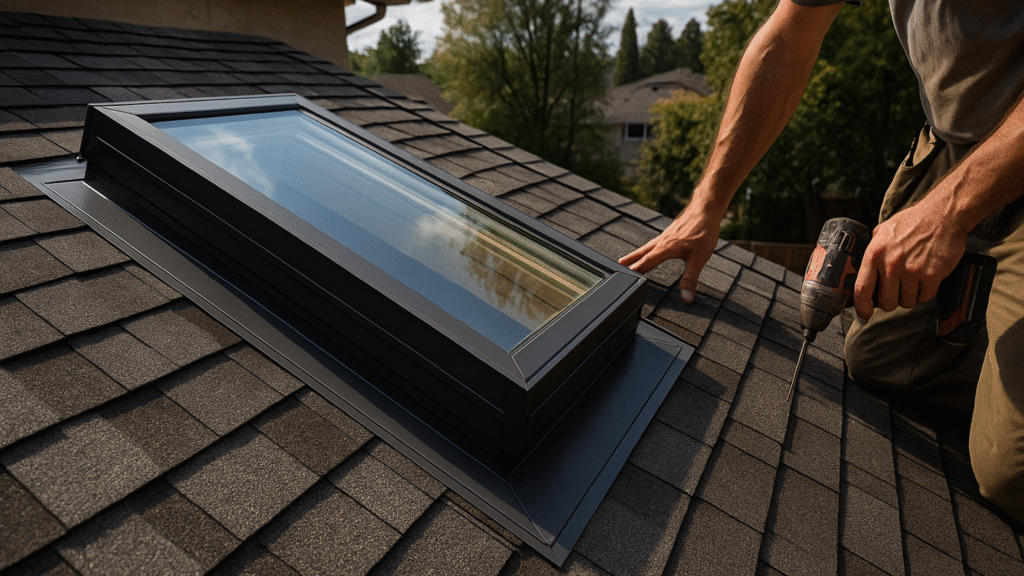
Proper installation determines whether skylights enhance your home or create problems. Water intrusion represents the primary concern—Bay Area winter storms thoroughly test every roof penetration. Professional installers employ multiple layers of protection, including high-quality flashing systems, weatherproof membranes, and carefully sealed joints, which prevent leaks even during heavy rainfall.
Skylight window installation requires coordination with roofing work to ensure seamless integration. The flashing system must integrate seamlessly with surrounding roofing materials, whether composition shingles, tile, or metal roofing, which is common on Bay Area homes. Experienced installers understand these material-specific requirements and ensure watertight installations regardless of roof type.
Maintenance and Inspection
Skylights require periodic maintenance to maintain performance and prevent issues. Annual inspections check seals, flashing condition, and glass integrity. Clean skylights regularly—dust and debris reduce light transmission, making units appear dimmer than they should. Most homeowners can handle basic cleaning safely from interior positions, though exterior cleaning on steep roofs requires professional assistance.
Check and clear drainage channels that allow water to flow away from skylight frames. Blocked drains can cause water backup and potential leaks. These simple maintenance tasks require minimal time but prevent expensive repairs and significantly extend the life of your skylight.
Installation Considerations for Bay Area Homes
Structural Requirements
Installing skylights involves cutting roof openings and, in some cases, modifying the framing. Older Bay Area homes built before modern building codes may require structural reinforcement. Professional installers evaluate framing conditions and make necessary modifications to ensure installations meet current safety standards without compromising roof integrity.
Flat roofs require different installation approaches than sloped roofs. While flat roofs make skylight access easier, they need special flashing and drainage considerations to prevent water pooling. Homes with flat roofs in areas such as parts of Oakland, Berkeley, or San Jose can still successfully install skylights with proper planning and specialized installation techniques.
Permit and Code Compliance
Bay Area jurisdictions require building permits for skylight installations. Permits ensure work meets structural, energy, and safety codes. Professional installers handle permit applications and inspections, ensuring compliance without delays. While permits add some cost and time to projects, they protect your investment and provide quality work that won’t create problems during future home sales.
Energy codes specify minimum performance standards for skylights. Products must meet California Title 24 requirements for U-factor and Solar Heat Gain Coefficient. Reputable suppliers stock code-compliant products, but verify specifications match your project’s climate zone requirements before purchasing.
Timing Your Skylight Project
Fall provides ideal conditions for skylight installation throughout most Bay Area locations. Mild weather facilitates roofing work without the intense summer heat that makes roof work uncomfortable or winter storms that create scheduling challenges. Completing installations before winter rains arrive ensures your home stays protected during the wettest months.
Plan projects considering your home’s usage patterns. Suppose you work from home in spaces with skylights, schedule installations when you can temporarily relocate. Most installations are complete in one or two days, minimizing disruption while delivering immediate benefits.
Transform Your Home with Natural Light
Skylight window installation represents one of the most dramatic home improvements available. Dark, uninviting spaces become bright, welcoming rooms that feel twice their actual size. Energy costs drop as you rely less on artificial lighting during daylight hours. Your home feels more connected to the outdoors, even in interior rooms far from traditional windows.
Bay Area homeowners, from San Jose to Concord, and from Berkeley to Livermore, discover that well-planned skylights enhance daily life in countless small ways. Morning coffee tastes better in naturally lit kitchens. Home offices feel less confined with overhead natural light. Evening routines benefit from gentle twilight filtering through bedroom skylights.
Ready to brighten your space? Explore skylight options specifically designed for Bay Area homes. Discover how professional installation creates beautiful, worry-free natural lighting that enhances your home for decades to come.
Since 1987, Insight Glass has provided top-quality windows & patio doors in the Bay Area.
Call 707-746-6571 for Expert Installation!
CONTACT US TO GET A FREE ESTIMATE!