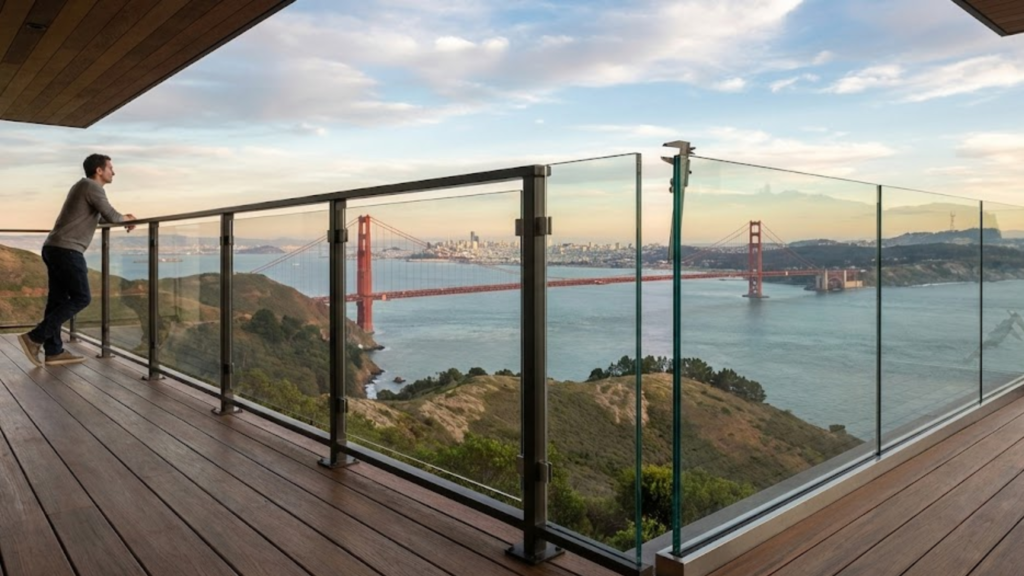
How thick should glass railings be for your Bay Area home? The answer depends on whether you’re installing framed or frameless systems, typically ranging from 10mm for framed to 12mm-19mm for frameless applications to meet safety regulations.
Getting Glass Railing Thickness Right
When designing glass railings for your Bay Area deck, balcony, or staircase, “thick enough” isn’t just about aesthetics—it’s about safety, legal compliance, and structural integrity. Whether you’re installing a deck railing overlooking the San Francisco Bay or a frameless staircase in your Oakland hillside home, choosing the right thickness is the difference between a secure barrier and a significant safety hazard.
If you’re asking “how thick should glass railings be?”—here’s the direct answer: For most residential projects, glass railings should be 10mm (3/8″) to 12mm (1/2”) thick.
Framed Systems: Typically use 10mm (3/8″) tempered glass panels held between posts.
Frameless Systems: Require thicker glass—usually 12mm (1/2″) to 19mm (3/4″)—or laminated glass (like 9/16″) to handle the structural load without a frame.
Commercial Use: Often mandates a minimum thickness of 15mm (5/8″) to 21.5mm (7/8″), depending on local building codes and foot traffic requirements.
This guide breaks down the engineering behind these numbers and helps you select the right glass thickness for your specific Bay Area project.
Common Glass Thicknesses & Their Applications
Understanding the “why” behind each thickness helps you identify your specific project needs:
10mm (3/8″) – The “Standard” for Residential Framed Systems
This is the most common minimum thickness for residential glass railing systems where metal posts provide structural support. Great for indoor stairs and decks where the frame carries the load. Most Bay Area framed installations use this thickness to balance cost and safety.
Semi-frameless glass railing installers frequently recommend 10mm for standard residential decks and balconies.
12mm (1/2″) – The “Premium” Choice for Homes
This thickness offers a sturdier feel and represents the minimum recommended thickness requirement for residential frameless systems or high-traffic areas. Many Bay Area homeowners choose 12mm even for framed systems because it reduces flex and provides better wind resistance in exposed locations.
15mm to 19mm (5/8″ to 3/4″) – The “Structural” Standard
Used for heavy-duty frameless systems—like base-shoe mounts or spigot installations—where the structural glass itself must support weight and wind pressure. Essential for frameless glass railing installers working on coastal properties or high-rise balconies where wind loads are significant.
Laminated Glass (e.g., 9/16″) – The Safety Gold Standard
Laminated glass consists of two layers bonded with an interlayer. If it breaks, the glass stays intact rather than shattering. Many California jurisdictions now require laminated options for elevated installations—vital for Bay Area hillside homes with significant drop heights.
Framed vs. Frameless: How the System Dictates Thickness
Glass thickness isn’t just a design choice—it’s a mechanical requirement determined by your system type:
Framed Systems (Post-to-Post)
Since metal posts take the load, the glass acts as “infill” between supports. This allows for thinner 10mm panels because the frame provides the structural integrity. The top rail and posts handle lateral pressure when someone leans against the railing.
For standard Bay Area residential decks with posts spaced 4-6 feet apart, 10mm tempered or laminated glass meets code requirements while keeping costs reasonable.
Frameless Systems (Spigots or Base Shoes)
The glass panels act as their own “posts.” To prevent excessive flex or bending when pressure is applied, the glass must be significantly thicker—usually 12mm minimum, with 15mm preferred for spans over 5 feet.
When working with the best glass railing installation contractor, they’ll calculate the required glass thickness based on your specific span lengths, height, and wind exposure.
Understanding Building Codes (IBC 2024/2025 & California Requirements)
While 1/4″ (6mm) is sometimes listed as a legal minimum in older national codes, it’s rarely used in modern glass guard installations because it fails to meet lateral load requirements. This “push” test simulates someone leaning heavily on the railing.
Load Requirements
Most building codes require railings to withstand a 200-lb concentrated load at any point along the top rail or cap rail. For glass railing systems, this means the glass thickness must prevent dangerous deflection under this load.
California’s strict seismic codes add another layer of requirements. Bay Area installations must account for lateral movement during earthquakes, often requiring thicker glass or additional reinforcement.
Tempered or Laminated: The Safety Debate
Many modern jurisdictions now require laminated glass for any railing where there’s a “significant drop”—usually 30+ inches—to prevent glass shards from breaking and falling. San Francisco, Oakland, Berkeley, and other Bay Area cities increasingly mandate laminated options for elevated decks and balconies.
Tempered glass is stronger but shatters into small pieces when broken. Laminated glass may crack, but it stays in place due to its interlayer.
The 4-Inch Rule
Regardless of thickness, safety regulations require that glass panels be spaced so that a 4-inch sphere cannot pass through gaps. This prevents small children from falling through or getting their heads stuck between panels.
Key Factors That Influence Your Thickness Choice
Wind Load Considerations
Bay Area coastal properties—especially in Pacifica, Half Moon Bay, or along the San Francisco waterfront—face significant wind pressure. Rooftop decks and oceanfront balconies often require a minimum of 12mm, with 15mm recommended for optimal wind resistance.
Your glass railing installation professional should calculate wind loads based on your specific location and exposure.
Railing Height
Taller railings act like sails in the wind. Commercial installations requiring a 42-inch height need thicker glass to prevent wobbling or base failure. Standard 36-inch residential railings can use thinner glass while maintaining stability.
Residential vs. Commercial Applications
Commercial spaces face higher “crowd loads” and stricter code requirements. Office buildings, restaurants, and retail spaces in San Francisco or Oakland typically require 15mm-19mm glass, while residential homes can use 10mm-12mm for most applications.
The “Flex” Factor: Why Thicker Often Feels Better
Beyond meeting code, thickness affects the user experience:
Psychological Safety
Thin glass can flex or vibrate when touched. While it might technically meet safety standards, it feels unstable. Thicker glass provides confidence, essential for second-story decks or hillside installations where visual drop-offs are significant.
Bay Area homeowners consistently report that upgrading from 10mm to 12mm eliminates the “flimsy” feeling that concerns guests.
Long-Term Durability
Thicker glass resists edge chips and surface impacts from furniture, children’s toys, or maintenance equipment. For homes with active families or frequent entertaining, the extra 2mm of thickness significantly reduces the risk of damage over the 20-25 year lifespan of quality glass panels.
Frequently Asked Questions
Is 10mm glass enough for a deck railing?
Yes, if you’re using a framed system with proper post support. For frameless installations, 12mm is the minimum recommended thickness. Bay Area coastal locations should consider 12mm even for framed systems due to wind exposure.
What is the minimum thickness for a frameless glass railing?
Usually 12mm (1/2″), but 15mm is safer and reduces flex for spans over 5 feet. Many professional installers won’t warranty frameless systems under 12mm due to deflection concerns.
Does the glass have to be tempered?
Yes, untempered “annealed” glass is illegal and dangerous for railing applications. All glass railings must use either tempered glass or laminated glass with tempered layers to meet safety standards.
Is thicker glass harder to maintain?
No, maintenance is identical regardless of thickness. However, the hardware—clamps, spigots, base shoes—will be larger and more expensive to accommodate thicker glass—budget accordingly when comparing system costs.
Don’t Guess When It Comes to Safety
While 10mm represents a common starting point for many residential projects, your specific location, system type, and exposure should determine the final thickness. Bay Area building departments have varying interpretations of state codes, and what passes inspection in Fremont might not meet requirements in San Francisco.
Always consult with experienced professionals or structural engineers to ensure your glass meets safety standards for your specific zip code and application. The difference between adequate and optimal thickness might only be 2mm of glass, but it can mean the difference between a system that lasts 25 years and one that needs replacement in 10.
For projects similar to window upgrades, working with replacement window experts who understand local codes ensures your investment meets both safety and longevity requirements.
Need help calculating the load requirements for your Bay Area project? Contact professional installers for a code-compliant consultation and glass selection that matches your specific installation conditions, exposure, and local building requirements.
Since 1987, Insight Glass has provided top-quality glass railings installation in the Bay Area.
Call 707-746-6571 for Expert Installation!
CONTACT US TO GET A FREE ESTIMATE!