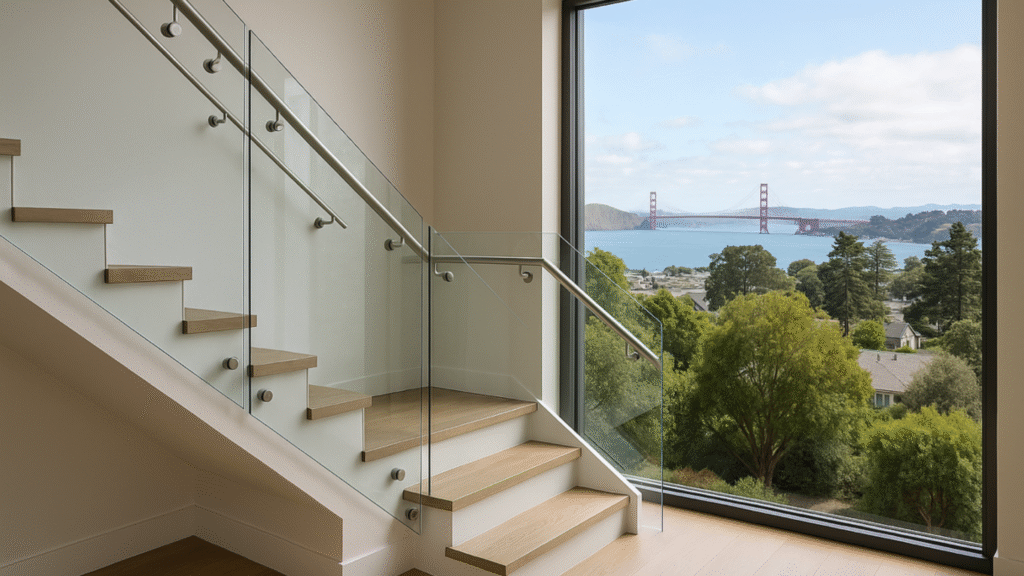
Glass stair railing systems bring modern aesthetics and open sightlines to Bay Area homes while meeting California’s strict building codes. Choosing the right system type, hardware, and installation approach ensures your staircase becomes a stunning architectural feature.
Why Glass Stair Railing Systems Enhance Bay Area Homes
Glass stair railing systems have transformed how Bay Area homeowners approach interior design. These sleek installations create visual continuity throughout San Francisco lofts, Oakland townhomes, and Berkeley hillside residences by eliminating the visual barriers traditional wood or metal railings create.
The transparent nature of glass stair railing systems allows light to flow freely between levels. This proves particularly valuable in Bay Area homes where natural light matters for both energy efficiency and quality of life. Stairs no longer block sunlight from reaching lower floors or interior rooms.
Modern aesthetics define contemporary Bay Area architecture. Glass railings complement mid-century modern homes throughout Marin County, fit seamlessly into newly renovated Victorians in San Francisco’s neighborhoods, and enhance minimalist designs popular in South Bay communities. The clean lines and transparency align with the region’s forward-thinking design sensibilities.
System Types and Configuration Options
Multiple glass railing configurations suit stairway applications. Each system type offers different structural approaches, aesthetic results, and installation requirements for Bay Area properties.
Post-to-Post Systems Traditional post-to-post designs install vertical supports at each stair turn or at regular intervals along straight runs. Glass panels span between posts, creating sturdy barriers that meet code requirements. This approach works well for retrofitting existing stairs where structural attachment points already exist.
Continuous Rail Systems: Handrails run continuously along the entire stairway length without interruption. Glass panels mount below the handrail using specialized fittings. This configuration provides a comfortable grip along the whole length of the stairs, which is essential for accessibility and code compliance.
Base Shoe Mounted Systems Base shoe installations clamp glass panels into U-channel profiles mounted along the stair treads or stringer edges. This method creates clean vertical lines with minimal visible hardware. The base shoe distributes loads effectively while simplifying glass panel replacement if needed.
Standoff Systems’ Standoff hardware attaches to the glass panels themselves, keeping them away from structural elements. Metal discs or clamps hold glass securely while creating a floating appearance. This design suits modern Bay Area homes seeking dramatic visual impact.
Frameless Glass Stair Railings
Frameless glass railings deliver the most transparent, unobstructed appearance for glass stair railing systems. These installations eliminate posts between glass panels, allowing continuous views along the entire stairway.
The frameless approach requires thicker tempered glass—typically 1/2 inch or more—to achieve necessary structural strength without intermediate supports. Glass panels attach directly to stair stringers, treads, or floor structures using specialized mounting hardware designed to transfer loads safely.
Installation demands precise measurements and careful structural preparation. Each glass panel must fit exactly within its opening, as frameless systems offer limited adjustment once installed. The treads, stringers, or supporting floors must provide adequate strength to anchor glass without sagging or movement.
Bay Area building officials closely scrutinize frameless installations. Engineering calculations proving the system meets load requirements often accompany permit applications. The additional design and installation complexity results in higher costs, but the stunning visual effect justifies the investment for many homeowners seeking signature architectural features.
Semi-Frameless Systems for Stairs
Semi-frameless glass railings balance modern aesthetics with practical installation requirements. These glass stair railing systems incorporate posts at strategic locations—typically where stairs change direction or at maximum spacing intervals determined by glass strength and code requirements.
Posts provide multiple benefits for stair applications. They create secure attachment points that simplify structural connections. The vertical elements break long stair runs into manageable segments, reducing the size of individual glass panels and associated costs. Posts also accommodate stairs with slight irregularities that might complicate actual frameless installations.
Stainless steel posts resist corrosion in the Bay Area’s coastal climate while complementing contemporary design aesthetics. The posts can be round, square, or rectangular, depending on architectural preferences. Slim profiles minimize visual intrusion while providing necessary structural support.
Semi-frameless systems typically cost less than frameless alternatives while still delivering impressive openness and light transmission. This makes them popular choices for Bay Area remodels where budget considerations matter alongside design goals.
Hardware and Mounting Methods
Hardware selection significantly impacts both the performance and appearance of glass stair railing systems. Quality components ensure safe, long-lasting installations that meet California’s demanding building standards.
Handrail Attachments Building codes require continuous handrails on stairs. Glass stair railing systems must incorporate handrails that provide a secure grip while maintaining aesthetic consistency. Options include:
- Top-mounted metal rails attached to glass panels
- Wood caps secured to glass edges
- Integrated glass handrails with rounded or beveled edges
Stainless steel handrail brackets resist corrosion from moisture and cleaning products. The fasteners must penetrate through tempered glass without causing stress points that could lead to failure.
Base Mounting Systems: How glass panels attach at their base determines structural stability. Base shoe channels made from aluminum or stainless steel clamp glass securely while accommodating slight variations in installation surfaces. Rubber or neoprene gaskets cushion glass within channels, preventing direct glass-to-metal contact that could cause cracking.
Through-bolted systems penetrate completely through stair treads or structural members, providing robust connections. These installations require access to both sides of the mounting surface and careful sealing to prevent water infiltration.
Glass Clamps and Brackets Point-supported systems use clamps or brackets at discrete locations rather than continuous channels. These hardware pieces must distribute loads across a sufficient area of glass to prevent localized stress. Stainless steel clamps maintain appearance and performance in the Bay Area’s variable indoor humidity conditions.
Tempered Glass Requirements for Stair Applications
All glass stair railing systems must use tempered glass to meet California building codes. The safety requirements for stair applications exceed those for many other glass installations due to the elevated risk of impact and consequences of failure.
Tempered glass provides essential safety characteristics. The heat-treating process creates surface compression, increasing strength approximately 4 times compared to standard glass. When broken, tempered glass fractures into small, relatively harmless pieces rather than dangerous shards—critical for stairway safety where falls could drive people into railings.
Thickness requirements for glass panels depend on panel dimensions, support configuration, and anticipated loads. Most residential stair installations use tempered glass ranging from 3/8-inch to 1/2-inch thick. Larger panels or frameless systems may require thicker glass to meet structural and deflection criteria.
Glass manufacturers permanently etch small stamps into the corners to indicate the tempering treatment. These marks verify code compliance during building inspections. Specify stamp locations carefully so they appear in inconspicuous positions once glass railing systems are installed.
California Building Code Requirements
Glass stair railing systems must comply with multiple code provisions governing stairway safety in San Francisco, Oakland, and all Bay Area jurisdictions. Understanding these requirements prevents costly mistakes and ensures safe installations.
Height Requirements: Stair guards must extend at least 42 inches above the tread nosing. Glass panels typically span most of this height, with handrails adding the remaining dimension. Some configurations allow the glass itself to meet the complete 42-inch requirement.
Load Requirements: Railings must withstand a 200-pound load applied horizontally at any point. This substantial load ensures guards can arrest falls without failure. Glass thickness, panel dimensions, and mounting methods must all contribute to meeting this standard.
Opening Limitations: Codes restrict openings in guards to prevent children from passing through. No sphere larger than 4 inches in diameter should pass through at any point. Glass railing systems easily meet this requirement since glass panels create solid barriers.
Handrail Standards Continuous handrails between 34 and 38 inches above tread nosings must provide a secure grip. The handrail profile, diameter, and mounting method all meet specific requirements to ensure usability.
Installation Challenges for Stairways
Installing glass stair railing systems presents unique challenges compared to straight-run deck or balcony applications. Stairs introduce angles, transitions, and structural variables requiring careful planning.
Angled Glass Panels: Stair slopes require angled glass panels that follow the stairway pitch. Cutting and tempering glass at precise angles demands accurate measurements and careful fabrication. Any measurement errors result in panels that don’t fit properly or create gaps that violate the code.
Landing Transitions: Points where stairs meet landings require special attention. Glass panels must transition smoothly while maintaining structural integrity and meeting height requirements. Hardware at these junctions faces complex loads from multiple directions.
Existing Structure Variations Older Bay Area homes often have stairs with slight irregularities—treads that aren’t perfectly level, stringers that vary in alignment, or floors that have settled over time. Glass stair railing systems demand precision that existing structures may not provide. Shimming, custom fabrication, or structural corrections may become necessary.
Access for Installation Maneuvering large glass panels through Bay Area homes’ existing doorways, hallways, and room layouts can prove challenging. Installation teams must carefully plan delivery routes. Some projects require temporarily removing windows or doors to bring in glass panels.
Cost Considerations and Budget Planning
Budget planning for glass stair railing systems involves multiple factors that vary by system selection, home configuration, and site-specific conditions across the Bay Area.
Material costs depend primarily on glass panel sizes and thickness. Larger panels cost more to manufacture, temper, and transport. Thicker glass required for frameless systems or long spans significantly increases material costs.
Hardware quality affects both initial investment and long-term performance. Stainless steel components cost more than standard metals but resist corrosion in the Bay Area’s coastal air. Quality mounting hardware ensures safe installations that don’t require premature replacement.
Labor represents a substantial portion of total project costs. Stair installations demand more expertise than simple straight railings. Experienced installers familiar with glass stair railing systems command appropriate compensation for their specialized skills. Complex stair configurations with multiple turns, landings, or custom angles increase labor requirements.
Permits and engineering add to expenses. Most Bay Area jurisdictions require permits for new railing installations. Projects involving frameless systems or unusual configurations may need professional engineering stamps, adding several hundred to over a thousand dollars, depending on complexity.
Choosing the Right System for Your Stairs
Selecting appropriate glass stair railing systems balances aesthetic goals, budget constraints, structural conditions, and practical installation considerations for your Bay Area property.
Evaluate your design priorities. If creating maximum openness and showcasing architectural drama matters most, frameless systems justify their premium costs. If budget constraints or structural limitations are more significant, semi-frameless configurations deliver excellent results at lower investment levels.
Consider your home’s architectural style. Modern aesthetics in contemporary homes pair naturally with minimalist glass systems. Traditional Bay Area Victorians or Craftsman homes might benefit from glass railings with wood handrails that bridge historical and modern design elements.
Assess structural conditions. Older homes may need reinforcement before supporting glass railing systems. Factor these potential costs into decision-making early in the planning process.
Work with experienced professionals familiar with Bay Area building codes and local jurisdiction requirements. Quality installation ensures your glass stair railing systems perform safely while creating the stunning visual impact that makes them worthwhile investments in your home’s beauty and value.
Since 1987, Insight Glass has provided top-quality glass railings installation in the Bay Area.
Call 707-746-6571 for Expert Installation!
CONTACT US TO GET A FREE ESTIMATE!