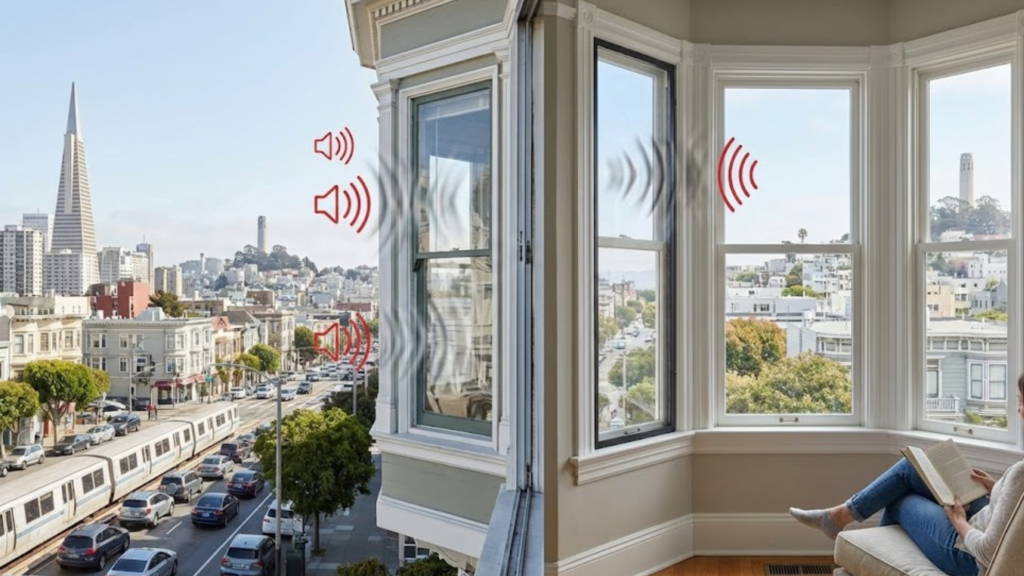
If you’re wondering “can you soundproof windows” to block traffic, neighbors, or street noise, the answer is yes—Bay Area homeowners have multiple effective options at every budget level.
Can you soundproof windows in your Bay Area home? This question keeps countless San Francisco residents awake at night—literally. Traffic noise from busy streets, BART rumble, barking dogs, and loud neighbors can ruin the peace of your home. The window is the weakest link in your home’s sound barrier, allowing significantly more noise to pass through than walls or doors.
Here’s the encouraging answer: Yes, you can effectively soundproof windows. While achieving complete 100% silence is scientifically difficult—sound finds ways through even the tiniest openings—you can reduce noise levels by up to 95% using the proper methods. The dramatic noise reduction transforms chaotic urban living into a peaceful sanctuary.
The strategy involves three tiers of solutions, ranging from simple DIY sealing to address air leaks to installing acoustic window inserts, or—for maximum results—replacing glass with specialized laminated panes explicitly designed for noise control. Each approach delivers different levels of noise reduction at corresponding price points.
This guide covers all three soundproofing levels: budget-friendly DIY fixes, high-impact add-on solutions like inserts, and professional window replacement options that deliver studio-quality quiet.
The Science: How Sound Gets Through Your Windows
Understanding sound transmission through windows reveals why specific solutions work while others fail.
Air leaks represent the primary culprit. If air can penetrate gaps around your window frame, sound waves travel through those same openings effortlessly. Even tiny cracks—barely visible to the naked eye—allow substantial noise transmission. Bay Area Victorian and Edwardian homes with original windows often suffer from decades of settling, creating gaps between the frames and the walls.
Sealing these air gaps delivers the biggest bang for your buck in noise reduction, often reducing sound by 20-30% for minimal cost.
Vibration represents the second major pathway. Standard window glass is thin—typically 1/8 to 3/16 inch—and vibrates easily when sound waves strike its surface. This vibration acts like a speaker membrane, transmitting noise from outside directly to your interior space. The glass literally carries sound waves through the barrier.
The solution trio combines three scientific principles: Mass (heavier glass that resists vibration), Air Gaps (dead space that traps and dissipates sound waves), and Damping (materials that absorb vibration energy). Effective soundproofing strategies incorporate at least two of these three principles.
Level 1: DIY & Renter-Friendly Fixes
Budget-conscious Bay Area residents and renters can achieve meaningful noise reduction without major construction or landlord approval.
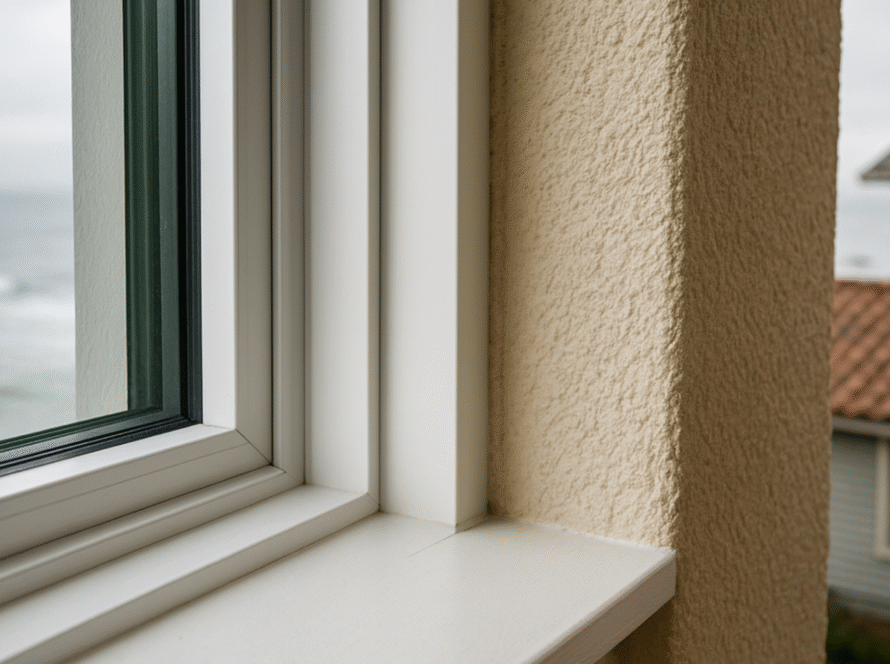
Seal the gaps first—this delivers the most dramatic improvement for the least expense. Use acoustic caulk to permanently seal cracks and gaps around window trim where the frame meets the wall. Unlike standard caulk, acoustic formulations remain flexible and don’t transmit vibration.
Apply weatherstripping to moving parts of existing windows—the sashes that slide up and down or swing open. V-seal weatherstripping works particularly well for double-hung windows, which are standard in Bay Area homes. This combination of caulking and weatherstripping can reduce noise by 20-30% for under $50 in materials.
Soundproofing curtains provide modest additional help. Heavy velvet or multi-layer blackout curtains add mass and absorb sound echoes inside the room, improving acoustics. However, they’re limited in blocking external noise, such as traffic or construction. Curtains cannot seal air gaps or prevent window vibration, so they work best combined with proper sealing.
Realistic expectations matter: curtains might reduce noise by an additional 5-10%, not the 50-90% some manufacturers claim.
Furniture placement creates physical barriers. Placing heavy bookshelves filled with books near windows adds mass that absorbs sound. This strategy works best for ground-floor rooms where aesthetic considerations allow large furniture near windows.
Level 2: Acoustic Inserts & Secondary Glazing
Soundproof window installers often recommend acoustic inserts as the sweet spot, balancing effectiveness and cost.
Window inserts are clear acrylic or glass panels that press or magnetically attach to the inside of your existing window frame, creating a secondary layer. Unlike flimsy plastic film, quality inserts use thick acrylic (typically 1/4 inch thick) or laminated glass, mounted in frames designed to seal tightly against the interior window opening.
Why they work relates directly to the air gap principle. Inserts create substantial dead air space—typically 2 to 6 inches—between the insert and your original window. This air gap traps sound waves, preventing them from vibrating through to your interior space. The larger the gap, the better the low-frequency noise reduction.
Performance and practicality make inserts attractive. They deliver 50-70% noise reduction—transforming intrusive traffic noise into a background murmur. Costs are significantly lower than complete window replacement, typically $300-$1,000 per window, depending on size and quality.
Inserts work excellently for historic Bay Area homes where replacing original windows isn’t permitted, or for renters who need solutions that don’t require permanent alterations. Installation requires no construction—inserts press into place and can be removed when moving.
Level 3: Professional Replacement
Maximum noise reduction requires purpose-built soundproof windows installed by replacement window experts.
Laminated glass represents the gold standard for reducing sound transmission. Unlike standard glass, laminated construction uses a “sandwich” design: glass layer + PVB (polyvinyl butyral) plastic interlayer + glass layer. The plastic interlayer acts as a damper, absorbing vibration energy that would otherwise transmit through the glass.
When sound waves strike laminated glass, the plastic layer converts vibrational energy into heat, dramatically reducing noise transmission. This same technology makes car windshields quiet and is why highway noise barely penetrates modern vehicles.
Dissimilar glass thickness enhances performance further. Using one thick pane (perhaps 1/4 inch) and one thin pane (1/8 inch) in a double-glazed unit blocks different sound frequencies. Thick glass stops low-frequency rumble from traffic and construction, while thin glass blocks high-frequency sounds like voices or alarms.
STC ratings (Sound Transmission Class) quantify performance. Standard single-pane windows rate around STC 26—essentially providing minimal noise blocking. Quality double-pane windows achieve STC 28-32. Professional soundproof windows with laminated glass achieve STC ratings of 45-52, reducing perceived noise by 75-90% compared to standard windows.
The difference between STC 26 and STC 45 is dramatic—every 10-point increase in STC rating cuts perceived noise roughly in half.
Common Myths: What Doesn’t Work
Separating effective solutions from marketing hype saves Bay Area homeowners money and frustration.
Soundproof window film represents the most common myth. While window film provides excellent UV protection and privacy, it adds virtually no mass and proves largely ineffective for blocking traffic noise or reducing sound transmission. The thin plastic layer—just a few millimeters thick—cannot stop vibration or seal air gaps.
Film might reduce noise by 1-2%. Save your money for solutions that actually work.
Egg cartons or foam panels stuck to glass do nothing to improve soundproofing. These materials absorb sound echo inside rooms—helpful in recording studios or home theaters—but don’t block noise transmission through windows. Sound waves pass through thin foam easily, rendering it useless for external noise control.
Common Soundproofing Questions
Can you soundproof windows from the outside?
Installing storm windows on the exterior provides moderate noise reduction by creating an air gap, similar to interior inserts. However, interior sealing and treatments typically prove more effective because you can achieve tighter seals and control installation quality. Exterior storm windows face weather exposure that eventually degrades seals, reducing effectiveness.
How much does it cost to soundproof a window?
Costs vary dramatically by approach. DIY sealing with acoustic caulk and weatherstripping runs under $50 per window. Quality acoustic window inserts cost $300- $1,000 per window, depending on the size. Professional soundproof window replacement with laminated glass runs $1,000-$2,500+ per window for premium systems installed by the best window installation contractor.
Do double-pane windows block sound?
Double-pane windows perform better than single-pane windows for noise reduction, but standard double-pane windows aren’t explicitly designed for soundproofing. They typically achieve just STC 28-32, a modest improvement. True quiet requires laminated glass specifically engineered for noise control, achieving STC 45-50+.
Finding Your Quiet Solution
You don’t always need to tear out windows to achieve peace in your Bay Area home. Start by identifying and sealing air gaps—this simple step delivers surprising results for minimal investment.
Evaluate your noise source and budget. Low-frequency traffic rumble requires different solutions than high-pitched alarms or voices. Match your investment to your noise problem—sometimes a $10 tube of acoustic caulk solves the issue, while severe noise pollution demands custom soundproof window inserts or complete replacement.
Bay Area residents seeking professional soundproofing solutions can consult with Insight Glass for expert guidance. Our team specializes in acoustic window solutions for San Francisco and surrounding communities, from window insert recommendations to complete soundproof window replacement using laminated glass. Whether you’re battling Market Street traffic noise, BART vibration, or neighborhood sounds, we provide solutions matching your specific noise challenges and budget. We also handle new construction windows installation with soundproofing built in from the start. Contact Insight Glass today for a free noise assessment and discover how much quieter your Bay Area home can become.
Since 1987, Insight Glass has provided top-quality windows installation in the Bay Area.
Call 707-746-6571 for Expert Installation!
CONTACT US TO GET A FREE ESTIMATE!