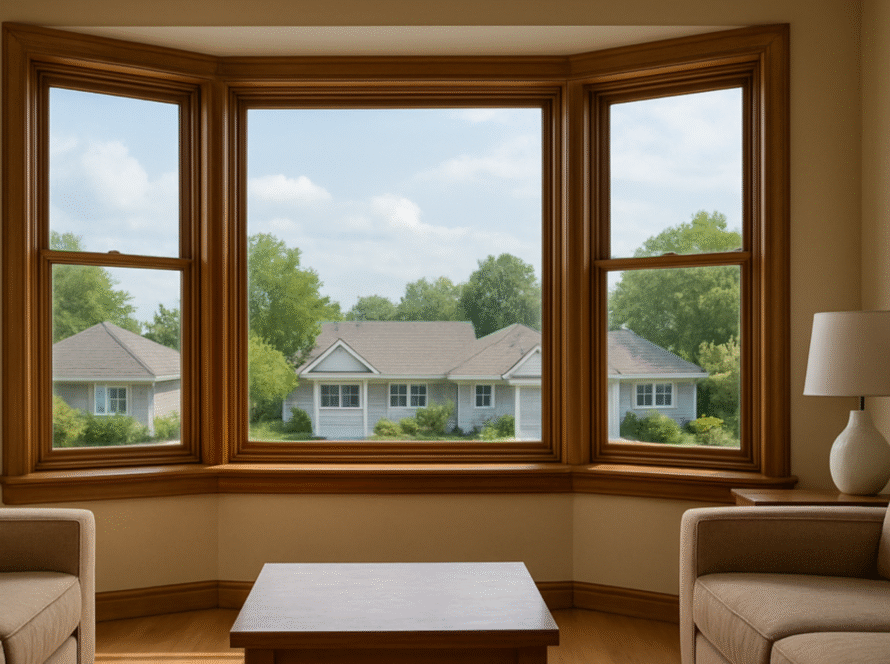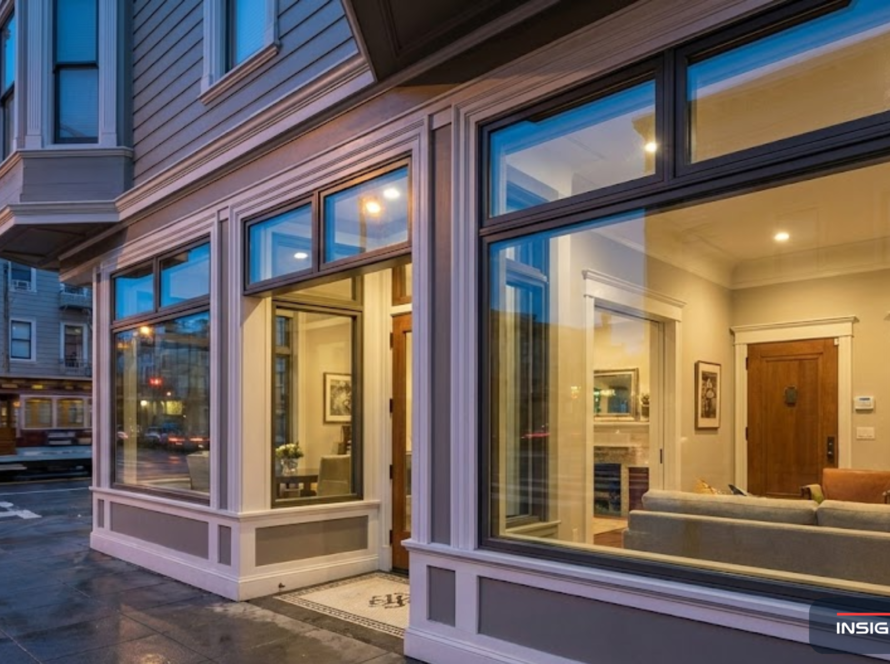
Understanding whether vinyl windows are fire rated is essential for Bay Area homeowners—especially when building codes require specific fire protection levels for property line installations.
Are vinyl windows fire rated? This question comes up frequently among Bay Area homeowners planning renovations or new construction. Vinyl windows dominate the residential market as the most popular choice for modern homes due to their affordability and energy efficiency. But when it comes to fire safety, homeowners rightfully ask: can they withstand a fire?
Here’s the direct answer: Standard residential vinyl windows are not fire-rated. While PVC (polyvinyl chloride) is difficult to ignite and won’t spontaneously catch fire, it softens and melts at relatively low temperatures—around 165°F to 250°F. This causes the window framing to fail structurally long before achieving any specified fire rating, like 45 or 60 minutes.
The exception? Highly specialized, steel-reinforced vinyl systems are available for specific commercial applications. Still, they are not the standard vinyl windows you’ll find at home improvement stores or installed by typical replacement window experts.
This post explains why standard vinyl windows fail fire tests, the critical difference between “self-extinguishing” and “fire-rated,” and what materials you should use if Bay Area code requirements demand fire ratings.
Why Standard Vinyl Windows Are Not Fire Rated
Understanding PVC’s behavior under fire conditions reveals why vinyl cannot achieve fire ratings despite some fire-resistant properties.
The melting point problem represents vinyl’s fundamental limitation. Rigid PVC doesn’t catch fire easily—in fact, it resists ignition better than wood or many other building materials. However, the material begins to soften and warp at temperatures as low as 165°F. Full structural deformation occurs well before the PVC’s actual ignition temperature of approximately 730°F is reached.
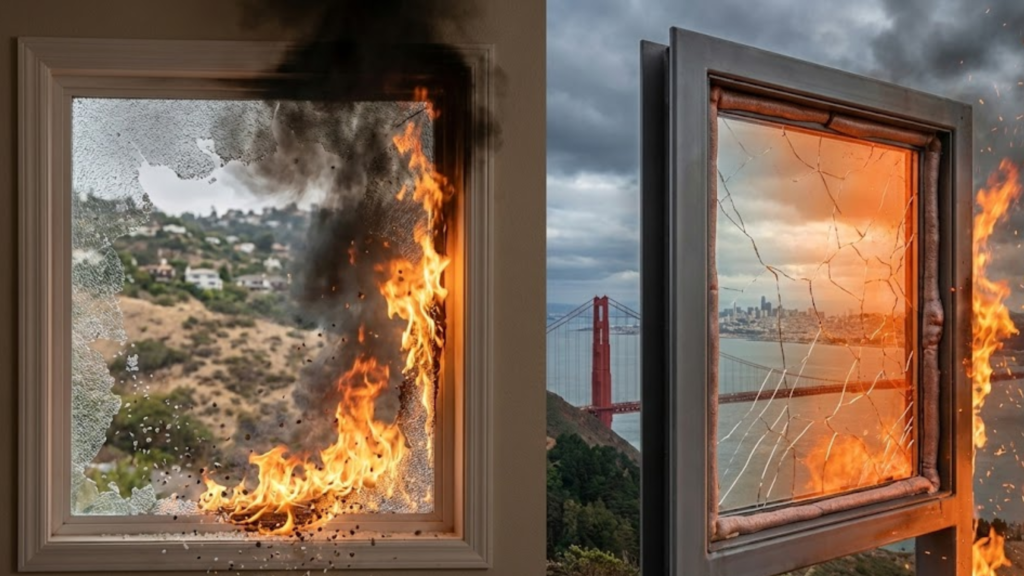
Structural failure occurs rapidly in real fire events. When fire engages a room, temperatures quickly exceed 1,000°F and can reach 1,600°F or higher. At these temperatures, vinyl window frames melt and lose their grip on the glass units. As the frame sags and deforms, the heavy double-pane windows fall entirely out of the opening.
This catastrophic failure breaches the fire barrier, creating a gaping hole that allows smoke, flames, and oxygen to spread freely. The window provides no fire protection once the frame fails, regardless of the type of glass installed.
Ignition versus melting represents the key distinction window manufacturers must address. While vinyl has a relatively high ignition temperature—it won’t spontaneously burst into flames until around 730°F—the melting behavior prevents it from earning fire ratings. Fire-rated products must maintain structural integrity throughout the rated duration. Vinyl’s tendency to soften, warp, and eventually melt disqualifies it from certification.
The Confusion: Fire Resistant vs. Fire Rated
This terminology confusion leads to dangerous assumptions about vinyl window fire performance.
Fire-resistant describes a material property. Vinyl is naturally self-extinguishing—if you remove the flame source, vinyl stops burning rather than continuing to combust. This fire resistance makes vinyl safer than older wood windows, which can add fuel to fires and actively contribute to fire spread.
However, being fire-resistant doesn’t make vinyl fire-rated. The material won’t feed the fire, but it won’t contain it either.
Fire-rated represents a legal certification based on rigorous testing. To be fire-rated—earning UL certification for 20, 45, or 60 minutes—a window assembly must stay intact and block fire and smoke penetration for that specific duration. Standard vinyl windows cannot achieve this because the material physically deforms under heat long before these time thresholds are reached.
The entire window assembly—frame, glass, seals, and hardware—must maintain structural integrity while blocking flames, smoke, and excessive heat transfer. Vinyl’s melting behavior makes this impossible.
How to Improve Vinyl Window Performance in Fires
While vinyl cannot achieve fire ratings, certain features improve fire performance for general residential applications.
Metal reinforcement is found in higher-quality vinyl windows. Steel or aluminum stiffeners installed inside the hollow frame chambers provide additional structural support. While this reinforcement doesn’t transform vinyl into a fire-rated material suitable for one-hour fire walls, it helps frames maintain their shape longer under heat stress than unreinforced hollow vinyl.
Bay Area homeowners selecting vinyl windows for new construction should verify that the frames include metal reinforcement, particularly for larger windows.
Tempered glass addresses another vulnerability. Glass often fails before frames in fire situations. Upgrading to tempered glass—usually required in California Wildfire/WUI zones—helps windows resist heat-induced breakage longer than standard annealed glass.
Tempered glass withstands higher temperatures and thermal stress without shattering. At the same time, non-fire-rated glass and tempered pane windows provide meaningful improvement over standard glass in fire scenarios. This upgrade makes particular sense for Bay Area residents in wildfire-prone areas where ember resistance is a top priority.
Better Alternatives for Fire-Rated Requirements
When building codes require actual fire ratings, vinyl cannot meet the standard.
Code requirements sometimes mandate fire-rated windows—particularly for installations on property lines near neighboring structures or in commercial buildings requiring fire-rated separations. If your architect specifies a “one-hour window” for code compliance, you cannot use vinyl windows, regardless of reinforcement or glass type.
The proven solutions include:
Steel frames represent the gold standard for fire ratings. Steel maintains structural integrity at temperatures exceeding 1,600°F and easily withstands fire exposure for 60, 90, or even 120 minutes. The material doesn’t melt, warp, or fail structurally, ensuring the window assembly remains intact throughout the rated duration.
Fire-rated aluminum systems use sophisticated engineering with internal cooling cores to achieve fire ratings while maintaining aluminum’s aesthetic advantages. These specialized systems differ dramatically from standard aluminum windows, incorporating thermal barriers and fire-resistant materials.
Fiberglass frames offer better heat resistance than vinyl, maintaining structural integrity at higher temperatures. However, fiberglass still requires specific certifications and testing to qualify as truly fire-rated. Not all fiberglass windows meet fire-rating standards.
Common Vinyl Window Fire Questions
At what temperature do vinyl windows melt?
Vinyl begins to distort and soften around 165°F, with significant structural deformation occurring by 250°F. The material will structurally fail and melt well before reaching its ignition temperature of approximately 730°F. This low melting threshold prevents vinyl from achieving fire ratings.
How can you tell if a window is fire-rated?
Look for a permanent metal label or an etched stamp on the glass or frame from recognized testing agencies such as UL (Underwriters Laboratories) or Intertek. These permanent markings identify the specific fire rating—20 minutes, 60 minutes, etc. If there’s no label, the window is not fire-rated, regardless of materials or construction quality.
Are there any fire-rated vinyl windows?
They’re scarce and limited to highly specialized commercial applications. Most fire-rated window installations utilize steel or specially engineered fire-rated aluminum frames because these materials maintain structural integrity under extreme heat. Standard residential vinyl windows available from typical window manufacturers do not meet fire ratings.
Making Informed Fire Safety Decisions
Standard vinyl windows are safe for general residential use in the Bay Area. They won’t add fuel to the fire and offer self-extinguishing properties superior to those of wood. However, vinyl cannot meet strict fire-rated building code requirements because it tends to melt at relatively low temperatures.
Bay Area homeowners in high-fire-risk areas should prioritize tempered glass and metal-reinforced frames for improved fire performance. If your project requires certified fire ratings for code compliance—standard for property line installations or commercial buildings—you must use steel or fire-rated aluminum systems installed by a qualified fire-rated window installer.
For expert guidance on window fire safety in Bay Area construction projects, consult with Insight Glass. As the best window installation contractor serving San Francisco and surrounding communities, we understand California fire codes and can help you select appropriate windows for your specific requirements. Whether you need high-performance vinyl windows with tempered glass for general residential use or certified fire-rated assemblies for code compliance, our team provides the expertise your project demands. Contact Insight Glass today for a professional consultation on fire-safe window solutions for your Bay Area property.
Since 1987, Insight Glass has provided top-quality windows installation in the Bay Area.
Call 707-746-6571 for Expert Installation!
CONTACT US TO GET A FREE ESTIMATE!