Understanding whether double pane windows are soundproof matters for Bay Area homeowners—the answer determines whether you’ll achieve the peace you’re expecting from your window investment.
Are double pane windows soundproof? This question frustrates countless Bay Area homeowners who invest thousands in window upgrades, expecting total silence, only to discover they can still hear MUNI buses rumbling down the street or traffic noise from 101. The disappointment is real and expensive.
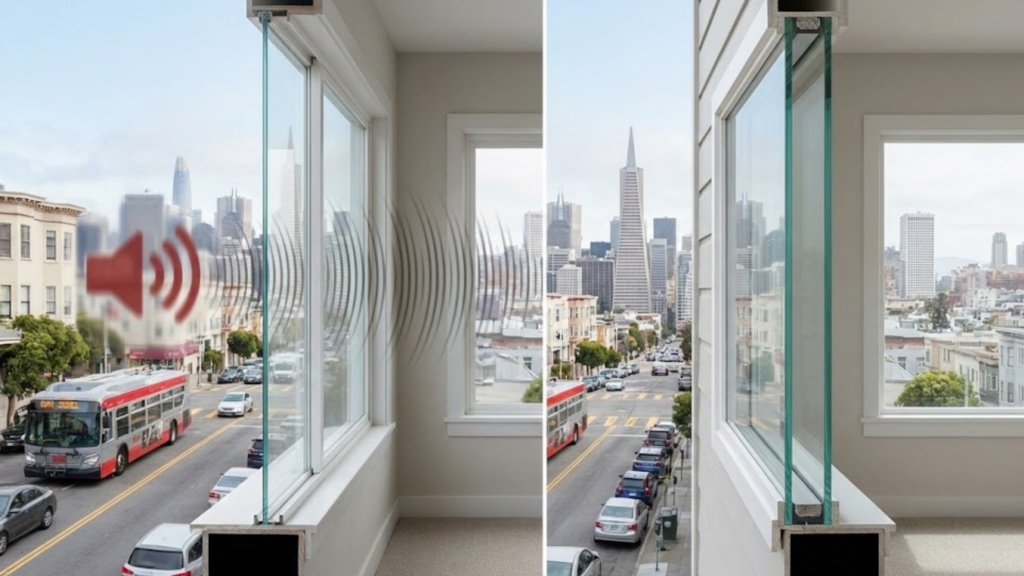
Here’s the honest answer: Standard double-pane windows are not soundproof. While they’re definitely quieter than single-pane windows—typically reducing noise by 20-50%—standard double-pane windows are designed primarily for temperature control and energy efficiency, not sound control. They help, but they don’t eliminate noise.
The problem? Double-pane windows often struggle with low-frequency noise, such as traffic rumble, airplane flyovers, and bass from nearby music. The parallel glass panes can create resonance that actually amplifies specific frequencies, making some sounds more noticeable despite overall noise reduction.
The solution? To achieve proper soundproofing, you need double-pane windows specifically engineered with laminated glass or dissimilar glass thickness. These specialized designs cost more but deliver the quiet you’re expecting.
This post explains why standard double-pane windows sometimes fail to block Bay Area traffic noise and what features you actually need for a genuinely quiet home.
How Double Pane Windows Reduce Noise
Understanding the basic physics reveals both the promise and limitations of standard double-pane construction.
Mass and air space work together to reduce sound transmission. Having two layers of glass instead of one provides additional mass that sound waves must penetrate. The air gap—or argon gas barrier—between glass panes acts as a buffer, dampening sound vibration as energy travels from the outside pane through the air space to the inside pane.
Each material transition (glass to air to glass) causes sound waves to lose energy. Some sound reflects outside rather than transmitting through. This multi-barrier system explains why double-pane windows outperform single-pane windows.
High-frequency success makes double-pane windows feel dramatically quieter initially. They excel at blocking high-pitched sounds—such as bird chirping, people talking on sidewalks, children playing, and high-frequency traffic noise. These sounds diminish noticeably, creating the impression of significant noise reduction.
Bay Area homeowners often report being thrilled with their new replacement windows for the first few weeks, only to realize that the deep rumble of trucks, buses, and motorcycles still penetrates clearly.
The “Drum Effect”: Why Standard Windows Fail at Soundproofing
This phenomenon is the most critical concept for understanding the limitations of double-pane windows.
The science behind the drum effect explains why double-pane windows sometimes amplify rather than reduce certain sounds. When both glass panes have identical thickness—the standard for most residential windows—they vibrate at the same frequency when struck by sound waves. This synchronized vibration creates resonance, similar to how a drum’s two heads vibrate together to produce sound.
At specific low frequencies, this resonance actually amplifies sound transmission rather than blocking it. The two glass panes work together like a speaker membrane, transmitting low-frequency rumble more effectively than you might expect.
The result frustrates homeowners. You hear less total noise—the overall volume drops noticeably—but the type of noise you still hear becomes more prominent and annoying. High-frequency sounds (voices, birds) disappear, but the deep rumble from diesel trucks, BART trains, motorcycles, and aircraft persists or even feels more noticeable by contrast.
This selective frequency filtering explains why some Bay Area residents feel their expensive new windows didn’t solve their noise problems despite a measurable overall reduction.
How to Make Double Pane Windows Actually Soundproof
Specific engineering upgrades transform standard windows into genuine noise barriers that reduce sound across all frequencies.
Dissimilar glass thickness elegantly solves the drum effect problem. Using one pane at 3mm thick and another at 6mm thick means they vibrate at different frequencies when struck by sound waves. Instead of resonating together, they interfere with each other, canceling out more noise across a broader frequency range.
This asymmetric design particularly improves low-frequency noise reduction—exactly where standard double-pane windows struggle. The cost increase is modest compared to the dramatic improvement in noise reduction performance.
Laminated glass represents the gold standard for soundproofing. Instead of solid glass panes, laminated construction sandwiches a plastic PVB (polyvinyl butyral) layer between two glass layers. This plastic interlayer acts as a shock absorber for sound waves, converting vibrational energy into heat rather than allowing it to transmit through.
When sound waves strike laminated glass, the PVB layer dampens sound vibration before it can reach the other side. This same technology makes car windshields quiet despite highway speeds. Laminated glass panes dramatically reduce noise across all frequencies, delivering the peaceful Bay Area homeowners expect.
Wider air gaps between panes provide diminishing returns. While increasing spacing from the standard 1/2 inch to 1 or 2 inches helps reduce sound, the improvement plateaus quickly. Vast gaps (3+ inches) offer minimal additional benefit while creating bulky, expensive window frames. Most soundproof window installers recommend gaps of 1 to 2 inches as optimal.
Double Pane vs. Triple Pane: Is More Better?
The common assumption that more glass layers equal better soundproofing doesn’t hold.
The myth suggests that triple-pane windows provide three times the soundproofing of single-pane windows or 50% better than double-pane windows. Marketing materials often imply that adding a third pane of glass significantly improves noise reduction, justifying premium pricing.
The reality disappoints those seeking soundproofing specifically. Triple-pane windows excel at thermal insulation—they’re excellent for cold climates like Minnesota or Maine, where reducing heat loss matters most. However, they often offer only a negligible improvement in soundproofing compared to high-quality laminated double-pane units.
The reason? Even with laminated glass or dissimilar thicknesses, triple-pane windows still suffer from resonance issues. Three identical panes can create complex vibration patterns that sometimes perform worse than well-designed double-pane systems for specific frequencies.
For Bay Area applications where energy efficiency matters but extreme cold isn’t a concern, spending extra for triple-pane windows strictly for noise reduction rarely makes financial sense. Invest in laminated double-pane windows instead—they cost less while delivering superior noise reduction.
Understanding STC Ratings
Sound Transmission Class (STC) ratings quantify precisely the noise reduction provided by different windows.
What is STC? The Sound Transmission Class measures how many decibels of sound a barrier blocks. Higher STC numbers indicate better soundproofing—every 10-point increase in STC roughly halves perceived noise.
Single pane windows rate approximately STC 26. You can hear everyday conversation clearly through these windows. Traffic noise can be loud, making homes near busy streets uncomfortable.
Standard double-pane windows achieve STC 28-32—a modest improvement. They muffle conversation, making speech unintelligible, but allow traffic noise through clearly. The deep rumble of buses and trucks remains intrusive. This explains why many Bay Area homeowners feel disappointed after upgrading from single- to standard double-pane windows.
Soundproof double-pane windows with laminated glass reach STC 35-40 or higher. At these ratings, traffic shifts from intrusive noise to barely noticeable background whisper. Every day conversation outside becomes inaudible. The difference between STC 28 and STC 38 is dramatic—perceived noise drops by 75% or more.
Professional installation by the best window installation contractor ensures windows achieve their rated STC. Poor installation with air gaps undermines even the best windows, dropping actual performance well below rated specifications. Proper installation with complete sealing is absolutely critical for achieving the promised noise reduction.
Making Informed Window Decisions
Don’t purchase standard double-pane windows expecting studio-quality silence. They provide moderate noise reduction—enough to notice but insufficient for serious noise problems common throughout the Bay Area’s urban corridors.
If noise reduction is your primary priority rather than just energy efficiency, specify precisely what you need. Ask your window dealer specifically for “dissimilar laminated glass” or “acoustic-rated windows.” Don’t accept vague promises that double-pane is “quieter”—demand specific STC ratings and confirmation of laminated glass.
Understand that the cheapest double-pane windows prioritize thermal performance over acoustic performance. The glass panes will be identical in thickness, with minimal air space—adequate for reducing heat but mediocre at reducing sound. Spending 20-30% more for acoustic-optimized double-pane windows delivers noise reduction worth far more than the cost difference.
Bay Area homeowners serious about reducing noise should consult with Insight Glass for expert guidance on acoustic window solutions. Our team specializes in helping San Francisco and Bay Area residents select windows that actually deliver the quiet they’re seeking. We explain the fundamental differences between standard double-pane glass, laminated glass, and dissimilar-thickness configurations, providing honest assessments of what you can expect. Whether you’re planning new construction windows installation or replacing existing windows specifically to reduce noise, we offer the specialized knowledge your project demands. Contact Insight Glass today for a free consultation on achieving genuine quiet in your Bay Area home.
Since 1987, Insight Glass has provided top-quality windows installation in the Bay Area.
Call 707-746-6571 for Expert Installation!
CONTACT US TO GET A FREE ESTIMATE!