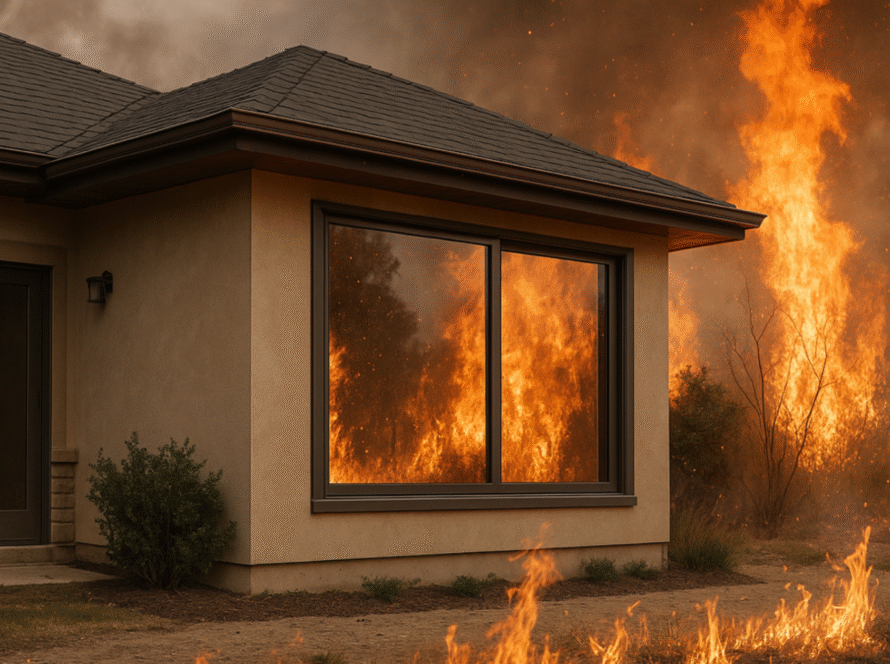
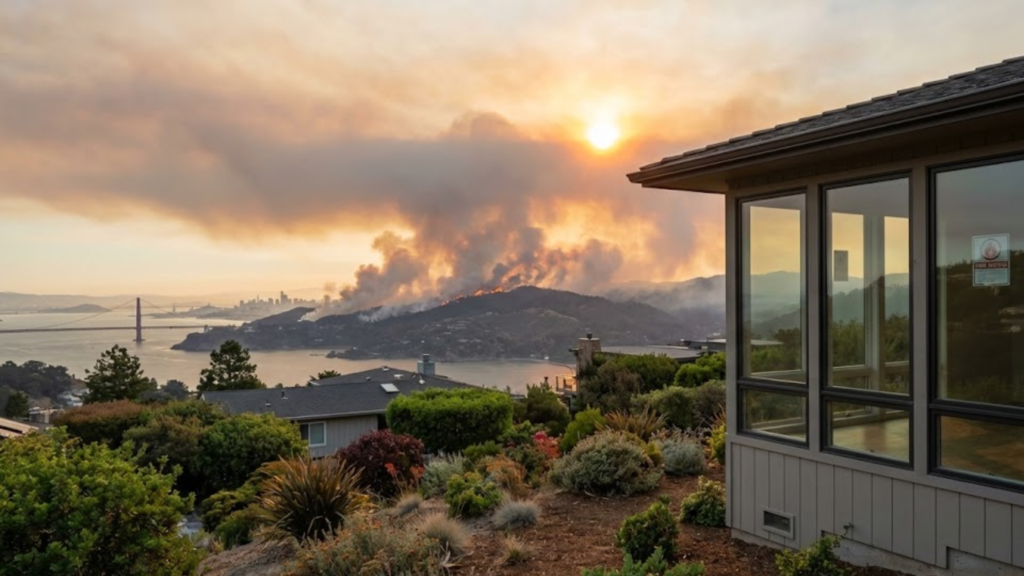
Understanding whether double glazed windows are fire rated is critical for Bay Area homeowners—especially in wildfire zones where proper fire protection can save lives and property.
Are double glazed windows fire rated? This question comes up frequently among Bay Area homeowners, particularly those living in wildland-urban interface zones where fire safety isn’t optional—it’s essential. Many homeowners assume that thicker, double-pane windows automatically offer better fire protection. While double glazing excels at insulation and energy efficiency, assuming these windows are fire-rated can be a dangerous mistake.
Here’s the straightforward answer: Standard double-glazed windows are not inherently fire-rated. While they offer slightly more resistance than single-pane windows—typically withstanding heat for 1 to 3 minutes compared to 1 to 2 seconds for single-pane glass—they lack the specialized fire-resistant materials required to withstand a flame and smoke for the certified 20 to 90 minutes needed for an actual fire rating.
The exception? Double-glazed windows can be fire-rated, but only if manufactured with specific fire-resistant glass, like ceramic, and installed with steel or specially treated frames. Standard residential double-pane windows with vinyl frames won’t protect your home in a fire.
This post explains why standard vinyl double glazing often fails in fires and how to identify genuine fire-rated windows for your Bay Area home’s safety.
Why Standard Double Glazing is Not Fire Rated
Understanding the mechanics of how standard double-pane windows fail in fires reveals why they can’t be considered fire protection.
Thermal shock represents the primary failure mode. In a fire, the outer layer of glass on the fire side heats up rapidly—potentially reaching hundreds of degrees within minutes. Meanwhile, the shielded inner pane remains relatively calm due to the insulating air gap between panes. This dramatic temperature difference creates severe stress, causing the outer pane to shatter almost immediately, often within 1 to 3 minutes of fire exposure.
Once the outer pane breaks, the inner pane offers minimal additional resistance. While it provides a brief barrier, it quickly overheats and fails, leaving your home vulnerable to the spread of flames and radiant heat.
Frame failure compounds the glass problem. Most residential double-glazed windows installed by replacement window experts use vinyl (PVC) or standard aluminum framing material.
Vinyl frames melt quickly when exposed to extreme heat—typically around 300°F. As the vinyl softens and fails, the entire heavy glass unit can fall out of the wall opening, creating a gaping hole that allows fire to enter your home freely. This complete structural failure eliminates any fire protection the glass might have provided.
Aluminum frames conduct heat rapidly and warp under fire conditions. While aluminum doesn’t melt as quickly as vinyl, its thermal expansion can break seals and distort the frame, causing the glass to dislodge or crack.
True Fire-Rated Double Glazing: What Makes It Different
“Fire-rated” refers to a specific legal certification based on rigorous testing, not simply a description of glass thickness or type.
The glass in certified fire-rated windows is made from specialized materials designed to withstand extreme thermal stress. Ceramic glass maintains structural integrity under intense heat without shattering from thermal shock. Unlike standard tempered glass, ceramic glass can handle temperature differentials of 1,600°F or more without failing.
Intumescent glass provides another fire-rated option. When exposed to fire, the interlayer expands and turns opaque, blocking heat transfer and preventing the spread of flames while maintaining the glass’s structural integrity.
The frames must be constructed from materials that won’t melt, warp, or fail under fire conditions. Steel frames provide the most common solution for fire-rated glass installations, maintaining structural integrity even when exposed to extreme temperatures. Specialized fire-retardant alloys or treated timber also meet building code requirements in specific applications.
The rating indicates how long the complete assembly—glass, frame, seals, and hardware—can resist fire penetration. These units undergo standardized testing to achieve ratings of 20, 45, 60, or 90 minutes. The entire window assembly must pass, not just the glass itself.
Wildfire Zones: The Tempered Glass Middle Ground
Bay Area homeowners in wildland-urban interface zones face specific requirements that fall between standard windows and complete fire-rated assemblies.
Building code requirements in California wildfire areas often mandate dual-pane windows with at least one pane of tempered glass. This represents a critical distinction that confuses many homeowners planning new construction window installation.
The distinction matters: Tempered glass is significantly tougher than standard annealed glass, resisting breaking from radiant heat and flying embers longer than ordinary glass. However, tempered glass is not technically fire-rated glass. It’s a hardening measure designed to prevent embers from entering the home and igniting interior materials, but it won’t function as a firewall stopping direct flame exposure for extended periods.
This tempered double-pane requirement provides reasonable protection against the most common wildfire threat—wind-blown embers landing on or near windows—without the high cost of fully certified fire-rated assemblies.
How to Identify Fire-Rated Windows
Determining whether your windows provide genuine fire protection requires checking for specific certifications.
Look for the permanent etching on the glass surface. All fire-rated windows are legally required to have a permanent label etched into the corner of the glass. This isn’t a removable sticker—it’s permanently marked into the glass itself during manufacturing.
Key codes to identify: Look for designation letters like “D” (indicating door applications), “H” (indicating window or hose stream test), or specific time ratings such as “20 min,” “60 min,” or “90 min.” These markings confirm the window has passed standardized fire testing.
No label means no rating. If there’s no etching visible on your glass, it’s almost certainly standard architectural glass without a fire rating, regardless of whether it’s double-pane, tempered, or laminated. Don’t assume—verify the certification marking.
Common Fire-Rated Window Questions
Are double-glazed windows more fire-resistant than single-pane?
Yes, marginally. The air gap between panes acts as an insulator, slowing heat transfer, and the double pane provides a backup barrier once the first pane breaks. However, this only buys a few minutes of additional time, compared to a few seconds for single-pane windows. For proper fire protection lasting 20 minutes or more, you need certified fire-resistant materials throughout the assembly.
What material is 100% fireproof?
No window material is fireproof forever. Fire-rated windows are fire-resistant for specific tested durations—typically 20, 60, or 90 minutes. These ratings allow occupants time to evacuate safely and give firefighters time to respond. The goal is containment and delay, not permanent resistance.
Can I upgrade my existing windows to be fire-rated?
Generally, no. You cannot simply swap the glass in existing frames to achieve a fire rating. The entire assembly—frame, glass, sealant, and hardware—must be tested together as a complete unit to achieve certification. Upgrading requires full window replacement with certified fire-rated assemblies installed by a qualified fire-rated window installer.
Protecting Your Bay Area Home
Standard double glazing is designed for energy efficiency and noise reduction, not fire safety. For proper fire protection—especially at lot lines, near fire escapes, or in high-fire zones—you need certified fire-rated units that combine ceramic glass with steel framing.
Bay Area homeowners building in high-fire zones or remodeling properties near neighbors should check local building codes. California regulations specify when tempered double-pane windows are sufficient and when fully fire-rated glazing is mandatory. Don’t guess—verify requirements with your local building department.
Bay Area residents seeking fire-rated window solutions can consult Insight Glass for expert guidance on fire-safety glazing. As the best window installation contractor serving San Francisco and surrounding communities, we understand California’s fire safety requirements and can help you select appropriate windows for your specific situation. Whether you need tempered double-pane windows for wildfire protection or fully certified fire-rated assemblies for property line installations, our team provides the expertise and quality materials your home deserves. Contact Insight Glass today for a free consultation on fire-rated window options for your Bay Area property.
Since 1987, Insight Glass has provided top-quality windows installation in the Bay Area.
Call 707-746-6571 for Expert Installation!
CONTACT US TO GET A FREE ESTIMATE!