
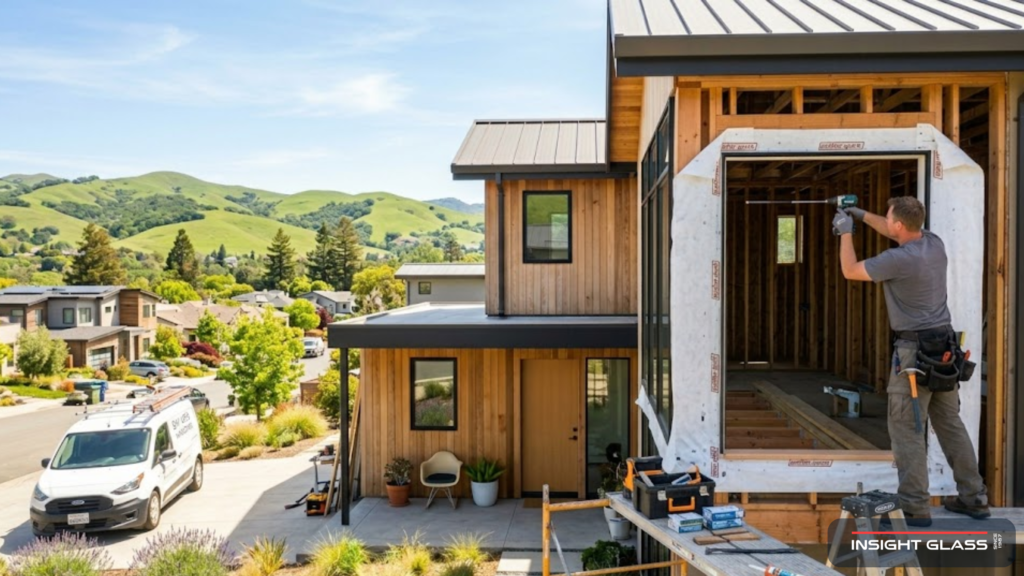
If you live in the Bay Area, fire season is no longer a distant concern reserved for rural mountain communities. Over the past several years, wildfires have pushed closer to suburban neighborhoods across Northern California, and updated building codes now reflect that reality. For homeowners in designated fire zones, a proper new construction windows installation is one of the most important upgrades you can make to protect your home, and spring is the best time to get it on the calendar.
At Insight Glass, we’ve been helping Bay Area homeowners navigate window upgrades since 1987, from straightforward energy efficiency improvements to code-required fire-rated installations in WUI (Wildland-Urban Interface) zones. Here’s what you should know before fire season peaks.
Why Fire Season Changes the Window Conversation
In most parts of the country, choosing new windows is primarily about energy efficiency, curb appeal, and comfort. In the Bay Area, there’s an additional factor that many homeowners don’t think about until they’re deep into a remodel or insurance review: fire resistance.
California’s building codes require that homes in designated Fire Hazard Severity Zones use tempered glass, ignition-resistant frames, and ember-safe assemblies. As of January 2026, updated WUI requirements under Title 24, Part 7 consolidate and strengthen these standards. If your home sits in a Very High Fire Hazard Severity Zone, which includes parts of Oakland, Berkeley, Napa, Santa Rosa, Vallejo, and neighborhoods across Marin and Contra Costa counties, your new construction windows must meet these specifications.
A standard window replacement (retrofit into existing frames) may not meet these requirements, particularly if the existing window frame is not rated for fire exposure. That’s where a full new construction window installation becomes the only compliant path forward.
What Makes New Construction Installation Different
The distinction between a retrofit and a new construction install comes down to how the window connects to your home’s structure.
With a construction window, the installer removes everything down to the rough opening, exposing the wall studs. The new window unit includes a nail fin, a flanged edge that fastens directly to the framing. Before the window goes in, the installer prepares the rough opening with house wrap and a waterproof sill pan using flashing tape. This creates a continuous weather barrier that protects against both water intrusion and ember penetration.
Once the window is set level and shimmed into place, the nail fin is secured to the framing, and flashing tape is applied over the side flanges and across the top. The house wrap flap at the top corners gets folded down and sealed. On the interior, low-expansion spray foam fills the gap between the window frame and the studs.
The Installation Process: What to Expect
If you’ve never been through a new construction window project, here’s a straightforward overview of what happens at each stage.
Rough Opening Preparation
Your installer measures and verifies that the rough opening is the correct size. The house wrap around the opening is cut and folded in, and a sill pan is created with flashing tape across the bottom, extending up the sides. This is the first and most important line of defense against water and embers reaching the framing.
Setting the Window
A continuous bead of sealant is applied to the back of the nail fin along the top and sides, but not the bottom. Leaving the bottom unsealed allows moisture to drain out rather than pool. The window is placed into the opening, shimmed level, and checked for plumb and square.
Securing and Flashing
The nail fin is fastened with galvanized roofing nails or screws. Then flashing tape goes over the side flanges first, then across the top. The house wrap flap folds down over the top flashing and gets sealed at the top corners with tape. This shingle-style sequence ensures water always sheds outward and down.
Interior Insulation
Low-expansion foam or fiberglass fills the gap between the window frame and the rough opening from the inside. This step is essential for both energy efficiency and preventing air leakage that could draw embers or smoke into the home.
For a whole-house project, expect the work to take roughly one week, depending on the number of openings and the types of windows involved.
Need a professional assessment before fire season? We’ll check your property’s fire zone designation, evaluate your existing frames, and walk you through exactly what’s required.
Call 707-746-6571Which Bay Area Homes Need This Most
Not every Bay Area home requires fire-rated windows. But a significant number fall into zones where the updated codes apply. Here are some of the areas where homeowners most commonly need a full new construction window installation for compliance:
Napa & Sonoma Counties: Neighborhoods throughout Napa and Santa Rosa, where rebuilding after recent wildfires has made fire-rated construction the standard.
Marin County: Hillside communities including Mill Valley, Tiburon, and Novato.
Solano County: Parts of Vallejo, Benicia, and Fairfield that border open grassland.
Contra Costa County: WUI-designated pockets near Walnut Creek, Orinda, and Lafayette.
Even if your home isn’t in a designated fire zone today, California’s fire maps are updated periodically, and areas previously considered low risk have been reclassified. Upgrading proactively can protect your home and simplify future insurance renewals.
Why Spring Is the Right Time to Schedule
There’s a practical reason to book your new construction window installation in spring rather than waiting until summer or fall.
Contractor availability is best right now. Once summer construction season hits, experienced window installers across the Bay Area are booked out weeks or months in advance. Scheduling in March, April, or May gives you more flexibility and shorter lead times on custom-ordered window units.
Spring weather is ideal for installation. Flashing tape, sealants, and spray foam all perform best in mild, dry conditions. The Bay Area’s spring climate, with temperatures typically in the 60s and low humidity, creates perfect curing conditions. By contrast, summer heat can cause sealants to set too quickly, and fall rain introduces moisture into the rough opening before the window is fully sealed.
And the biggest reason: your windows will be in place and fully sealed before fire season begins. That’s peace of mind you can’t put a price on.
Does Your Home Need a New Construction Window Install?
Making the Right Decision for Your Home
If you’re unsure whether your home needs a full new construction install or a retrofit replacement, the answer usually comes down to two things: the condition of your existing frames and whether your property falls within a fire hazard zone.
When the frames are solid and your home is outside WUI boundaries, a quality replacement window can deliver excellent energy efficiency and comfort. But when frames are deteriorating, when you’re changing window sizes, or when fire code compliance is on the table, a new construction window installation is the approach that protects your investment in the long term.
At Insight Glass, we assess your existing frames, check your property’s fire zone designation, and walk you through exactly what’s required and what’s optional. No pressure. Just clear guidance from a team that understands both the building science and the local codes.
Since 1987, Insight Glass has provided top-quality new construction windows installation across the Bay Area.
Call 707-746-6571 to Schedule Before Fire Season!
CONTACT US TO GET A FREE ESTIMATE!