
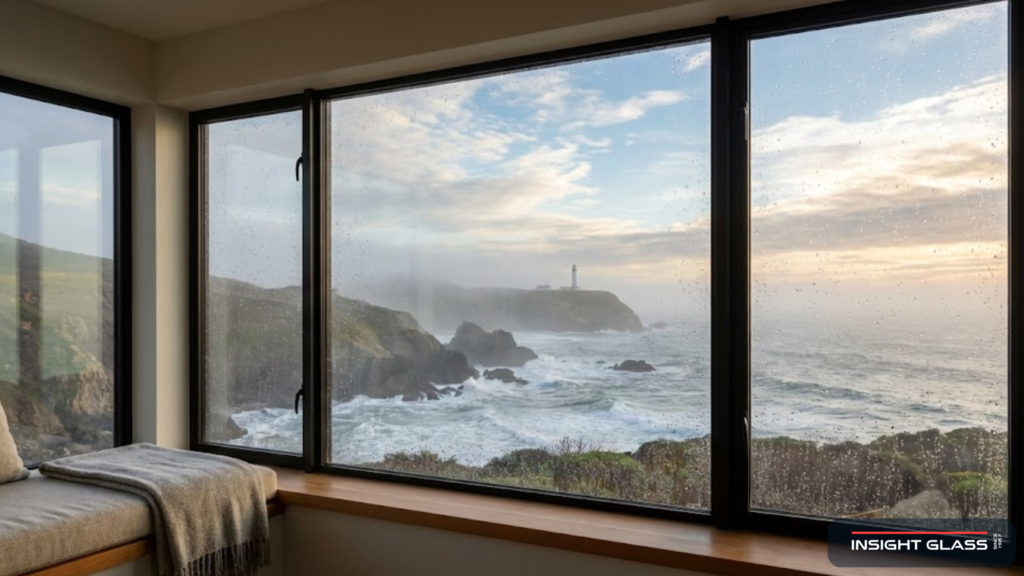
The best window for salt air exposure combines corrosion-resistant frame materials like vinyl or fiberglass with marine-grade stainless steel hardware and advanced seal technology that prevents the premature failures plaguing coastal Bay Area homes in Pacifica, Sausalito, and Half Moon Bay
Why San Francisco Bay Coastal Homes Demand Specialized Windows
Determining the best window for salt air conditions starts with understanding what makes Bay Area coastal environments uniquely destructive to standard building materials. Persistent fog rolling off the Pacific carries salt particles that settle on every exposed surface. This salt air doesn’t just appear during storms—it’s a daily assault, 200+ days a year, in coastal areas from Point Reyes to Montara.
Windows and doors face this challenge continuously. Standard aluminum windows show corrosion pitting within three years. Wood windows absorb salt-laden moisture, which can lead to rot in the bottom rails and corner joints. Even premium products fail prematurely when materials aren’t specified for marine exposure. The best window for salt air must resist corrosion, maintain seal integrity despite temperature cycling, and function smoothly despite constant moisture exposure.
Material Selection: Frames That Survive Coastal Assault
Frame material determines window longevity in coastal environments more than any other factor. Three materials provide adequate salt resistance for Bay Area homes.
Vinyl windows lead in pure corrosion resistance because the material itself is impervious to salt air. Modern vinyl formulations resist UV degradation that once caused yellowing and brittleness in coastal installations. For windows for coastal homes, vinyl offers exceptional value—combining low maintenance, good energy efficiency, and decades of reliable performance. Double-hung and casement windows in vinyl construction suit most residential applications without the premium costs of other materials.
Fiberglass window frames provide even greater structural strength while remaining completely immune to salt corrosion. The material’s low thermal expansion keeps seals intact through the Bay Area’s daily temperature swings—cool foggy mornings to warm sunny afternoons. Fiberglass costs 30-50% more than vinyl but justifies the premium in severely exposed locations that face direct ocean spray.
Aluminum windows require special consideration in salt environments. Standard aluminum corrodes rapidly, but marine-grade aluminum with a powder coat or anodized finish resists corrosion when properly maintained. However, any scratch or chip exposing bare metal creates corrosion points. Thermally broken aluminum—with insulating barriers preventing heat transfer—performs better than solid aluminum profiles while still requiring vigilant maintenance.
Wood windows should generally be avoided in direct coastal exposure unless clad with aluminum or vinyl exteriors. Even then, moisture intrusion at joints or hardware penetrations can reach wood cores, starting rot that spreads invisibly behind protective cladding.
Glass Specifications for Coastal Fog Performance
The type of glass matters as much as the frame material for coastal fog window performance. Bay Area’s persistent moisture creates condensation challenges that standard glass units can’t handle well.
Low-E glass for coastal climates serves dual purposes. The coating blocks UV rays that fade interiors while improving thermal performance, reducing condensation. Low-E coatings keep interior glass surfaces warmer, preventing moisture from condensing when humid outdoor air contacts cool glass.
Impact-resistant glass becomes relevant for properties in exposed locations experiencing strong winds during winter storms. While the Bay Area doesn’t face hurricanes, severe weather occasionally brings high-wind events that make impact-rated glass a valuable insurance option. Laminated impact glass also provides superior seal integrity, helping prevent the window seal failure that plagues coastal installations.
Gas fills between glass panes require careful consideration. Standard argon fills perform well, but krypton—though more expensive—provides better insulation in thinner profiles. The gas type matters less than seal quality, as any gas-fill leak negates the thermal advantages.
Hardware and Operational Components
Marine-grade stainless steel hardware is non-negotiable for coastal windows. Standard steel or zinc-plated components rust within months when exposed to salt air. Locks, hinges, rollers, and operators must all be specified in 316 stainless steel or equivalent corrosion-resistant materials.
Casement windows provide excellent seal performance in coastal conditions because the sash compresses against weatherstripping when closed, creating positive pressure that resists moisture intrusion. When a window opens, casement designs also allow better ventilation control than double-hung windows in windy conditions.
Weatherstripping materials must withstand harsh weather conditions, including UV exposure and salt contact. EPDM rubber or silicone seals last longer than standard vinyl or foam weatherstripping common in interior climate installations.
Window Seal Failure Prevention Strategies
Preventing window seal failure requires understanding the causes of seal failure in coastal environments. Temperature cycling—daily swings between cool fog and warm sun—stresses perimeter seals. Expansion and contraction eventually break the adhesive bonds between glass and spacers, allowing moisture to enter insulated glass units.
Quality spacer systems using warm-edge technology resist seal failure better than traditional aluminum spacers. These specialized spacers conduct less heat, reducing temperature differences that stress seals. Materials like stainless steel, composite, or foam spacers maintain flexibility through temperature changes, preserving seal integrity for decades rather than years.
Proper installation dramatically affects seal longevity. Flashing must direct water away from frames rather than allowing it to pool against seals. Setting blocks that support glass weight must be positioned correctly to prevent stress concentrations that accelerate seal failure.
Ventilation Styles and Salt Air Resistance
The type of window selected affects both salt resistance and functional performance. Casement windows excel in coastal installations because their operating mechanism creates tight seals and allows complete openings for ventilation without screens protruding into salt spray.
Double hung windows work well but require more maintenance in coastal settings. The meeting rails where sashes overlap collect salt deposits that can interfere with smooth operation. Regular cleaning prevents buildup that stresses hardware and weatherstripping.
Sliding windows should generally be avoided in severe coastal exposure. The track systems collect debris and salt that accelerate wear on rollers and weatherstripping. When tracks corrode or become pitted, smooth operation becomes impossible.
Maintenance Requirements for Coastal Windows
Even the best window for salt air requires maintenance to achieve expected longevity. Monthly washing with fresh water removes salt deposits before they concentrate enough to cause damage. Pay particular attention to hardware, tracks, and weatherstripping where salt tends to accumulate.
Lubricate moving parts quarterly using marine-grade lubricants formulated for salt exposure. Standard petroleum-based products wash away quickly in coastal moisture, leaving components unprotected.
Annual professional inspection identifies minor issues before they become failures. Check for seal degradation, hardware corrosion, and weatherstripping that is compressed, reducing effectiveness.
Professional Installation for Coastal Performance
Proper installation separates windows that last for decades from those that require replacement within years. Flashing details, sealant selection, and drainage plane integration require expertise beyond standard window installation. A qualified windows installation contractor experienced with coastal conditions understands critical details.
For new construction windows installation in coastal locations, specifying appropriate materials and installation methods from the design phase prevents costly failures. Builders working in Marin, San Mateo coastal areas, and San Francisco’s ocean-facing neighborhoods should default to marine-grade specifications.
Protect Your Coastal Investment
Bay Area coastal properties demand windows engineered for salt-air exposure. Standard products fail prematurely, requiring expensive replacements that proper initial specification would prevent.
Ready to install windows that survive coastal conditions? Consult experienced window-replacement experts who understand the Bay Area’s salt-air challenges. Insight Glass has installed thousands of coastal windows throughout Pacifica, Half Moon Bay, Sausalito, and San Francisco’s western neighborhoods.
Our team specifies frame materials, glass packages, and hardware that withstand persistent fog and salt spray. We understand which products deliver on manufacturer promises and which fail despite marketing claims.
Contact us to discuss window solutions for your coastal property. Stop replacing corroded windows every decade—invest in materials engineered to last in California’s harshest coastal environments.
Since 1987, Insight Glass has provided top-quality windows replacement or installation in the Bay Area.
Call 707-746-6571 for Expert Installation!
CONTACT US TO GET A FREE ESTIMATE!