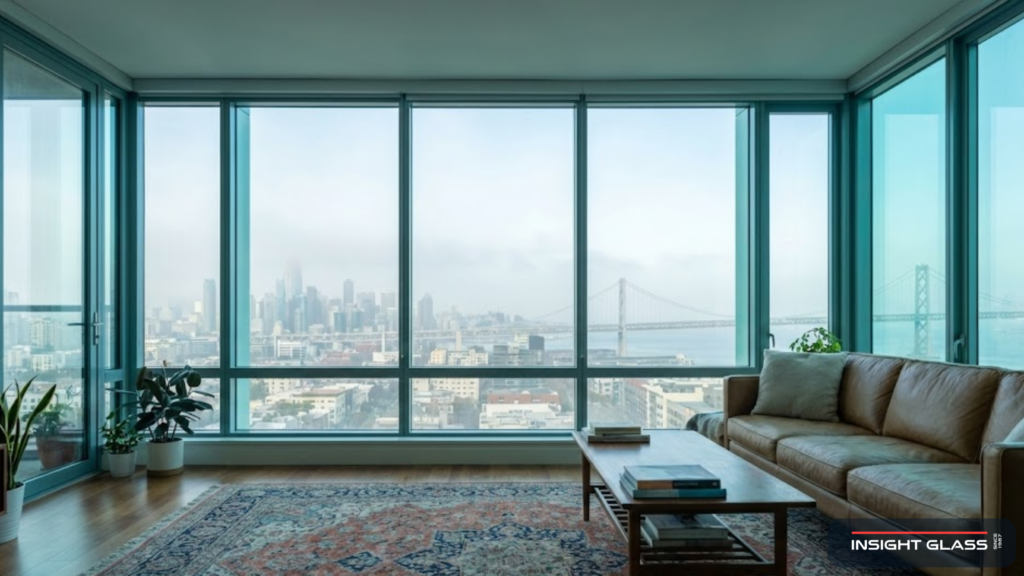
Low-e glass benefits extend beyond energy savings to include blocking harmful UV rays that damage furniture, flooring, and artwork, even during San Francisco’s foggy winters when sunlight appears weak but ultraviolet radiation remains intense
Why Winter Sunlight Still Threatens Your Interior
San Francisco’s January sun feels gentle compared to summer heat, leading many homeowners to underestimate ongoing damage to their interiors. However, low-e glass benefits include year-round protection from ultraviolet radiation that penetrates windows regardless of season or temperature. UV intensity remains surprisingly high during Bay Area winters, steadily fading your furniture, rugs, and hardwood floors even when fog obscures direct sunlight.
The misconception that weak winter sun poses minimal risk costs homeowners thousands in damaged furnishings. A leather sofa positioned near south-facing windows loses color uniformity within 18 months. Hardwood floors develop distinct fading patterns where sunlight strikes daily. Fine artwork and family photographs bleach to pale shadows of their original colors. These sun-damaged windows allow sunlight to enter continuously for 365 days annually unless the window glass incorporates protective coatings.
Understanding Low-Emissivity Coating Technology
Emissivity glass refers to window glass with microscopically thin metallic coatings applied to the surface of the glass during manufacturing. These coatings—invisible to human eyes—selectively control which wavelengths pass through while blocking UV rays and infrared radiation.
The coating works through reflection rather than absorption. Harmful UV rays strike the coated glass surface and bounce back outside rather than entering your home. This protection functions identically in January and July, providing consistent UV protection for furniture regardless of outdoor temperature or cloud cover.
Compared to standard uncoated glass that allows 70-75% of UV radiation to pass through, low-E glass blocks up to 99% while still transmitting visible light. You maintain bright, naturally lit interiors without the radiation that destroys materials.
How Low-E Glass Controls Heat While Admitting Light
Beyond UV protection, energy-efficient coatings dramatically improve energy efficiency by managing infrared heat transfer. The Bay Area’s mild climate benefits from both winter heat retention and summer heat rejection that low-E glass provides.
During cool mornings, low-E coatings reduce heat loss from inside by reflecting heat back into rooms rather than letting it escape through the glass. This keeps indoor temperatures more stable, reducing the heating burden on furnaces or heat pumps. The coating essentially acts as an invisible insulating blanket.
When the afternoon sun warms your home, properly specified low-E coatings also control solar heat gain—the amount of the sun’s energy that enters your home as heat. Different low-E formulations emphasize either heat retention or heat rejection, depending on climate needs. Bay Area homes typically benefit from balanced coatings that retain morning warmth while limiting afternoon overheating.
Energy Savings Beyond Summer Cooling
Most homeowners associate energy-efficient windows with air conditioning savings, but heating and cooling costs in the Bay Area often involve more heating than cooling. Low-E glass addresses both.
Compared to standard glass, low-E windows reduce energy consumption by 30-50% annually. For a typical San Francisco home, this translates to $200- $400 in yearly savings on utility bills. Over a window’s 20-30 year lifespan, these savings exceed the initial premium for low-E glass.
Energy loss through windows accounts for 25-30% of residential heating and cooling loads. Upgrading to low-E glass dramatically reduces this waste while maintaining the natural light that makes Bay Area homes attractive. You don’t sacrifice brightness or views to achieve efficiency.
When combined with argon gas fills between glass panes, low-E coatings create insulated glass units with exceptional thermal performance. Argon’s density slows heat conduction better than air does, and low-E coatings prevent radiative heat transfer that gas alone can’t address.
Environmental Impact and Carbon Footprint
Reducing residential energy consumption directly shrinks your carbon footprint. California’s electricity grid, while increasingly renewable, still includes fossil fuel generation. Every kilowatt-hour saved through better window performance reduces demand on power plants.
Low-E glass contributes to green building certifications, such as LEED, and to compliance with California’s Title 24. New construction and major renovations in the Bay Area face increasingly strict energy requirements that standard glass cannot meet. Low-E technology provides necessary performance without aesthetic compromises.
Additional Comfort Benefits
Beyond measurable energy savings and UV protection, low-E glass improves daily comfort in subtle but meaningful ways. Rooms maintain more uniform temperatures without the cold zones near windows that plague homes with standard glass. You can position furniture anywhere without worrying about uncomfortable drafts.
Reduced glare makes south and west-facing rooms more usable during peak sun hours. The coating softens harsh light while preserving views and brightness. This matters particularly for home offices where computer screens face windows or for rooms with televisions.
For homes near busy streets or highways, low-E glass can complement soundproof window installation by adding an extra layer to insulated glass units. While not primarily acoustic products, the thicker glass assemblies required for optimal low-E performance also dampen sound transmission.
Long-Term Value Protection
UV protection for furniture represents hidden but substantial financial value. High-quality hardwood flooring costs $8-$15 per square foot installed. A 300-square-foot living room with exposed flooring requires $2,400-$4,500 in material investment. Protecting this from UV fading extends its appearance and delays costly refinishing or replacement.
Fine rugs, upholstered furniture, and artwork similarly represent thousands in vulnerable investments. Low-E glass preserves these materials indefinitely rather than accepting gradual degradation as unavoidable.
Homes with low-E windows command premium resale prices. Buyers increasingly prioritize energy efficiency and recognize the ongoing savings these windows provide. The initial investment returns both through reduced operating costs and enhanced property value.
Protect Your Home Investment Year-Round
Bay Area homeowners deserve window technology that addresses regional climate challenges while protecting interior investments. Low-E glass delivers proven performance backed by decades of development and millions of installations worldwide.
Ready to upgrade to protective, energy-efficient windows? Consult experienced window-replacement experts who understand the Bay Area’s requirements. Insight Glass has installed thousands of low-E windows throughout San Francisco, Oakland, San Jose, and surrounding communities.
Our team helps homeowners select appropriate low-E formulations for their specific exposure and needs. Not all low-E coatings perform identically—specifications matter. We explain options clearly and ensure you receive windows optimized for Bay Area conditions.
Whether replacing existing windows or planning new construction window installation, we provide detailed proposals covering performance expectations, energy savings projections, and installation timelines. Work with a qualified windows installation contractor who prioritizes both immediate results and long-term satisfaction.
Contact us to discuss low-E window solutions for your home. Protect your furniture, reduce energy costs, and improve comfort with proven glass technology designed for year-round Bay Area conditions.
Since 1987, Insight Glass has provided top-quality windows replacement or installation in the Bay Area.
Call 707-746-6571 for Expert Installation!
CONTACT US TO GET A FREE ESTIMATE!