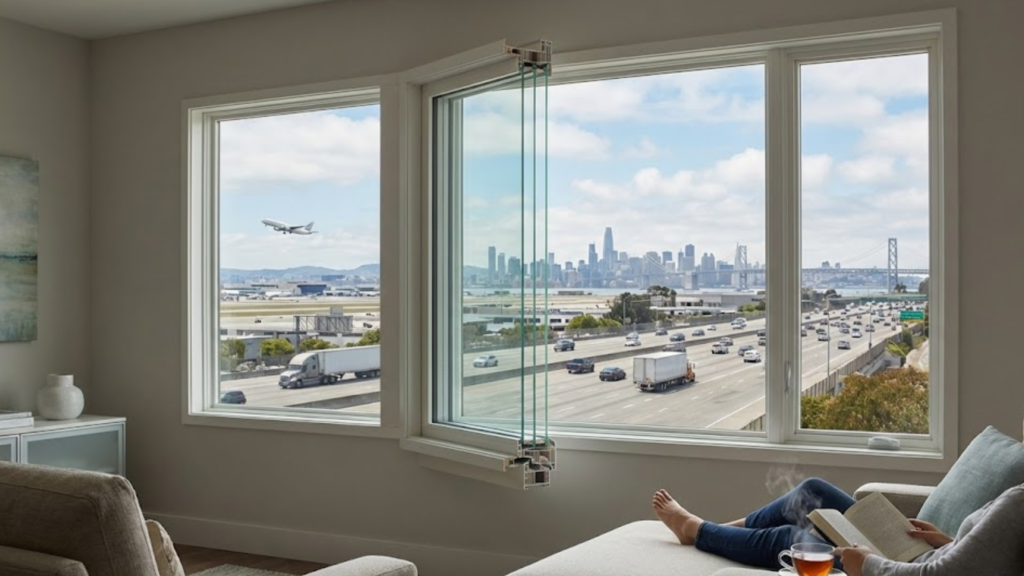
Are triple glazed windows soundproof? While not 100% soundproof, they dramatically reduce noise through three panes of glass and insulating gas—making them highly effective for Bay Area homes near highways, airports, and busy streets.
The Bay Area Noise Challenge: Are Triple Glazed Windows Soundproof?
Whether it’s the constant hum of Highway 880, a neighbor’s leaf blower, or the SFO flight path overhead, unwanted noise ruins the comfort of your home. Triple glazing is often sold as the ultimate solution—but does adding a third pane actually deliver silence?
If you’re asking “are triple glazed windows soundproof?”—here’s the direct answer: No window is 100% soundproof, but triple glazed windows are highly effective at dampening noise. They typically provide a 20-30% improvement in sound reduction over standard double-glazed windows and can muffle external sounds to a level that’s no longer intrusive.
The nuance? While triple-pane windows are superior at blocking sound waves, their performance depends heavily on glass thickness, spacing, and frame quality. This post breaks down the science of how triple glazing blocks sound, why the “third pane” isn’t always a magic fix, and how it compares to other acoustic options for Bay Area homeowners.
How Triple Glazing Dampens Sound (The Science of Mass)
Triple-glazed windows offer three layers of glass separated by two insulating gaps filled with Argon or Krypton gas. This creates multiple barriers that sound must penetrate before reaching your interior.
Sound waves lose energy every time they transition between different media—from glass to gas to glass again. Triple glazing forces sound to make this transition twice as much as a single-pane window, significantly reducing noise pollution that reaches your living space.
In acoustics, mass is the enemy of sound. Adding an extra pane of glass roughly doubles the window’s physical weight, making it significantly harder for sound vibrations to pass through the unit. Those additional layers create what acousticians call “decoupling”—each layer moves independently, preventing sound transmission from one surface to the next.
The window frames also play a critical role. High-quality frames with proper weatherstripping ensure there are no gaps through which sound can leak. Remember: if air can penetrate, so can noise.
The “Asymmetric Glass” Factor: Why Not All Triple Glazing is Equal
Here’s where many homeowners get surprised: not all triple-pane windows deliver the same level of sound insulation.
The resonance problem occurs when all three panes of glass are the same thickness (for example, 4mm each). At specific frequencies, all three panes may vibrate together, allowing certain noises to pass through more easily than expected.
The solution? The most effective soundproof windows use dissimilar glass—varying thicknesses like 4mm, 6mm, and 8mm panes. This asymmetric configuration “breaks” sound waves at different frequencies, providing a much quieter environment. Each pane vibrates at its own frequency, preventing resonance and blocking a wider range of sounds.
Dense gases like Argon or Krypton in the cavities between glass don’t just reduce heat loss—they also slow down sound transmission better than plain air. Krypton is particularly effective due to its higher density, though it comes at a premium price.
Some manufacturers incorporate polyvinyl butyral (PVB) interlayers in laminated glass as one of the three panes, combining the noise-blocking benefits of lamination with the thermal performance of triple glazing.
Triple Glazed vs. Double Glazed: A Noise Comparison
Sound Transmission Class (STC) ratings measure how well windows block sound. Higher numbers mean better performance:
Standard Double Pane: STC ~28-32 (Good for quiet Bay Area suburbs like Danville or Los Gatos)
Standard Triple Pane: STC ~34-40 (Ideal for busy streets in San Francisco, Oakland, or near San Jose International Airport)
Triple glazing is generally 5-10 decibels (dB) better than double glazing, and a comparison of the two shows that this difference is significant. The human ear perceives every 10 dB reduction as “half as loud,” so even a 5 dB improvement makes a noticeable difference.
The “muffle” vs. “silence” distinction is important. Triple glazing excels at turning a “shout” into a “whisper,” but high-pitched sirens or low-frequency bass—like a garbage truck rumbling by or a neighbor’s subwoofer—may still be slightly audible. The extra layer of glass blocks mid-range frequencies most effectively.
For Bay Area homes near BART lines, freeways, or under flight paths, this level of noise reduction transforms living spaces. Working with experienced replacement window experts ensures proper installation that maximizes acoustic performance.
Triple Glazing vs. Acoustic Glass (Which Should You Choose?)
Here’s an interesting debate: “Acoustic Double Glazing” using laminated glass can sometimes outperform “Standard Triple Glazing” for pure noise reduction. So which option makes sense for your Bay Area home?
Choose Triple Glazing When:
- You want the dual benefit of maximum energy efficiency improvements (lower PG&E bills) and significant noise reduction.
- You live in microclimates with temperature extremes (hot East Bay summers or foggy coastal winters)
- You’re investing long-term in a comprehensive home upgrade.
Choose Acoustic Double Glazing When:
- Your only concern is reducing noise pollution.
- You live in a moderate Bay Area climate where extra thermal insulation isn’t critical.
- Budget constraints make the 30-50% cost premium of triple glazing prohibitive.
Many soundproof window installers recommend acoustic laminated glass as one layer within a triple-glazed unit for homeowners who want the absolute best performance in both categories.
The Trade-offs: What to Consider Before Buying
Cost Considerations
Triple glazing represents a significant investment, typically costing 30-50% more than double-pane options. For a typical Bay Area home with 15-20 windows, this price difference can add $5,000-$10,000 to your project. However, the combination of noise reduction and energy savings often justifies the expense over the window’s 20-25 year lifespan.
Weight and Structural Requirements
The extra pane makes windows much heavier—sometimes 40-50% heavier than double-pane units. Ensure your window frames and hardware are high-quality to prevent sagging over time. This is especially important for large picture windows or sliding glass doors. The best window installation contractor will evaluate your existing frames to confirm they can support the additional weight.
The “Weakest Link” Principle
Even the best triple-pane windows won’t work if the seals are poor or if your walls lack proper insulation. Sound finds the path of least resistance. If your windows are perfect but sound leaks through electrical outlets, doors, or thin walls, you won’t achieve the quiet you’re expecting.
Consider triple glazing as part of a comprehensive acoustic treatment, not a standalone solution.
Frequently Asked Questions
Are triple-pane windows worth it for noise reduction?
Yes, especially if you’re also looking to improve your home’s energy efficiency. For Bay Area homeowners facing both noise and high energy costs, triple-pane windows offer dual benefits. The added sound insulation is most valuable near highways, airports, or urban centers where noise levels consistently exceed 65 dB.
What is the best glass to reduce noise?
Laminated or “acoustic” glass provides the best noise reduction. This glass type includes a PVB interlayer that dampens vibrations. The ideal solution combines laminated glass as a single layer in a triple-glazed unit, providing both acoustic and thermal performance.
What are the disadvantages of triple glazing?
Increased cost (30-50% more than double glazing), heavier weight requiring stronger frames, and slightly reduced “solar gain”—meaning less natural heat from the sun enters your home. In foggy Bay Area microclimates, this reduced solar gain is rarely an issue, but homes in sunny Walnut Creek or Pleasanton may notice the difference.
Do they block airplane noise?
They significantly reduce it. Triple glazing can lower airplane noise by 10-15 dB, making overhead flights much less intrusive. However, for homes directly under SFO or Oakland Airport flight paths, you may need specialized acoustic inserts or secondary glazing systems in addition to triple-pane windows for maximum noise reduction.
Make the Right Choice for Your Bay Area Home
Triple-glazed windows are a premium solution for homeowners seeking peace. While they aren’t a “silence button” for the world outside, the combination of extra mass, gas-filled cavities, and proper installation makes them vastly superior to standard windows for reducing noise pollution.
If you’re buying for noise reduction, don’t just ask for “triple pane”—specifically request asymmetric glass thicknesses to get the best acoustic performance for your investment. The difference between standard and optimized triple glazing can mean 3-5 additional dB of noise reduction.
For new construction windows installation or retrofit projects, discuss your specific noise concerns with your installer. They can recommend the optimal glass configuration, frame style, and sealing techniques to achieve the quiet environment your Bay Area home deserves.
Since 1987, Insight Glass has provided top-quality windows installation in the Bay Area.
Call 707-746-6571 for Expert Installation!
CONTACT US TO GET A FREE ESTIMATE!