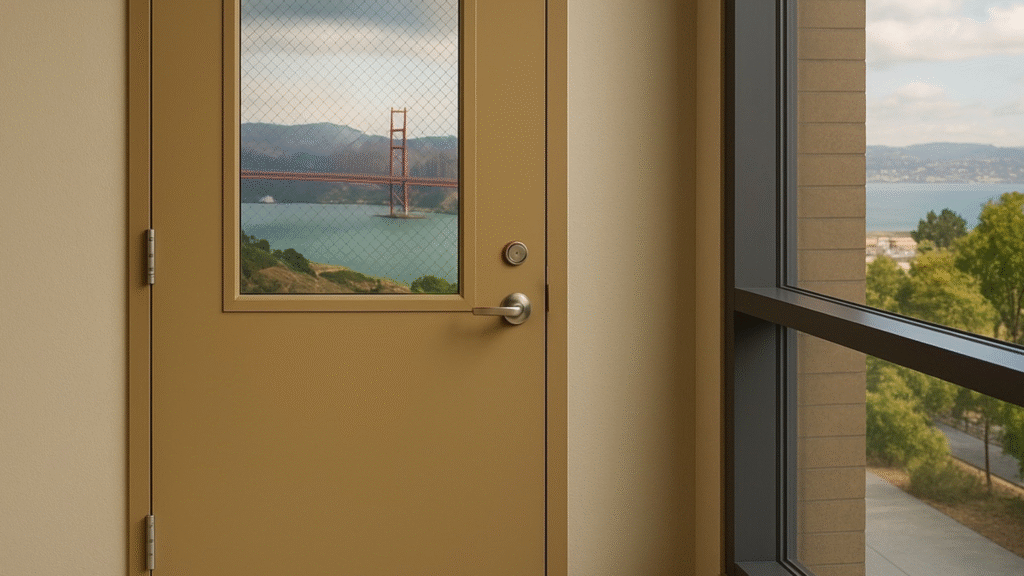
A 20 minute fire rated door with glass balances fire protection with visibility and natural light in Bay Area commercial and residential buildings. Understanding the testing standards, glass types, and code requirements ensures you select compliant doors that meet California’s building regulations.
What is a 20 Minute Fire Rated Door with Glass
A 20-minute fire-rated door with glass provides fire protection while allowing visibility through glazed openings. These specialized doors use fire-rated glass and tested assemblies that resist fire spread for at least 20 minutes under standardized testing conditions.
The 20-minute rating represents the minimum fire protection level for many applications throughout San Francisco, Oakland, San Jose, and other Bay Area jurisdictions. This rating suits corridors, interior partitions, and openings where codes require fire resistance but don’t mandate higher protection levels.
Unlike standard doors that fail quickly when exposed to fire, a 20-minute fire-rated door with glass maintains its integrity long enough to slow fire progression and allow building occupants to evacuate safely. The glass components meet specific fire and impact safety standards that differ significantly from ordinary window glass.
Understanding Fire Ratings and Testing Standards
Fire ratings indicate how long door assemblies withstand standardized fire test exposure. The rating applies to the complete assembly—door slab, frame, glass, hardware, and all components working together.
Testing laboratories expose doors to controlled fire in accordance with established temperature curves. The assembly must prevent flame passage for the rated duration while maintaining structural stability. A 20-minute fire-rated door with glass must keep flames from penetrating through the door or glass openings for the whole 20-minute test period.
Fire ratings differ from fire resistance ratings applied to walls and floor assemblies. Door ratings are measured in minutes (20, 45, 60, 90 minutes), while wall ratings typically use hours (1-hour, 2-hour). The distinction reflects different testing methods and performance expectations.
Codes require specific fire ratings based on the wall rating the door penetrates. A 20-minute-rated door typically installs in walls rated for one hour or less. Higher wall ratings generally demand doors with 45-minute or greater fire protection.
UL 10C Testing Requirements
UL 10C represents the primary testing standard for fire doors with glazing in North America. This Underwriters Laboratories protocol evaluates both fire endurance and hose stream tests that simulate firefighting conditions.
During UL 10C fire testing, doors are subjected to gradually increasing temperatures, reaching approximately 1000°F at 10 minutes and 1300°F at 20 minutes. The door must prevent the passage of flames and restrict the rise in temperature on the unexposed surface throughout the test duration.
Following fire exposure, assemblies undergo hose stream tests. Firefighters’ hoses direct high-pressure water streams at the hot door, simulating real firefighting conditions. The door must withstand this impact without creating openings that would allow fire passage.
A 20-minute fire-rated door with glass passing UL 10C testing receives official classification. Only doors maintaining their listings through proper installation and unmodified components provide the protection their ratings promise.
Positive pressure testing has become increasingly important in modern fire door evaluation. Traditional testing used neutral or negative pressure, but real fires often create positive pressure that pushes flames and smoke through openings more aggressively. Current standards include positive-pressure considerations to reflect actual fire conditions better.
Glass Options for 20 Minute Fire Doors
Not all glass qualifies for use in a 20-minute fire-rated door. The glass must pass the same UL 10C testing as the complete door assembly.
Wired Glass
Traditional wired glass contains embedded wire mesh that holds fractured glass pieces together during fire exposure. While effective for fire containment, wired glass presents impact safety concerns and has limited aesthetic appeal. Building codes increasingly restrict the use of wired glass due to injury risks.
Ceramic Glass
Specialty ceramic glass products withstand extreme temperatures while maintaining transparency. These materials don’t require wire reinforcement, offering a cleaner appearance than wired options. Ceramic glass works well for vision panels and smaller glazed openings in 20-minute applications.
Fire-Rated Laminated Glass
Advanced laminated products use intumescent interlayers that expand when heated, creating insulating barriers. These systems provide superior clarity and impact safety compared to traditional wired glass. Fire-rated laminated glass has become the preferred choice for Bay Area projects prioritizing both safety and aesthetics.
Glass size limitations apply based on door location and rating. A 20-minute fire-rated door with glass typically allows larger glazed areas than doors with higher ratings. Maximum glass area varies by manufacturer and specific product listings, so always verify allowable dimensions with classified and labeled assemblies.
Impact Safety Requirements
Beyond fire protection, glass in a 20-minute fire-rated door must meet impact safety standards. Building codes mandate safety glazing in hazardous locations, which includes most door applications.
Safety glazing must pass impact tests demonstrating it won’t create dangerous shards when broken. Tempered glass, laminated glass, and wired glass all qualify as safety glazing, though each provides different break patterns and injury protection levels.
Tempered glass alone doesn’t meet fire rating requirements. While it provides excellent impact safety under normal conditions, tempered glass shatters quickly when exposed to fire temperatures. A 20-minute fire-rated door with glass must use materials that satisfy both fire endurance and impact safety simultaneously.
Laminated fire-rated glass offers the best combination of fire protection and impact safety. The lamination prevents dangerous fragmentation during normal impacts, while the fire-rated interlayers provide necessary fire resistance during emergencies.
California building codes strictly enforce safety glazing requirements throughout the Bay Area. Inspectors verify that glass in fire doors meets both fire ratings and impact safety standards appropriate to the installation location.
Where 20 Minute Fire Doors Are Required
Codes require a 20-minute fire-rated door with glass in specific applications throughout Bay Area buildings. Understanding these requirements helps property owners and builders specify appropriate products.
Corridor Doors
Corridors serving as exit access routes often require 20-minute doors. These applications frequently benefit from glazed doors that allow visibility while maintaining the required fire separation.
Interior Office Partitions
Office spaces separated by one-hour fire-rated walls typically use 20-minute doors. Glass panels in these doors preserve open, collaborative environments while meeting code-mandated fire protection.
Storage and Utility Rooms
Certain storage rooms, electrical closets, and utility spaces require 20-minute fire separation from adjacent occupancies. Glazed doors allow a quick visual inspection without opening them.
Multi-Family Residential Buildings
Some multi-family buildings throughout San Francisco, Oakland, and other Bay Area cities require 20-minute doors at unit entries or between common areas and living spaces.
Local jurisdictions interpret and enforce requirements differently. San Francisco maintains stringent building standards in its dense urban environment. Always verify specific code requirements with local building departments before specifying fire doors.
Classified and Labeled Door Assemblies
Proper labeling distinguishes genuine fire-rated products from standard doors. A legitimate 20-minute fire-rated door with glass carries permanent labels indicating its fire rating and listing agency.
Labels typically appear on the door edge or hinge side, showing:
• Fire rating (20 minutes)
• Testing laboratory (UL, Intertek, etc.)
• Manufacturer name
• Specific model or assembly designation
The label proves that the door passed the required fire test protocols. Building inspectors verify these labels during final inspections. Missing, damaged, or altered labels void the fire rating and create code violations.
Complete assemblies include classified frames, hardware, and glass. Installing fire-rated glass in a non-rated frame, or using non-rated hardware, compromises the assembly’s fire protection. All components must carry appropriate ratings and listings.
Bay Area building officials take fire door compliance seriously. Projects using a 20-minute fire-rated door with glass must provide documentation demonstrating that all assembly components match the tested configurations.
Frame and Hardware Considerations
The door slab represents just one component of a fire-rated assembly. Frames and hardware contribute equally to achieving the 20-minute fire protection rating.
Fire-Rated Frames
Frames must carry ratings that match or exceed the door rating. Steel frames most commonly support fire doors, though wood and hollow metal frames also qualify when properly rated and labeled. The frame listing specifies compatible door models and installation requirements.
Frames include intumescent seals that expand when heated, sealing gaps between the door and frame during fires. These seals prevent the passage of smoke and flame through the clearances required for regular door operation.
Hardware Requirements
Hinges, latches, closers, and other hardware must meet fire-rating standards. Standard residential hardware fails quickly under fire exposure. Fire-rated hardware maintains function throughout the test duration, ensuring doors remain closed and latched during fires.
Self-closing devices become mandatory on most fire doors. Codes require that fire doors automatically close and latch after each use, ensuring they’re positioned to protect in the event of a fire. Only specific applications allow fire doors to remain open using automatic release mechanisms tied to fire alarm systems.
California Building Code Requirements
California adopted the International Building Code (IBC) with state-specific amendments affecting fire door requirements throughout the Bay Area. These codes establish minimum standards that local jurisdictions may exceed.
The California Building Code specifies where fire-rated assemblies become necessary based on building type, occupancy classification, and construction type. A 20-minute fire-rated door with glass must meet these requirements, as well as any additional local amendments.
Accessibility Standards
Fire doors must also comply with accessibility requirements. Door opening forces, hardware operation, and clear widths must allow use by people with disabilities. A 20-minute fire-rated door with glass installed in accessible routes must meet additional specifications beyond the basic fire rating.
Energy Code Compliance
California’s Title 24 energy code affects doors in building envelopes. While primarily focused on exterior openings, these requirements sometimes intersect with fire door specifications, particularly for doors connecting conditioned and unconditioned spaces.
Wildfire Interface Requirements
Properties in Bay Area wildland-urban interface zones are subject to additional exterior fire-resistance requirements. While most 20-minute assemblies serve interior applications, fire-rated windows and doors protecting building exteriors in high fire hazard zones must meet CalFire standards exceeding standard interior ratings.
Selecting the Right Door for Your Project
Choosing an appropriate 20-minute fire-rated door with glass balances code compliance, functional needs, aesthetic preferences, and budget constraints for Bay Area projects.
Start with code analysis. Determine the specific fire rating your application requires—some situations need 20 minutes while others mandate higher protection. Architects or code consultants can clarify requirements for complex projects.
Consider the glass area needs. Larger glazed openings provide better visibility and more natural light, but cost more and may be subject to size restrictions based on ratings and location. Balance these factors against project priorities.
Evaluate glass type options. Traditional wired glass costs the least but presents impact safety and aesthetic concerns. Ceramic or laminated fire-rated glass offers superior appearance and safety at a higher price. Bay Area projects increasingly specify laminated products that elegantly meet both fire and impact safety requirements.
Plan for proper installation. Even correctly specified doors fail to provide rated protection if installed improperly. Work with experienced contractors familiar with fire door installation requirements—minor errors in frame installation, hardware mounting, or seal placement void fire ratings.
Budget for complete assemblies. A 20-minute fire-rated door with glass requires rated frames, hardware, and proper installation. Factor these components into project costs rather than focusing only on door slab prices.
For projects involving replacement windows or comprehensive building upgrades, coordinate fire door specifications with overall fire protection strategies. Consistent fire ratings and properly integrated systems provide the best life safety protection for Bay Area buildings.
Since 1987, Insight Glass has provided top-quality windows installation in the Bay Area.
Call 707-746-6571 for Expert Installation!
CONTACT US TO GET A FREE ESTIMATE!