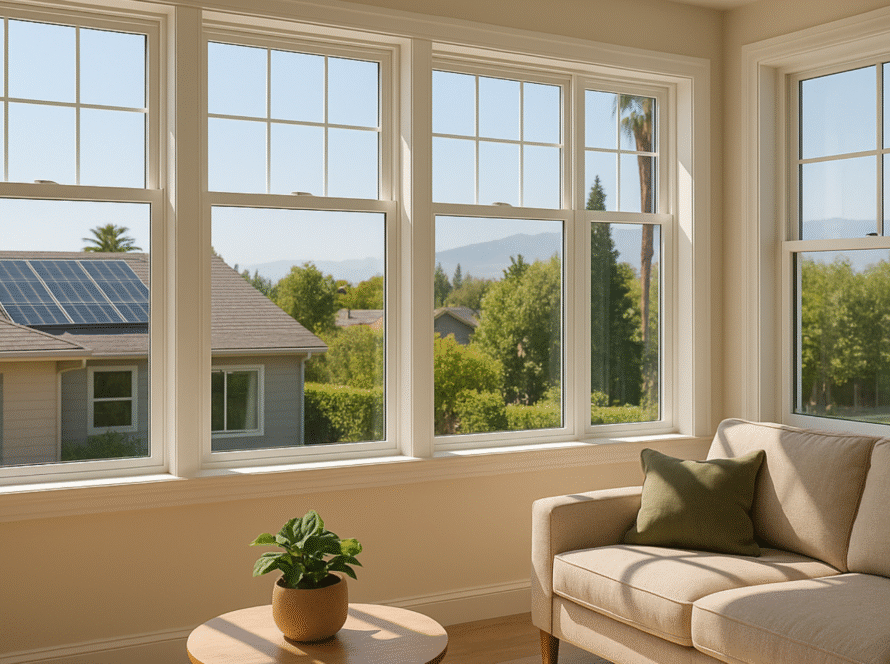
Learning how to soundproof a room from outside noise helps Bay Area residents create peaceful spaces despite urban traffic, neighbor activity, and city sounds. Effective soundproofing combines window upgrades, wall treatments, door sealing, and strategic materials that block, absorb, and dampen sound transmission.
Understanding How Sound Enters Your Room
Understanding how to soundproof a room from outside noise starts with identifying where sound enters. Bay Area homes face constant noise from traffic on busy streets like Geary Boulevard, Market Street, or El Camino Real, plus BART trains, construction, neighbors, and urban activity throughout San Francisco, Oakland, and San Jose.
Sound transmission occurs through three primary pathways: direct penetration through solid materials like walls and ceilings, gaps and openings around windows and doors, and structural vibrations that travel through building frames. Effective soundproofing addresses all three paths rather than focusing on just one area.
Windows typically represent the weakest link in room soundproofing. Standard single-pane windows common in older Bay Area homes provide minimal sound blocking. Gaps around window frames and doors create direct sound channels that bypass wall barriers entirely. Understanding these vulnerabilities helps prioritize soundproofing efforts for maximum impact.
Soundproofing Windows for Maximum Noise Reduction
Windows deserve priority attention when learning how to soundproof a room from outside noise. They represent the primary entry point for sound in most Bay Area homes, and improvements here deliver the most noticeable results.
Installing Soundproof Windows provides the most effective window soundproofing solution. These specialized units use multiple glass panes with varying thicknesses, gas fills between panes, and sound-dampening frames that dramatically reduce noise transmission.
Quality soundproof windows can reduce outside noise by 75-95%, transforming noisy rooms into quiet sanctuaries. The investment makes particular sense for bedrooms facing busy streets, home offices requiring concentration, or any room where peace matters most.
Replacement windows with acoustic features work well during renovations or when existing windows need replacement anyway. The soundproofing benefits complement energy efficiency improvements and enhance aesthetics.
Window Inserts and Secondary Glazing. Interior window inserts create additional sound barriers without replacing existing windows. These acrylic or glass panels mount inside the window frame, adding a second layer that creates a sound-dampening air space between the insert and the original window.
Inserts work well for renters or homeowners seeking non-permanent solutions. They’re removable for seasonal use or when moving, yet provide substantial noise reduction—typically 70-80% when properly installed.
Heavy Curtains and Window Treatments Soundproof curtains made from dense, multi-layer materials help absorb sound and create barriers at windows. While not as effective as acoustic windows or inserts, quality soundproof curtains reduce noise by 20-30% and cost significantly less.
Hang curtains as close to walls as possible, extending rods beyond window frames so curtains seal against walls when closed. Floor-to-ceiling coverage works better than curtains ending at window sills.
Sealing Doors and Entry Points
Doors are another critical consideration for soundproofing a room from outside noise. Standard residential doors provide minimal sound blocking, and gaps around door perimeters create direct sound channels.
Door Sweeps and Seals: Install door sweeps along the bottom edges to seal gaps between doors and thresholds. These simple additions block sound from traveling under doors—often the most significant gap in door assemblies.
Add weatherstripping around all door edges where doors meet frames. Adhesive foam strips or V-channel weatherstripping compress when doors close, creating continuous seals that prevent noise transmission through gaps.
Solid Core Doors: Replace hollow-core doors with solid-core alternatives. Solid doors contain much more Mass that blocks sound transmission. The difference is substantial—solid-core doors reduce noise by 50-70% compared to hollow-core doors.
For maximum soundproofing, consider acoustic-rated doors explicitly designed for sound blocking. These specialized doors incorporate sound-dampening materials and deliver even better performance than standard solid-core options.
Door Blankets and Barriers: Temporary soundproofing using heavy blankets or acoustic blankets hung over doors provides quick noise reduction. While not elegant solutions, these barriers work well for temporary situations or rooms where aesthetics matter less than function.
Adding Mass to Existing Walls
Walls serve as the primary barrier between exterior noise and interior spaces. Increasing wall mass is a fundamental approach to soundproofing a room from outside noise throughout the Bay Area.
Mass Loaded Vinyl (MLV) represents one of the most effective soundproofing materials for walls. This dense, flexible material adds substantial Mass without requiring major construction. MLV hangs directly on existing walls beneath new drywall layers or decorative finishes.
MLV blocks sound transmission by adding weight that resists vibration from sound waves. A single layer of MLV improves sound blocking by 20-30 decibels, resulting in a significant difference in perceived noise levels.
Additional Drywall Layers: Adding second layers of drywall to existing walls increases Mass, which blocks sound. This straightforward approach works well during renovations when walls are open for other work.
Use different drywall thicknesses for the two layers—for example, existing 1/2-inch drywall plus a new 5/8-inch layer. Varying thicknesses prevent sound waves from resonating through both layers at the same frequency.
Apply Green Glue or a similar sound-dampening compound between drywall layers. These viscoelastic materials convert sound energy to heat, providing additional noise reduction beyond simple mass increase.
Resilient Channel Installation Resilient channels create decoupled wall assemblies that prevent sound from traveling through wall studs. These metal channels attach to studs, with drywall mounted to the channels rather than directly to framing.
The decoupling interrupts sound transmission paths, particularly effective at blocking low-frequency noise like traffic rumble or neighbors’ bass. Resilient channel systems improve sound blocking by 10-15 decibels compared to standard wall construction.
Installing Acoustic Panels and Sound Absorption
While mass additions block sound transmission, acoustic panels and absorption materials reduce sound reflection within rooms. Both approaches work synergistically when learning how to soundproof a room from outside noise.
Acoustic Panels Fabric-wrapped acoustic panels mounted on walls absorb sound waves, reducing echo and reverberation. While primarily improving interior acoustics rather than blocking outside noise, acoustic panels complement other soundproofing efforts.
Position acoustic panels on walls facing noise sources. The panels absorb sound that penetrates through windows or walls, preventing it from reflecting around the room and creating persistent noise.
Acoustic panels come in various thicknesses, with thicker panels (2-4 inches) providing better absorption, particularly for lower frequency sounds. Decorative fabric covers allow for matching room aesthetics while serving a functional purpose.
Acoustic foam wedges or pyramid shapes attach directly to walls, providing sound absorption similar to panels but at a lower cost. The three-dimensional shapes increase surface area for better sound wave capture.
Apply acoustic foam strategically rather than covering entire walls. Focus on the first reflection points where sound from windows or doors bounces before reaching the ears. This targeted approach delivers good results without overwhelming the room’s aesthetics.
Fabric Wall Coverings Heavy fabric stretched across wall surfaces absorbs sound while adding texture and warmth to room decor. This approach works particularly well for home theaters or music rooms where sound quality matters alongside noise blocking.
Soundproofing Ceilings
Ceilings require attention when exterior noise comes from above—common in Bay Area multi-story homes near flight paths or when neighbors create noise overhead.
Ceiling Mass and Decoupling: Apply the same mass-addition principles used for walls to soundproof ceilings. Adding drywall layers with sound-dampening compound between them increases noise blocking from above.
Resilient channel systems perform even better on ceilings than on walls. The decoupling prevents sound vibrations from traveling through ceiling joists into the room below.
Soundproof Insulation in Ceiling Cavities. If ceiling cavities remain accessible, add soundproof insulation, such as mineral wool or specialized acoustic insulation. These dense materials absorb sound within ceiling structures before it reaches living spaces.
Acoustic insulation works differently from thermal insulation. Standard fiberglass insulation provides minimal sound blocking. Proper soundproof insulation uses denser materials specifically designed to dampen sound transmission.
Drop Ceilings with Acoustic Tiles. Installing drop ceilings with acoustic tiles creates sound-absorbing barriers below existing ceilings. While reducing room height slightly, this approach provides excellent sound control without major construction.
Acoustic ceiling tiles absorb sound and prevent reflection, while the plenum space above adds additional sound-dampening volume. This combination effectively reduces noise from above.
Using Soundproof Insulation
Proper soundproof insulation within wall and ceiling cavities significantly improves sound blocking when learning how to soundproof a room from outside noise.
Mineral Wool Insulation: Mineral wool (rock wool) insulation provides superior sound-dampening compared to standard fiberglass insulation. The dense fiber structure effectively absorbs sound energy while providing good thermal insulation.
Install mineral wool batts in wall cavities between studs, filling gaps without compressing the batts. Gaps reduce effectiveness, so careful installation matters.
Spray Foam Insulation Closed-cell spray foam insulation adds both sound blocking and air sealing. The foam expands to fill all gaps and cracks, eliminating the air channels that allow sound to pass through standard insulation batts.
While primarily valued for thermal and moisture control, spray foam’s air-sealing properties contribute meaningfully to soundproofing by eliminating one of three sound transmission paths.
Acoustic Insulation Materials Specialized acoustic insulation products designed specifically for soundproofing outperform general-purpose insulation. These materials use optimized density and fiber arrangements to maximize sound absorption.
Consider acoustic insulation for walls facing the noisiest exterior areas—street-facing walls, walls near transit lines, or boundaries with boisterous neighbors.
Floor Treatments for Sound Control
While floors primarily matter for preventing sound transmission to rooms below, specific floor treatments help with overall room soundproofing from outside noise.
Heavy Rugs and Carpeting: Thick rugs or wall-to-wall carpeting absorb sound within rooms, reducing echo and reverberation from sounds that enter through windows or walls. This improves overall acoustic comfort even when not directly blocking exterior noise.
Dense carpet padding under carpeting enhances both sound absorption and impact sound reduction. The combination works particularly well in upstairs rooms where footstep noise matters.
Underlayment Materials: Acoustic underlayment beneath hard flooring, such as hardwood or laminate, reduces sound transmission through the floor while adding Mass that improves overall room acoustics.
These materials prove most valuable in multi-story homes, but the principle of adding Mass and absorption applies to single-story rooms as well.
Quick Fixes and Temporary Solutions
Not every approach to soundproofing a room from outside noise requires major construction. Several temporary or low-commitment solutions provide meaningful improvements.
Furniture Arrangement: Position heavy furniture, such as bookcases, wardrobes, or upholstered pieces, against exterior walls. The mass and absorption these items provide help block and dampen sound transmission.
Books, clothes, and other contents add to the sound-blocking effect. Filled bookcases work particularly well as temporary sound barriers.
Draft Stoppers and Gap Fillers. Simple draft stoppers placed at door bottoms or window gaps block sound just as they block air. These inexpensive solutions offer quick improvements while planning a more comprehensive soundproofing project.
Sound Machines and White Noise. While not technically soundproofing, white noise generators mask exterior sounds by providing a consistent background sound that makes intermittent noises less noticeable.
This psychological approach to noise reduction works well combined with physical soundproofing measures, helping create peaceful environments even when perfect sound blocking proves impractical.
Comprehensive Soundproofing Strategies
The most effective approach to soundproofing a room from outside noise combines multiple methods rather than relying on a single solution. Bay Area homes facing significant noise pollution benefit from layered strategies.
Prioritize Windows. Begin with window soundproofing, since windows are typically the weakest sound barrier. Installing soundproof windows often provides 70-80% of achievable noise reduction while representing only 30-40% of total soundproofing costs.
Seal All Gaps. Address every gap around windows, doors, electrical outlets, and wall penetrations. Sound travels through the path of least resistance—perfectly soundproofed walls accomplish nothing if gaps remain around window frames.
Use acoustic caulk designed explicitly for soundproofing rather than standard caulk. Acoustic caulk remains flexible, preventing sound transmission through cracks while accommodating building movement.
Add Mass Strategically focus mass-addition efforts on walls and ceilings facing primary noise sources. Complete soundproofing of all surfaces costs significantly more than targeted improvements to critical areas.
For rooms facing busy streets, prioritize the street-facing wall and windows. For apartments with noisy neighbors, focus on shared walls and appropriate ceilings or floors.
Combine Blocking and Absorption. Use sound-blocking materials like MLV or additional drywall to prevent sound transmission, then add acoustic panels or treatments to absorb sounds that do enter. This combination addresses both exterior noise and interior acoustics for optimal results.
Consider Professional Assessment. For severe noise problems or when investing significantly in soundproofing, professional acoustic consultants can identify the most effective improvements for your specific situation. They measure sound transmission, identify weak points, and recommend targeted solutions that maximize results per dollar spent.
Understanding how to soundproof a room from outside noise empowers Bay Area residents to create peaceful spaces despite urban noise pollution. Whether implementing comprehensive soundproofing or starting with targeted improvements like window upgrades and door sealing, each step reduces noise intrusion and improves quality of life. The combination of blocking sound transmission, sealing gaps, and absorbing residual sound creates practical barriers against the constant noise characterizing life in San Francisco, Oakland, San Jose, and throughout the Bay Area’s dynamic urban environment.
Since 1987, Insight Glass has provided top-quality windows installation in the Bay Area.
Call 707-746-6571 for Expert Installation!
CONTACT US TO GET A FREE ESTIMATE!